
Magyarpolány: Church, Calvary and Village Culture
Accommodation in Magyarpolány
Discover Magyarpolány through different facets of its history: the Szent László Church and Calvary, the vernacular architecture of Petőfi Street, and the open-air Passion Play. This guide can help you identify your interests as you consider Magyarpolány as a travel destination and look for a hotel for your stay.
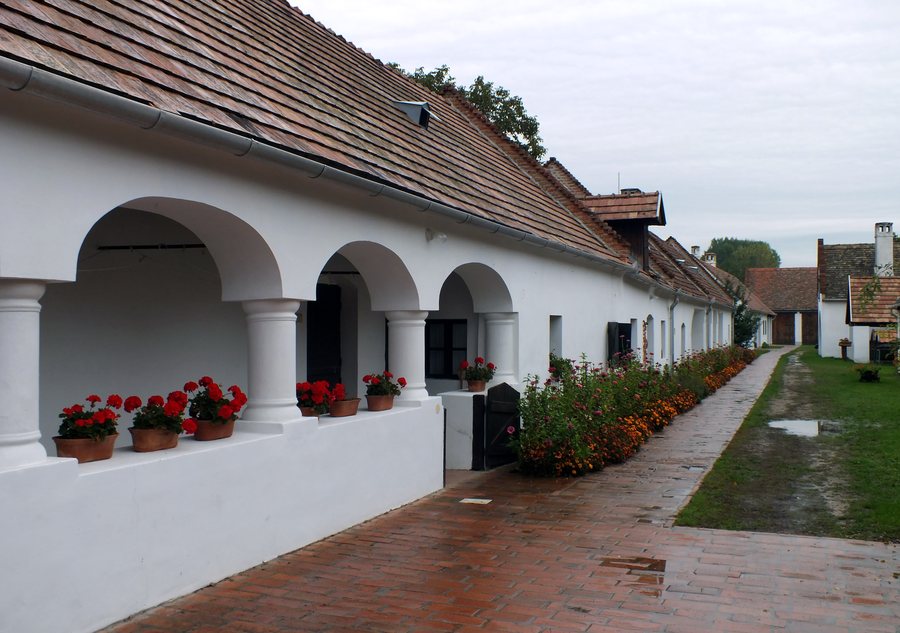 File:Tájház, 2013-ban. - Veszprém megye, Magyarpolány.jpg
Photo: Erikpapa via Wikimedia Commons, CC BY-SA 3.0
Magyarpolány at a glance
- The Szent László Church was built between 1761 and 1773 and is a specially protected historic monument.
- The Calvary features nearly life-size figures at five stations; they were created in 1780.
- Petőfi Street is known for its farmhouses with verandas. The Magyarpolány Village Museum is also located there, in a traditional stone house.
- Since 1993, the Magyarpolány Passion Play has been staged as an open-air performance by residents and members of the local community.
Which buildings define Magyarpolány?
The Szent László Church was built by Abbot Konstantin Haschke of Heinrichau together with master builder János Hoffpaur of Zirc. Construction took place between 1761 and 1773. The church is Baroque; its furnishings include a main altar and two side altars in the Copf style. The two style names therefore refer to different aspects: the church and its altars.
The Calvary stands on the hill beside the church. Its sculptural group features nearly life-size figures at five stations. The Swabian Listner brothers created them in 1780. A chapel dedicated to Our Lady of Sorrows stands at the summit. The Calvary is part of the cultural, natural and architectural heritage of Via Calvaria. The church, sculptures and chapel thus offer different ways to explore the town’s religious and architectural heritage.
What does Petőfi Street tell us about village life?
Historic Petőfi Street is known for its farmhouses with verandas. The Magyarpolány Village Museum is housed in a traditional stone house on the street. On display are furnishings and household items from traditional rural life, along with typical examples of folk dress. The architecture and collection offer two different perspectives: the houses show a characteristic building style, while the objects illustrate rural daily life and clothing.
In traditional houses, the kitchen was the central room. Smoke from the oven escaped through an open smoke vent; a pantry and a formal living room led off the kitchen. This layout shows how cooking, food storage and living space were connected within the house.
How do the cultural experiences differ?
The Passion Play offers a different experience from the permanent architectural sights: it is an open-air performance staged by village residents and members of the local community. The tradition dates back to 1993. If you are interested in community-led performances, the Passion Play is therefore a distinct area of interest alongside the church, Calvary and traditional rural culture. Performance dates may vary; check the schedule for your intended travel period.
Seasonal arts offerings are also different: during the summer months, interested visitors can explore various art forms with the guidance of expert masters. Check availability in advance. This does not imply that workshops or a particular venue are available.
If you would rather explore a route connecting several places, consider Via Calvaria: described as a developing hiking trail, it links Calvaries in 14 towns and villages; one of the sites is in Magyarpolány. This offers a different way to explore the area from a stay focused on local architecture or Petőfi Street. Discover more destinations: Városlőd, Kislőd, Somlóvásárhely, Úrkút, Halimba, Ajka, Nagyalásony and Somlószőlős.
FAQ
What is known about the Szent László Church?
It was built between 1761 and 1773, is a Baroque church and is a specially protected historic monument. Its furnishings include a main altar and two side altars in the Copf style.
What makes the Calvary in Magyarpolány distinctive?
The sculptural group features nearly life-size figures at five stations and was created by the Listner brothers in 1780. A chapel dedicated to Our Lady of Sorrows stands at the summit.
How long has the Magyarpolány Passion Play been performed?
It has been staged as an open-air performance by village residents and members of the local community since 1993. Check the schedule for your travel dates.
For the broader travel overview: Ajkai.

