
Discover Somlóvásárhely
Accommodation in Somlóvásárhely
Somlóvásárhely brings together striking examples of sacred art and insights into the history of the surrounding area. When planning your trip, it is also worth looking at Somló Hill: maps and suggested routes there lead to ruins, basalt cliffs, chapels and vineyards.
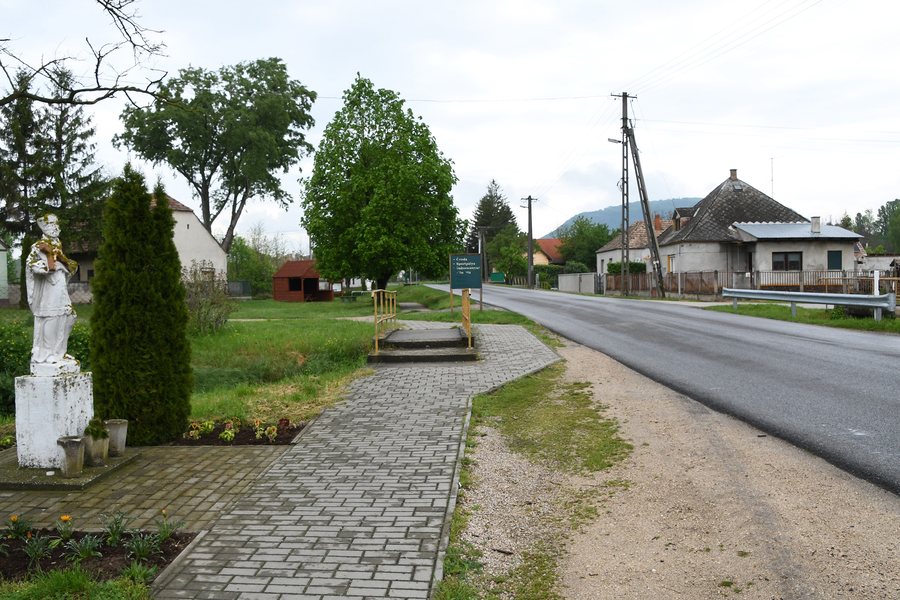 File:Somlóvásárhely, Nepomuki Szent János-szobor 2021 17.jpg
Photo: Pasztilla aka Attila Terbócs via Wikimedia Commons, CC BY-SA 4.0
File:Somlóvásárhely, Nepomuki Szent János-szobor 2021 17.jpg
Photo: Pasztilla aka Attila Terbócs via Wikimedia Commons, CC BY-SA 4.0
Somlóvásárhely at a glance
- The Church of Szent István, első vértanú, was built between 1788 and 1791 with funds from the Catholic Religious Fund.
- A Roman tombstone from the late 2nd to early 3rd century is visible in a secondary position in the southern wall of the choir.
- The Antiochiai-Szent-Margit Chapel is a protected monument and an archaeological site.
- Nearby Somlóvár has a history spanning around 900 years and is accessible only on foot or by bicycle through dense forest.
Which historical details shape the town?
The Church of Szent István, első vértanú, combines architectural history with several artistic styles. Its furnishings date from the mid-18th century and are in the Rococo style, while the high altar and altarpiece depicting the martyrdom of Saint Stephen are Baroque. A Roman tombstone can also be seen in the south wall of the choir. It was dedicated by Aurelius Proculinus and is in a secondary position. It dates from the late 2nd to early 3rd century.
The Antiochiai-Szent-Margit Chapel is also part of Somlóvásárhely’s historical character. Its designation as a protected monument and archaeological site gives it a different significance from the church: here, monument preservation and its archaeological character take centre stage. The two sites therefore offer different points of interest for travellers interested in sacred architecture or archaeological evidence.
What can you explore around Somló Hill?
Nearby, attractions range from the ruins of Somlóvár Castle to the basalt cliffs of the volcanic Somló Hill. The route to the castle passes through dense forest and is accessible only on foot or by bicycle. Bear this restriction in mind when planning your day.
The Somló Kapuja Visitor Centre at the foot of Somló Hill, near Somlóvásárhely on Road 8, serves as a car park and information point. From there, visitors can set off with a map and suggested routes to the ruins, basalt cliffs, cellars, chapels and vineyards. The cellars, chapels and vineyards evoke Provence. Check the latest information about the visitor centre and its services before your trip.
What should you bear in mind when travelling there?
One described train journey starts in Somlóvásárhely. From there, continue towards Somló Hill; Road 8 is crossed on the way to the visitor centre. Check current travel information before setting out and plan the rest of your journey according to your own route.
What else does the wider Lake Balaton - North destination have to offer?
The wider Lake Balaton - North destination also offers a range of inspiration for planning a trip. Boat rides are available in the Tapolcai-tavasbarlang, as well as the guided exhibition “Csodálatos karszt” (“Wonderful Karst”). The cave is part of a system beneath the town that has been explored to a length of 14.6 kilometres so far.
Another highlight is Hegyestű, a 337-metre-high mountain between Zánka and Monoszló. A quarry there exposes the interior of a basalt volcano that was active around eight million years ago. At the viewpoint on the western edge of the quarry grounds, a panoramic information board helps identify the surrounding hills; the site also includes a rock garden featuring characteristic rock types of Transdanubia. Badacsony, meanwhile, combines hiking trails and panoramic views with its basalt organ pipes and vineyards on its slopes. These examples differ mainly in whether you are interested in caves, volcanic geology, or a landscape associated with hiking and wine.
Discover more destinations: Halimba, Városlőd, Ajka, Somlószőlős, Nagyalásony, Úrkút, Kislőd, Magyarpolány.
FAQ
What can you see in the Church of Szent István?
The furnishings date from the mid-18th century and are in the Rococo style. The high altar and altarpiece are Baroque; a Roman tombstone is also visible in the southern wall of the choir.
How can you reach Somlóvár?
The route through the dense forest is accessible only on foot or by bicycle.
What information does the Somló Kapuja Visitor Centre provide?
It serves as a car park and information point. With a map and suggested routes, visitors can set off from there to the ruins of Somlóvár, the basalt cliffs, cellars, chapels and vineyards.
To the wider travel overview: Ajkai.

