
Zalaszántó: Basalt, Watermill, and Medieval History
Accommodation in Zalaszántó
Zalaszántó combines historic buildings with a distinctive geological formation and routes through varied landscapes. If you are planning a stay, this guide offers an overview of the features that define the town and its surrounding area.
Zalaszántó at a Glance
- The Gersei-Pethő Manor House is a locally protected medieval historic building in the town center.
- Bazaltutca on Kovácsi-hegy is about 200 meters long and lies on the outskirts of town.
- At Kotsy Watermill, you can see a 390-centimeter overshot waterwheel and mill relics; there is also a gift shop.
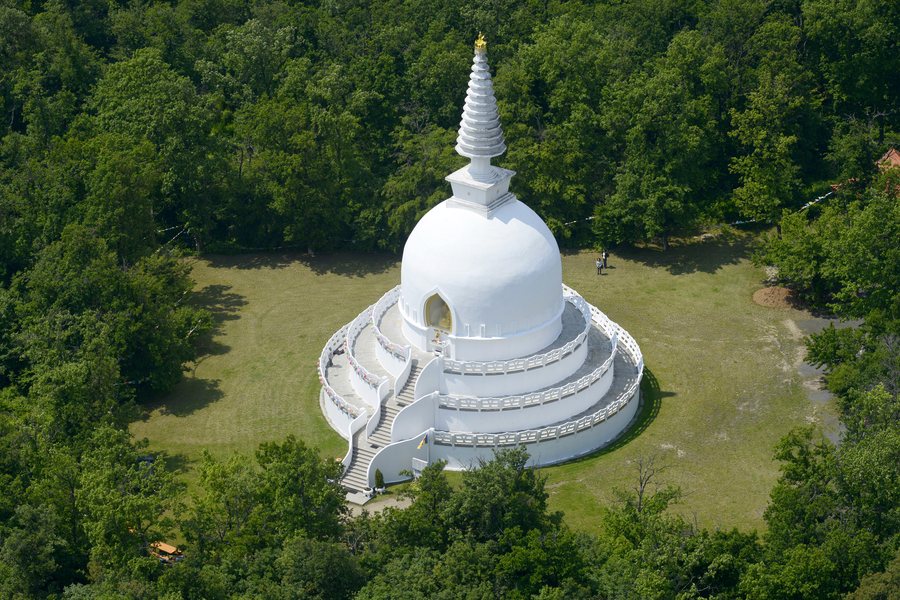
- A route leads from Zalaszántó to the Béke Stupa. The ruins of Tátika Castle are in the surrounding area.
What stories do the buildings tell?
The Gersei-Pethő Manor House, a locally protected medieval historic building, stands in the town center. The building is also connected with the history of the Gersei-Pethő family: the manor house recalls the period when the family owned the village and Tátika Castle as an estate. Architecture and historical memory come together here, though the story is not limited to a single building.
The Church of Saints Cosmas and Damian is a single-nave Gothic building. A tower stands at the western end; to the east is the polygonal chancel, supported by buttresses. A document from 1236 already mentions a church in the village dedicated to Saints Cosmas and Damian. The documentary reference and the architectural description offer two different insights into the local history of the church.
What makes the landscape around Zalaszántó special?
Bazaltutca on Kovácsi-hegy lies on the outskirts of town. The roughly 200-meter-long formation includes basalt walls, polygonal basalt columns, cavities, caves, and other volcanic features. Its variety makes it a distinct point of interest for travelers interested in the geological character of a landscape. It differs markedly from the historic buildings in the town center.
You can encounter another connection with the landscape at the Szent-Donát Vineyard Chapel. It was built at a spot on Derék-hegy described as having the hill’s most beautiful panorama.
How do the routes to the various destinations differ?
The route from Zalaszántó to the Béke Stupa passes through vineyards and by weekend houses; most of it is paved. A different landscape characterizes the route to the ruins of Tátika Castle: the forest trail leads through woodland with wild garlic and other forest plants. The estimated duration for this route is half an hour. The ruins are at an elevation of 412 meters and are therefore in the surrounding area of Zalaszántó, not in the town itself.
The two route descriptions emphasize different features: the route to the Béke Stupa is mostly paved and passes through vineyards and by weekend houses, while the route to Tátika is described as a forest trail. The estimated half-hour duration applies to the forest trail to the ruins; no duration is given for the route to the stupa.
Kotsy Watermill offers a focus of its own. You can see a 390-centimeter overshot waterwheel powered by water. Mill relics are also on display, and there is a gift shop. Check the current operating conditions before visiting.
What role does the wider destination of Zala play?
Within the wider travel destination of Zala, the Zalai Wine Region offers a regional perspective on viticulture and landscape. It developed on the slopes and upland plateaus of the Zalai-dombság and on the northwestern slopes of the Keszthelyi-hegység, and encompasses two wine-growing districts and 38 settlements. This offers a perspective on Zala as a larger region; Zalaszántó’s attractions have their own local focus.
How do you choose accommodation for your stay?
If you are considering Zalaszántó as a place to stay overnight, you can tailor your search to the themes you have planned: local history and architecture, the watermill, geology, or routes into the surrounding area. When considering a specific hotel offer, it is worth checking whether its location suits your plans.
Discover more destinations: Karmacs, Esztergályhorváti, Vonyarcvashegy, Zalavár, Gyenesdias, Vindornyalak, Balatongyörök, Keszthely.
FAQ
What is the historical connection of the Gersei-Pethő Manor House?
The locally protected medieval historic building recalls the period when the Gersei-Pethő family owned the village and Tátika Castle as an estate.
How do the routes to the Béke Stupa and Tátika Castle differ?
The route to the Béke Stupa is mostly paved and passes through vineyards and by weekend houses. The route to the ruins of Tátika passes through woodland and takes about half an hour.
What can you see at Kotsy Watermill?
You can see a 390-centimeter overshot waterwheel and mill relics. There is also a gift shop. Check the current operating conditions before your visit.
Go to the main travel overview: Keszthelyi.

