
Discover Saulkrasti Municipality: Nature, Trails and Culture
Accommodation in Saulkrasti Municipality
Saulkrasti is located on the eastern coast of the Gulf of Riga. Saulkrasti is situated approximately 50 km from Riga, and the Saulkrasti coastline is 17 km long. The internationally important VIA Baltica highway also runs through Saulkrasti Municipality.
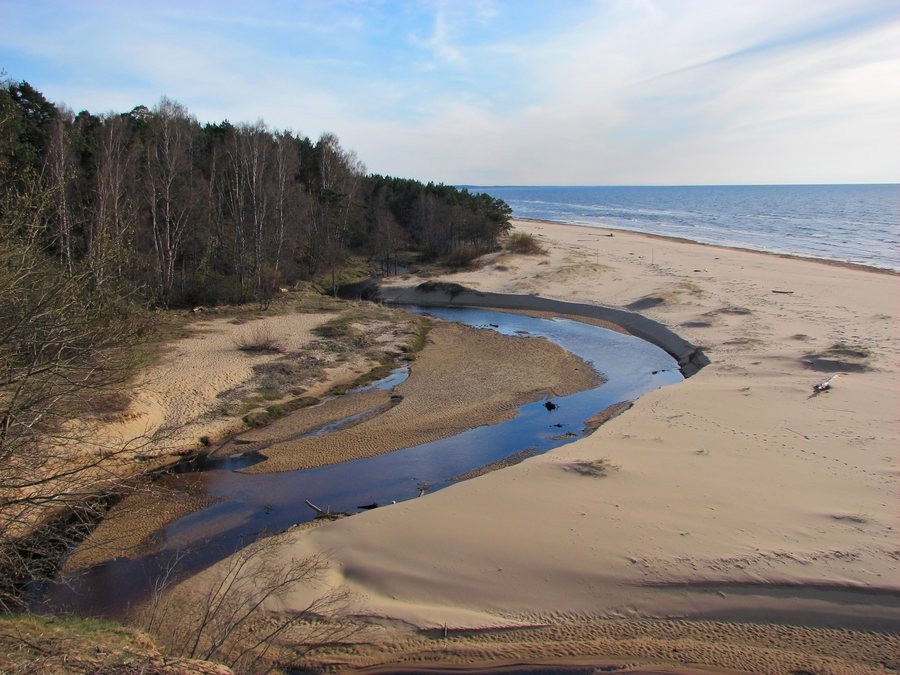 File:Saulkrasti, Saulkrastu pilsēta, Latvia - panoramio (3).jpg
Photo: alinco_fan via Wikimedia Commons, CC BY 3.0
File:Saulkrasti, Saulkrastu pilsēta, Latvia - panoramio (3).jpg
Photo: alinco_fan via Wikimedia Commons, CC BY 3.0
Coast and Nature
Piejūra Nature Park is a protected area established in 1962 to preserve coastal ecosystems as well as protected habitats and species; at the same time, it supports educational and recreational opportunities. The nature park contains a high proportion of protected habitats and a great diversity of species. There are developed trails and rest areas for pedestrians and cyclists, as well as car parks and information boards.
The White Dune is 18 m high. It is located on the right bank of the Inčupe near its mouth into the sea; from there, it offers a particularly beautiful view of the Gulf of Riga. There is singing sand on the coast near Lilaste.
Trails and Water
The Sunset Trail is approximately 4 km long and runs from the White Dune towards the centre of Saulkrasti. Along the way, it passes a wide sandy beach, foredunes, the Pēterupe and tall pine trees. The Ķirezera Trail is approximately 1.2 km long and is marked as a nature trail around Ķirezers by blue markings on the trees.
Saulkrasti Forest Park has wide paved paths that are considered safe and unobstructed for travel. The Lojas River is 26 km long and a right-bank tributary of the Gauja in Saulkrasti Municipality. Sēja Oak is considered one of the largest oak trees in Latvia and the Baltics. Water sports and other water-based recreational activities are available at Lake Pabaži, with the option of renting the necessary equipment.
History
At the beginning of the 19th century, Baron Karl von Reutern of Lēdurga had the first summer houses built and established a new seaside resort called Neubad (Neibāde). By the middle of the 19th century, Neibāde had developed into a spa resort.
Sēja Manor House dates from the turn of the 18th and 19th centuries and received Neo-Gothic decorative elements during renovations from 1883 to 1885. Built in 1903, the Sēja Manor Water Tower is a rare Neo-Gothic engineering structure of Latvian manor architecture and has the status of an industrial heritage site of regional significance.
The first building of Pēterupe Lutheran Church was erected in 1641; the fourth church building, which has survived to the present day, dates from 1856. Construction of Sēja School began in 1914, and the school was inaugurated on 26 November 1922.
Culture
The Saulkrasti cycling route includes the Velozinis course. It recreates typical conditions and obstacles of the urban traffic environment for children learning to ride bicycles.
The Saulkrasti Bicycle Museum houses Latvia’s only collection of old bicycles. The collection includes technically interesting examples found in Latvia from the history of bicycle development. Guided tours are offered at the museum in Latvian, English and Russian; they last between 20 minutes and 1.5 hours.
Saules Square in the centre of Saulkrasti is the venue for evening open-air concerts and film screenings in summer.
Other Places
Zvejniekciems originated in the 19th century as a fishing village on the coast of Skulte. The Saulkrasti Tourist Information Centre is located at Ainažu 13b in Saulkrasti.
More destinations: Gudenieku Parish, Durbe Municipality, Nereta Municipality, Auce Municipality, Olaine Municipality, Baltinava Municipality.
To the main travel overview: Latvia.

.jpg)