
Discover Vilkiautinis
Accommodation in Vilkiautinis
Prehistoric settlement traces and burial mound fields lie in the area surrounding Vilkiautinis. Dating, grave goods, and the dimensions of one field reveal different aspects of this cultural history.
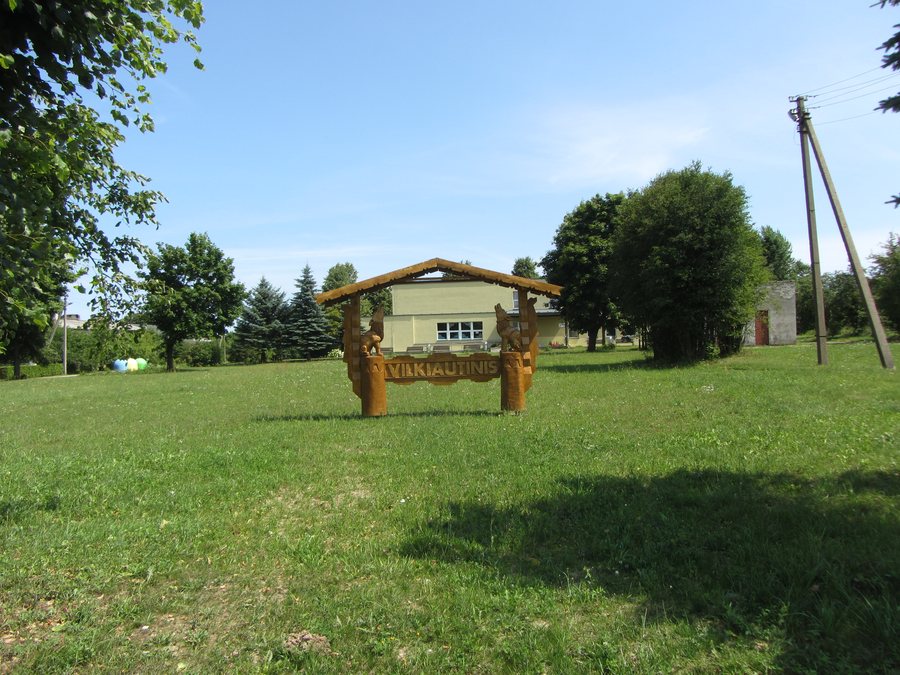
Vilkiautinis at a glance
- The burial mound fields and the prehistoric settlement in the surrounding area date from the 5th to the 12th century.
- The Vilkiautinio pilkapynas burial mound field in the area surrounding Vilkiautinis was elongated: 40–100 m long, 4 m wide, and 0.6 m high.
- The second burial mound field was discovered in 1996; the dead were cremated and buried in both fields.
- Finds from the burial mound fields and the prehistoric settlement in the area surrounding Vilkiautinis are kept at the Lietuvos nacionalinis muziejus and the Warsaw Archaeological Museum; neither museum is in Vilkiautinis.
How can the prehistory be placed in time?
The burial mound fields and the prehistoric settlement in the area surrounding Vilkiautinis date from the 5th to the 12th century. An ancient settlement in the area surrounding Vilkiautinis is assigned to the second half of the first millennium. The information emphasizes different time frames: one gives a period spanning several centuries, the other a more narrowly defined period within the first millennium. Read together, they provide an overview of the dating of the sites without reducing all traces to a single era. This distinction is useful for orientation, as it makes both the broad dating of the find groups and the more specific date for the ancient settlement clear.
How do the grave goods differ?
The dead were cremated and buried in both burial mound fields in the area surrounding Vilkiautinis. However, the lists of grave goods differ. The first field yielded spearheads and combat knives, brooches and rings, as well as fragments of equipment for riders and horses. The second field was discovered in 1996. Finds there included spearheads, axes and a shield boss, fragments of equipment for riders and horses, and pottery fragments.
A comparison makes the similarities and differences clear: spearheads and fragments of rider and horse equipment appear on both lists. Combat knives, brooches, and rings are listed for the first field; axes, a shield boss, and pottery fragments for the second. This keeps the find groups distinct rather than merging them into a single list.
What are the dimensions of the Vilkiautinio pilkapynas?
The Vilkiautinio pilkapynas burial mound field in the area surrounding Vilkiautinis was elongated and measured 40 to 100 metres long, 4 metres wide, and 0.6 metres high. The length is given as a range, while the width and height are each stated as a single measurement. Together, the three values convey the elongated shape of the burial mound field more concretely than the simple description “elongated” can. The range also shows that no single fixed length is specified. For travellers interested in culture, this comparison offers a tangible sense of the space occupied by one of the burial mound fields in the surrounding area.
Where are the finds kept?
Finds from the burial mound fields and the prehistoric settlement in the area surrounding Vilkiautinis are kept at the Lietuvos nacionalinis muziejus and the Warsaw Archaeological Museum; neither museum is in Vilkiautinis. This allows two aspects of Vilkiautinis’ cultural history to be distinguished: the find sites in the surrounding area and the museums where finds from these contexts are preserved. For you, this connection adds specific collection locations to the picture of prehistory. The two museums are part of the context for the finds; the archaeological topics themselves relate to the area around the destination.
Discover more destinations: Kibyšiai, Marcinkonių seniūnija, Pamusiai, Roduka, Genionys, Viršurodukis and Merkinė.
FAQ
What period do the prehistoric sites date from?
The burial mound fields and the prehistoric settlement in the area surrounding Vilkiautinis date from the 5th to the 12th century. An ancient settlement in the area surrounding Vilkiautinis is assigned to the second half of the first millennium.
What is known about the two burial mound fields?
The dead were cremated and buried in both. The recorded grave goods differ: brooches and rings, among other items, are mentioned for the first field, while axes, a shield boss, and pottery fragments are listed for the second.
Where are finds from the surrounding area kept?
Finds from the burial mound fields and the prehistoric settlement in the area surrounding Vilkiautinis are kept at the Lietuvos nacionalinis muziejus and the Warsaw Archaeological Museum; neither museum is in Vilkiautinis.
For the broader travel overview: Varėna District Municipality.

