
Discover Palūšė: Culture and Cycling Routes
Accommodation in Palūšė
Palūšė can be explored through a range of themes: the exhibition at the visitor centre of Aukštaitija National Park, the ensemble of St. Joseph’s Church, and tours that begin or end here. These differences can help you match your cultural interests to the timeframe of your trip.
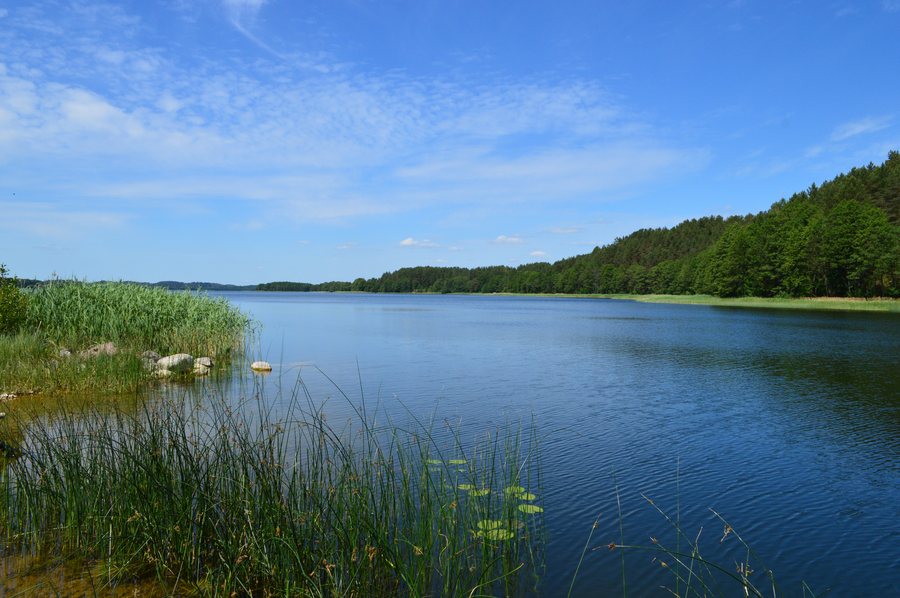
Palūšė at a glance
The “People of the Lakes” exhibition covers old and modern fishing methods and is aimed at visitors of all ages. St. Joseph’s Church is an ensemble of rural folk architecture dating from the second half of the 18th century. Tours come in different formats: a challenging full-day cycling tour and a half-day driving tour, both starting in Palūšė.
What do the exhibition and church ensemble tell us?
At the visitor centre, the “People of the Lakes” exhibition explores fishing across different periods, covering both old and modern methods. This gives it a specific subject that differs from the church’s architectural history and furnishings. The exhibition is aimed at visitors of all ages; its subject matter offers a cultural point of interest for a range of travel interests.
St. Joseph’s Church was built without a saw or nails. As an ensemble of rural folk architecture, it dates to the second half of the 18th century. Its furnishings also include historic details: the church, bell tower and Palūšė chapel have brass bells dating from 1752 and 1772, decorated with Baroque ornaments. The construction method, architectural classification and bells represent different aspects of the church ensemble.
How do the tours differ?
The “See more” (D4) circular cycling route is described as a challenging full-day tour and starts in Palūšė. The cycling trail with the same name and number ends in the town. For planning purposes, both the type of tour and its timeframe are relevant: the cycling route is a full-day activity, not a half-day tour.
The “Small Park Ring” (A1) circular route is different: it is a half-day driving tour that also starts in Palūšė. You can distinguish between the two options described here by mode of transport and duration: a full day of cycling or a half-day driving route.
What natural and archaeological sites are there?
The Palūšė Oak is a state-protected natural heritage site. It is estimated to be 400 years old, stands 26 metres tall and has a trunk circumference of 4.60 metres. Its age and measurements provide different points of reference for understanding this natural monument. The age given is an estimate.
Outside the village, in the forests northwest of Palūšė, between Palūšė and Pagavaitis, there are two barrow cemeteries. The first, Kuronai, comprises twelve barrows.
Discover more destinations: Nastazavas, Kazitiškis, Švedriškė, Mielagėnai, Ginučiai.
FAQ
What is the “People of the Lakes” exhibition about?
It covers old and modern fishing methods and is aimed at visitors of all ages.
Which tours start in Palūšė?
The challenging “See more” (D4) circular cycling route is a full-day tour; “Small Park Ring” (A1) is a half-day driving tour. Both start in Palūšė.
How old is the Palūšė Oak?
It is estimated to be 400 years old. The oak is 26 metres tall and has a trunk circumference of 4.60 metres.
Go to the broader travel overview: Ignalina District Municipality.

