
Discover Švedriškė: Church and Lourdes chapel post
Accommodation in Švedriškė
Švedriškė offers two distinct perspectives on sacred woodcraft: three Neo-Gothic altars in the Church of St. John the Baptist and an oak chapel post between two lakes. The church’s history and the imagery on the post give the place a distinct cultural focus.
Švedriškė at a glance
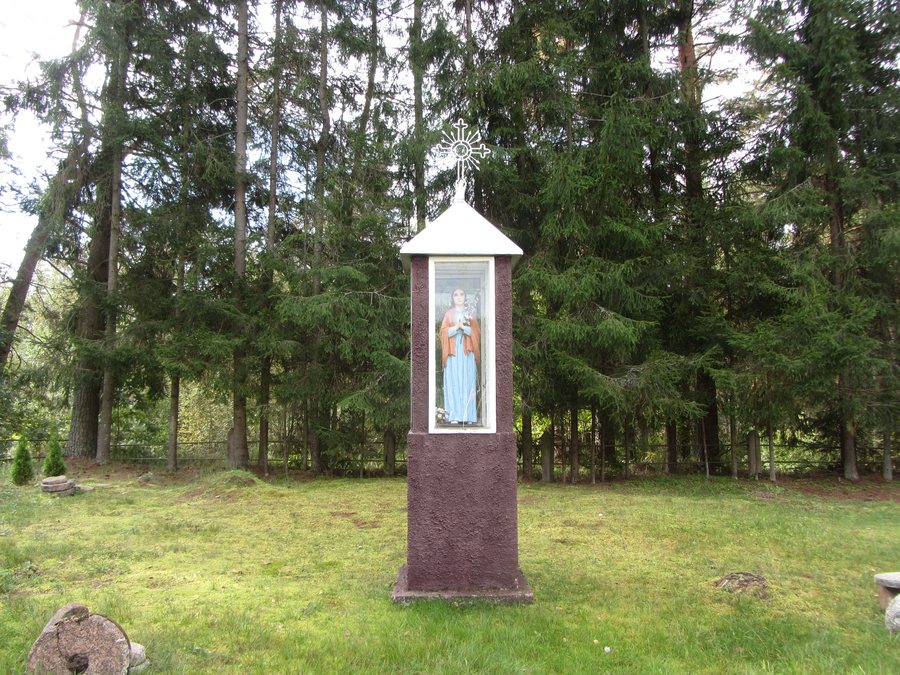
The present-day Church of St. John the Baptist was built in 1933 at the instigation of the priest Jonas Gurauskas and furnished in 1934; it was designed by the engineer Stasys Taškūnas. Its three Neo-Gothic wooden altars, decorated with sculptures, complement the wood-carved interior. The Lourdes chapel post is made of natural, knotty oak, is surrounded by a small fence, and was made without nails, an axe, or a saw.
What details define the church?
Several design features come together in the church. The three wooden altars are Neo-Gothic in style and decorated with sculptures; together, they complement the wood-carved interior. The cultural focus can thus be understood through the materials, style, and figurative decoration. If you are interested in church art, this combination offers a clear point of reference without requiring any prior knowledge of architectural history.
How does the building history fit together?
To understand the building history, it helps to distinguish between the design, construction, and furnishing. The present-day church was built in 1933 at the instigation of Jonas Gurauskas and furnished in 1934. It was designed by the engineer Stasys Taškūnas. The two dates refer to different stages, while the names identify different roles: Gurauskas initiated the construction, and Taškūnas provided the design. This timeline and division of roles make the brief history of the church’s origins easy to follow.
What makes the Lourdes chapel post distinctive?
The Lourdes chapel post is defined by its material, how it was made, and its subject matter. It is made of natural, knotty oak and is surrounded by a small fence; no nails, axe, or saw were used to make it. It was re-erected thanks to the priest Alfredas Karišauskas. The sculptures of John the Baptist and Jesus together depict the baptism of Jesus. The post is located in Švedriškė between Lakes Ažvinčis and Ažvintaitis. It thus brings together the baptismal theme and a specific detail of craftsmanship.
How do the two wooden works differ?
The altars shape the church interior through their number, Neo-Gothic style, and sculptural decoration; the post, by contrast, is defined by its knotty oak, method of construction, and baptismal theme. The cultural focus thus extends from the design of an interior to a single religious motif. By narrowing down your interests, you can explore architecture, woodcraft, and Christian imagery separately or in relation to one another.
Discover more places to visit: Mielagėnai, Ginučiai, Palūšė, Kazitiškis and Nastazavas.
FAQ
When was the church built and furnished?
The present-day church was built in 1933 at the instigation of Jonas Gurauskas and furnished in 1934.
Who designed the church?
The engineer Stasys Taškūnas created the design.
What do the sculptures on the chapel post depict?
John the Baptist and Jesus are depicted; the sculptures show the baptism of Jesus.
Where is the chapel post located?
It is located in Švedriškė between Lakes Ažvinčis and Ažvintaitis.
For the main travel overview: Ignalina District Municipality.

