
Discover Karvys: Churches and Manor History
Accommodation in Karvys
In Karvys, the history of its churches and manor meets the life story of geologist Antanas Karolis Giedraitis. The surviving architectural features and dated events offer a concrete glimpse into the town’s history.
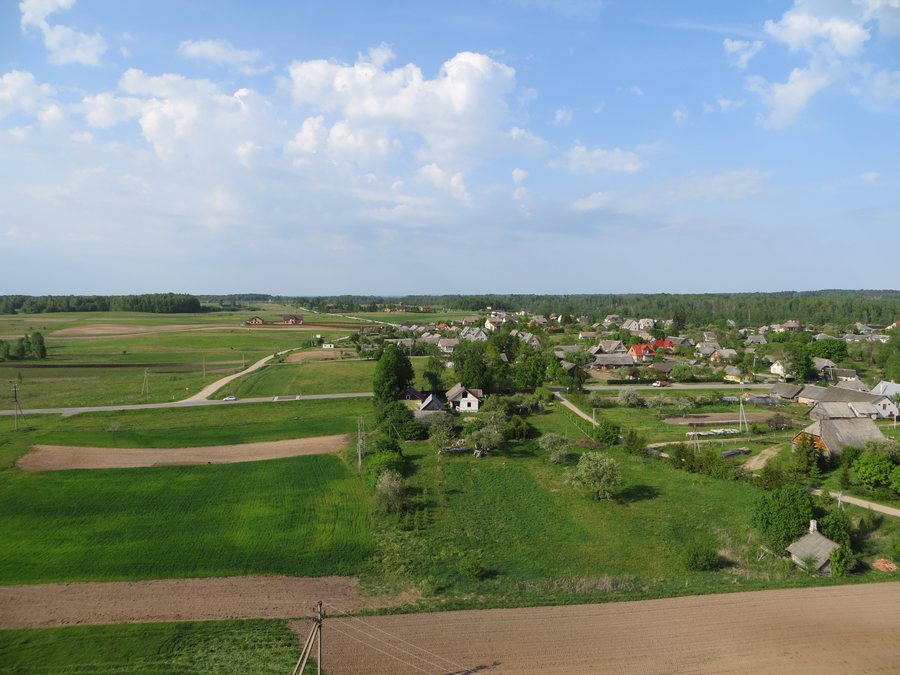
Karvys at a glance
- The twin-towered Karvio St. Joseph’s Church, built in the Neo-Gothic style, was completed in 1864 and has survived to this day.
- Fragments of the Karvio Manor near Karvio ežeras were listed as local cultural heritage in 1992; the register code is 898.
- Antanas Karolis Giedraitis (1848–1909), Lithuania’s first professional geologist, was born at Karvio Manor near Vilnius.
What church history has shaped Karvys?
The first wooden church in the village of Karvys was built between 1779 and 1790. In 1861, it burned down in a fire caused by lightning. A few years later, it was rebuilt with support from the congregation and the Giedraitis family. The construction period, cause of the fire and rebuilding trace different chapters in its history; the support of the congregation and family is also part of this historical context.
Another specific landmark is the twin-towered Karvio St. Joseph’s Church. It is Neo-Gothic, was completed in 1864 and has survived to this day. This gives culturally curious travellers different architectural features to look for: the first wooden church is defined by its construction and rebuilding, while the named Karvio St. Joseph’s Church is distinguished by its style, towers and year of completion.
What traces of Karvio Manor have survived?
The fragments of Karvio Manor are located near Karvio ežeras in Karvys. They were listed as local cultural heritage in 1992 under register code 898. These details refer to the manor fragments and give them a distinct place in the town’s cultural history.
A 2023 article by the heritage authority describes a small wooden granary that has survived on the manor grounds. Remnants of an earlier shingle roof are visible beneath the slate covering, making it possible to distinguish two roof coverings from different periods on a single structure. The same article notes that one end of the second former servants’ house has retained its original appearance from the manor era. The surviving details thus include both individual structural elements and the appearance of part of the former house.
What is Giedraitis’ connection to Karvys?
Antanas Karolis Giedraitis was born in 1848 at Karvio Manor near Vilnius. From the age of three, he lived with his parents at nearby Antanavas Farm, a former estate outbuilding. His birthplace and childhood home are therefore two different historical sites: Karvio Manor and nearby Antanavas Farm. This distinction helps put the biographical connections in their geographical context without treating the two estates as one and the same.
Giedraitis was Lithuania’s first professional geologist and a pioneer of Quaternary research and geological mapping. His story connects Karvys with a scientific biography: alongside the churches and manor buildings, the early life of a prominent geologist is also part of the town’s history. When planning your trip, you can therefore explore architectural history and biographical interest as distinct yet connected themes.
Discover more destinations: Švenčionys, Eišiškės, Kernavė, Bezdonys, Antatilčiai, Kaniūkai, Trakai and Juodšiliai.
FAQ
When was the first wooden church in Karvys built?
It was built between 1779 and 1790. After a fire caused by lightning in 1861, it was rebuilt a few years later with support from the congregation and the Giedraitis family.
What are the features of Karvio St. Joseph’s Church?
The church has two towers, is Neo-Gothic and was completed in 1864. It has survived to this day.
What is known about Giedraitis’ early homes?
He was born at Karvio Manor near Vilnius. From the age of three, he lived with his parents at nearby Antanavas Farm, a former estate outbuilding.
For the broader travel guide: Vilnius District.

