
Kościan
Accommodation in Kościan
When planning a trip to Kościan, routes in the landscape park, historic buildings, and a few activities on the water are especially tangible points of reference. This can help you decide whether to focus on cycling, culture, or activities on the water.
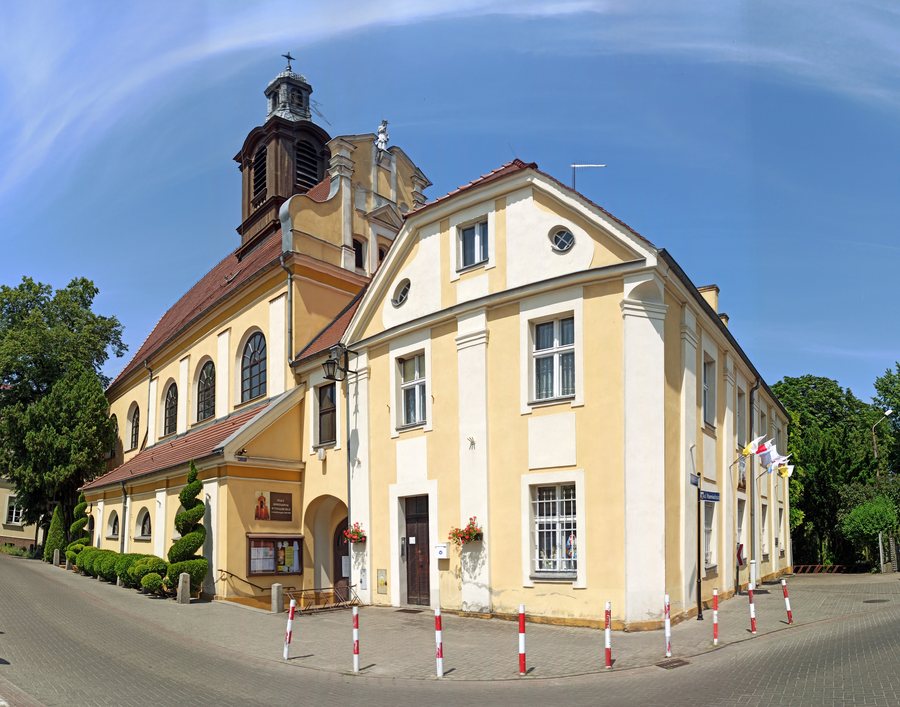
Kościan at a glance
The General Dezydery Chłapowski Landscape Park was established in 1992 and covers 17,323.21 hectares. The park has a 28.5 km cycling education trail with seven stops, as well as a 12 km nature trail, also with seven stops. Cultural and historical sites range from churches and a chapel to residences. The water activities mentioned include kayak landing stages on the Kościański Canal and a supervised beach in Cichowo with a designated swimming area for children.
Which paths and routes suit your trip?
If you are planning a longer bike ride, you can follow the cycling education trail “Trees with a History, Birds of the Present.” Its 28.5 km route passes through Racot, Darnowo, Wyskoć, Rogaczewo Małe and Rogaczewo Wielkie, Rąbiń, Turew, Stary Gołębin, and Spytkówki, before returning to Racot. Seven stops give the route a thematic framework. Its length and sequence of places make it easy to include this ride as a separate outing in your travel plans.
A shorter option in terms of distance is the park’s nature trail: it is 12 km long and has seven stops. It runs from Rogaczewo Małe through Rogaczewo Wielkie and Rąbiń to Turew. The two routes differ both in length and in how they are described: the 28.5 km route is designated as a cycling education trail, while the 12 km route is a nature trail. A section of the Greater Poland Way of St. James runs through the landscape park; the park is also on the route of the “Traveling with Mr. Tadeusz” walking trail.
For guidance on other marked trails in Kościan County, the Kościan branch of PTTK maintains a map of the walking trails it oversees. There are also trails run by other organizations, including the Ziemiański Cycling Trail. If you want to plan your days around a particular route, you can take these maps and trails into account when choosing your outings.
Which historic places can you discover?
The palace, park, and estate complex in Racot was created in the late 18th century and the second half of the 19th century. In 1921, the palace became the summer residence of the Presidents of the Republic of Poland. These historical associations make Racot a specific destination for travelers who also want to spend time in Kościan exploring architecture and regional history.
Several churches reflect different architectural histories. The historic wooden Church of the Assumption of the Blessed Virgin Mary in Stary Gołębin dates from the second half of the 17th century. The wooden Church of St. Michael the Archangel in Błociszewo dates from 1736. In Lubiń, the Church of St. Leonard was built as a small Romanesque church in the early 13th century; it was remodeled in the Gothic style in 1549–1556. Those interested in religious architecture can find examples from different periods, although the buildings themselves were not all built at the same time.
Other architectural styles are represented, too: the Baroque residence in Turew was remodeled in the Neo-Gothic style in the first half of the 19th century. In Rąbiński Forest stands a larch chapel in the Zakopane style, built in the early 20th century in memory of a fatal hunting accident. These sites add their own architectural and commemorative histories to the churches and complex in Racot.
What activities are available on the water and in Kościan?
There are several kayak landing stages on the Kościański Canal. In Cichowo there is a supervised beach with a designated swimming area for children. These are different ways to spend time by the water: kayak landing stages on the one hand, and a beach with a designated swimming area on the other.
In Kościan, the water tower now serves as a climbing wall and astronomical observatory. The town also has a 15-hectare park with numerous walking paths. If you want to include a town park or an unusual use of a building alongside the routes in the landscape park, these are further specific options to consider when planning your day.
For information about specific places, you can also visit the pages for Jarogniewice, Śmigiel, Czempiń, Racot, Gryżyna, and Gorzyczki.
FAQ
How long is the cycling education trail in the landscape park?
The cycling education trail “Trees with a History, Birds of the Present” is 28.5 km long and has seven stops. It passes through several places and returns to Racot.
How long is the nature trail?
The trail is 12 km long and has seven stops. It runs from Rogaczewo Małe through Rogaczewo Wielkie and Rąbiń to Turew.
What swimming and kayaking options are mentioned?
There are several kayak landing stages on the Kościański Canal. Cichowo has a supervised beach with a designated swimming area for children.
What historic buildings can be found in Kościan?
Examples include the palace and estate complex in Racot, historic churches in Stary Gołębin, Błociszewo, and Lubiń, as well as the residence in Turew and the larch chapel in Rąbiński Forest.
For the broader travel overview: Greater Poland.

