
Discover Czempiń: Palace, Churches and City History
Accommodation in Czempiń
Czempiń combines a Baroque residence with churches built in different periods and a historic town plan. This puts clearly defined cultural themes at the forefront of your trip planning; a cycling route also has a named endpoint in the town.
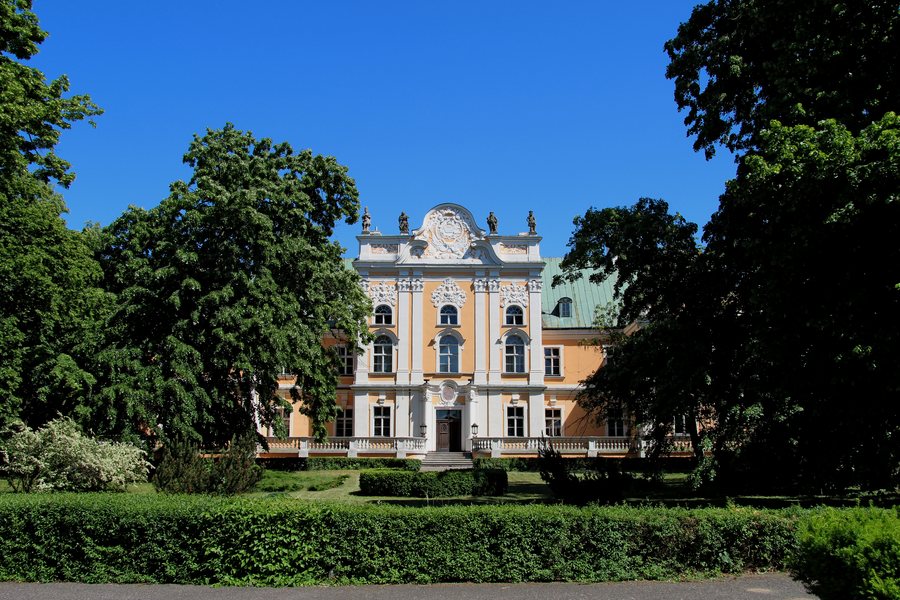 File:Pałac Szołdrskich w Czempiniu - Fasada.jpg
Photo: Jakub Skutecki via Wikimedia Commons, CC BY 3.0
Czempiń at a glance
- The palace is one of the most impressive Baroque residences in Greater Poland; its reconstruction was completed in 1739.
- The Church of St Michael the Archangel was built in 1895–1899 on the site of a predecessor building first mentioned in 1405.
- The Church of St Simon and Jude the Apostles was built of masonry in 1782, after a wooden church had been demolished.
- The historic town plan was entered in the Greater Poland Voivodeship’s register of monuments in 2008.
What do the palace and churches reveal about Czempiń’s architectural history?
The palace in Czempiń is one of the most impressive Baroque residences in Greater Poland. It was reconstructed in the 1730s, with the work completed in 1739. The churches reveal different building periods and histories: the Church of St Michael the Archangel was built in 1895–1899 on the site of a predecessor building first mentioned in 1405. The year 1405 therefore refers to the mention of the predecessor building, not to the construction date of the church from the late 19th century.
The Church of St Simon and Jude the Apostles adds a change in building material and predecessor building to the comparison. It was built of masonry in 1782, after the wooden church that had previously stood there was demolished. This makes it possible to distinguish the history of the palace, the early mention of a church predecessor and the replacement of a wooden church without conflating their respective dates.
How can the history be understood through the townscape?
The central square in Czempiń is a former marketplace. The church stands to its east, aligned with the square. The historic town plan was entered in the Greater Poland Voivodeship’s register of monuments in 2008. This brings together two different ways of finding your bearings: individual churches and their architectural history, and the town’s historic layout.
A photographic perspective adds to these architectural and spatial connections. The tourism project “Czempiń na szklanych pocztówkach” installed glass panels with transparent reproductions of old photographs in Czempiń. The images show important places in the town and date from the late 19th and early 20th centuries. In this way, the project broadens the view of Czempiń with historic townscapes from two periods.
What other cultural and educational themes are there?
TLENOWNIA is the new home of the cultural centre, the Public Library and the Czempiń Museum Room. The three institutions therefore share a named location; this connection is another point of reference for understanding the town’s cultural profile.
The educational trail “Zwierzęta naszych lasów, pól i przestworzy” at the Stacja Badawcza PZŁ Czempiń offers a different subject. It provides visitors with information about the station’s work and the animals kept there. While the palace and churches are understood primarily through their architectural history, this trail focuses on the station’s work and its animals. This means that, alongside the historic buildings, a specific educational theme can also be included.
Where does Cycling Route No. 7 end?
Cycling Route No. 7 ends in Czempiń at its junction with Cycling Route No. 1, near the railway crossing at Kolejowa and 24. Stycznia. This information identifies the junction and gives you street references to help you find the endpoint. Check the current route signs when you arrive.
Discover more destinations: Cichowo, Śmigiel, Jarogniewice, Gryżyna, Kościan, Racot, Lubiń and Gorzyczki.
FAQ
When was the Church of St Michael the Archangel built?
It was built in 1895–1899 on the site of a predecessor building first mentioned in 1405.
What can visitors learn on the educational trail at the Stacja Badawcza PZŁ Czempiń?
The educational trail provides information about the station’s work and the animals kept there.
Where does Cycling Route No. 7 meet Cycling Route No. 1?
No. 7 ends at its junction with No. 1 near the railway crossing at Kolejowa and 24. Stycznia. Check the current route signs on site.
Go to the main travel overview: Costs.

