
Discover Kobylin: Culture and cycling routes
Accommodation in Kobylin
Kobylin combines sacred architectural heritage and urban landmarks with three cycling routes that start and end in town. This lets you consider culture and route planning as separate focuses for your trip.
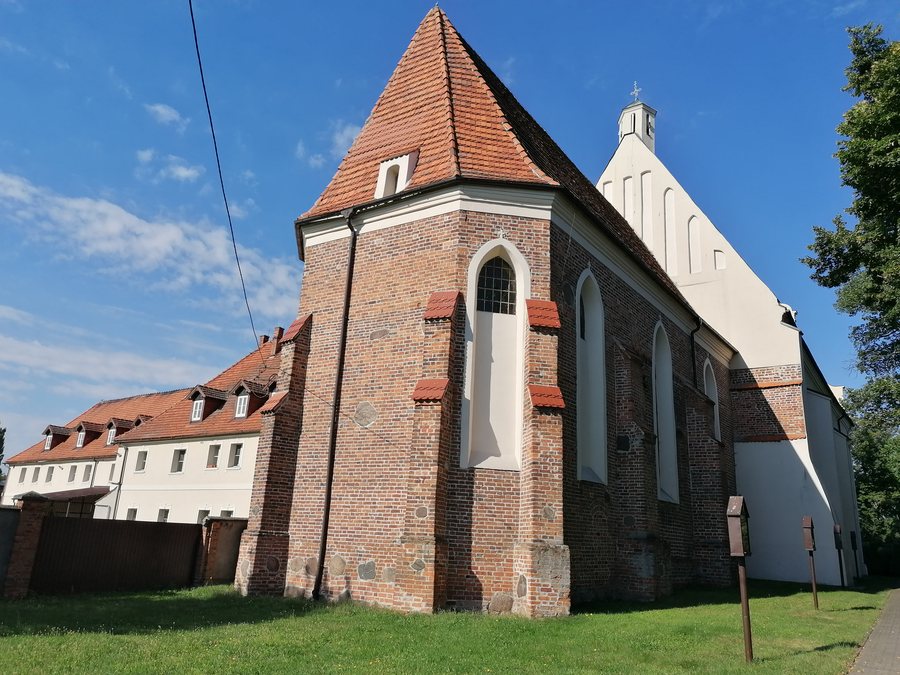 File:Our Lady at the Manger church in Kobylin Poland VIII 01.jpg
Photo: Abraham via Wikimedia Commons, CC BY-SA 4.0
Kobylin at a glance
The late Gothic parish church was built in 1512–1518 and remodelled in 1782; its high altar contains a Renaissance triptych dating from around 1518. A wooden clock tower from the 18th century is considered a remnant of a Protestant prayer house. The cycling routes described are 27, 32 and 34 kilometres long.
Which cultural landmarks define Kobylin?
Several periods come together in the parish church: it was built in 1512–1518 and remodelled in 1782. The high altar contains a wooden Renaissance triptych dating from around 1518. It depicts the legend of Saint Stanislaus, bishop and martyr. The approximate date of the altarpiece is therefore close to the church’s construction period; the remodelling marks a later phase in the church’s history.
Another striking building is the wooden clock tower from the 18th century, considered a remnant of a Protestant prayer house. Beside the monastery church stands a brick-built, plastered chapel from the same century. It contains two Gothic figures: Our Lady of Sorrows and Christ in Distress. The parish church, clock tower and chapel thus represent different forms of sacred architecture and furnishings.
The Franciscan church is also part of Kobylin’s religious heritage. It is dedicated to Our Lady of the Crib; the Franciscans settled in Kobylin in 1456. Historic houses are also among the town’s important cultural landmarks. The town hall on the market square offers a point of reference for the town’s architecture: the town coat of arms is above its entrance. Sacred buildings, historic houses and the town hall offer different ways to explore the town’s cultural history.
Which cycling routes can you compare?
Three cycling routes start and end in Kobylin. They differ both in length and in the intermediate places listed. Their distances range from 27 to 34 kilometres, making the longest route described seven kilometres longer than the shortest.
The 34-kilometre route passes through Długołęka, Smolice, Sroki, Pępowo, Gumienice, Zalesie Wielkie and Zalesie Małe.
The 32-kilometre route runs through Łagiewniki, Ochla, Kromolice, Wielowieś, Stary Gród, Kuklinów, Nepomucenów and Fijałów.
The 27-kilometre route passes through Długołęka, Pawłowo, Leśniczówka „Lila“, Baszków, Trzaski, Lipowiec and Rzemiechów. If you choose one of the routes described for a specific ride, check the current route and signage before setting off.
Discover more destinations: Brzoza, Krotoszyn, Smolice, Perzyce, Zduny, Sulmierzyce.
FAQ
How do the cycling routes differ in length?
The routes are 27, 32 and 34 kilometres long. The 27-kilometre route is the shortest, and the 34-kilometre route is the longest; the difference between them is seven kilometres.
When did the Powitanie Lata festival take place?
The two-day 2025 edition took place on 21 and 22 June at the Municipal Stadium in Kobylin. The 2026 edition was also held there and featured two days of music, family activities and celebrations together. If you would like to attend a later edition, check the latest dates.
When was the floating fountain put into operation?
The first floating fountain in the Kobylin municipality was officially put into operation on 10 May 2025 on the pond at ul. Grobla.
For the wider travel overview: Krotoszyn.

