
Sulmierzyce
Accommodation in Sulmierzyce
Sulmierzyce combines a remarkable wooden town hall with a historic windmill and trails through wooded areas.
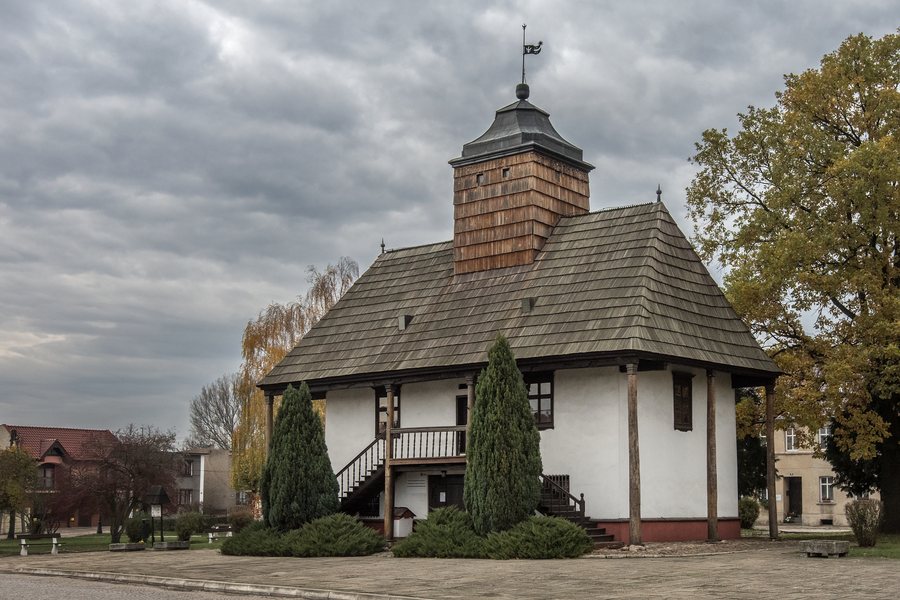
Sulmierzyce at a glance
- The wooden town hall dates from 1743 and is considered the only building of its kind in Europe.
- The town hall houses the Regional Museum, founded in 1957.
- The “Jakub” windmill was built in 1795.
- The yellow hiking trail connects Sulmierzyce and Krotoszyn over 17.6 km; a 36 km cycling route passes through Sulmierzyce.
What makes the town hall and Regional Museum distinctive?
The town hall is a unique wooden building dating from 1743. Its arcades run along three sides and are supported by oak posts. This design makes the town hall a special point of interest if you are interested in historic wooden architecture. It is considered the only building of its kind in Europe.
The Muzeum Regionalne Ziemi Sulmierzyckiej im. Sebastiana Fabiana Klonowicza is also part of this historic site: the museum, founded in 1957, is housed in the wooden town hall. The town hall’s architecture and the museum are therefore in the same building. If you are weighing up the cultural element of a trip, Sulmierzyce offers two clearly defined points of interest: a town hall with an unusual design and a regional museum.
What other cultural sites are there?
The “Jakub” windmill stands on the northern outskirts of Sulmierzyce, on the road to Chwaliszew and at the junction of Poznańska and Ceglarska streets. It was built in 1795. The mill features traditional equipment and an exhibition on the milling trade. It complements the town hall with a different subject: here, the focus is on milling rather than wooden architecture.
The Church of the Most Sacred Heart of Jesus (Najświętszego Serca Pana Jezusa) currently serves the Roman Catholic parish and is used for funeral ceremonies before burial. This current function differs from the historic architecture and craft themes of the town hall and mill.
What can you plan on foot or by bike?
The yellow hiking trail connects Sulmierzyce and Krotoszyn over a distance of 17.6 km and runs mostly through wooded areas. A 36 km cycling route also passes through Sulmierzyce.
Near Sulmierzyce, Grodzisko Sulimira lies on the hiking trail from Sulmierzyce to Krotoszyn. Also nearby, halfway to Krotoszyn, is a Bronze Age II burial mound field: it lies in an old oak forest beside the connecting road. These two places add historical points of interest in the surrounding area to the route information. The burial mound field and Grodzisko Sulimira are separate destinations, each with its own location description.
What traces of transport history are there?
From 1895 to 1991, Sulmierzyce was the terminus of a narrow-gauge railway. At its peak, the railway connected Sulmierzyce with Wrocław.
FAQ
What is special about the town hall in Sulmierzyce?
The wooden town hall dates from 1743. Arcades supported by oak posts run along three sides; it is considered the only building of its kind in Europe.
How long is the yellow hiking trail?
It connects Sulmierzyce and Krotoszyn over 17.6 km and runs mostly through wooded areas.
Where is the “Jakub” windmill?
It stands on the northern outskirts of Sulmierzyce, on the road to Chwaliszew, at the junction of Poznańska and Ceglarska streets.
What historic railway connection was there?
From 1895 to 1991, Sulmierzyce was the terminus of a narrow-gauge railway that connected the town with Wrocław at its peak.
For the main travel overview: Krotoszyn.

_ID_652571.jpg)