
Discover Łowyń by Łowyńskie Lake
Accommodation in Łowyń
Łowyń can be viewed through three specific themes: its location by Łowyńskie Lake, evidence of its history, and routes that mention the town. This can help you decide whether scenery, cultural history or a route is most important for your trip.
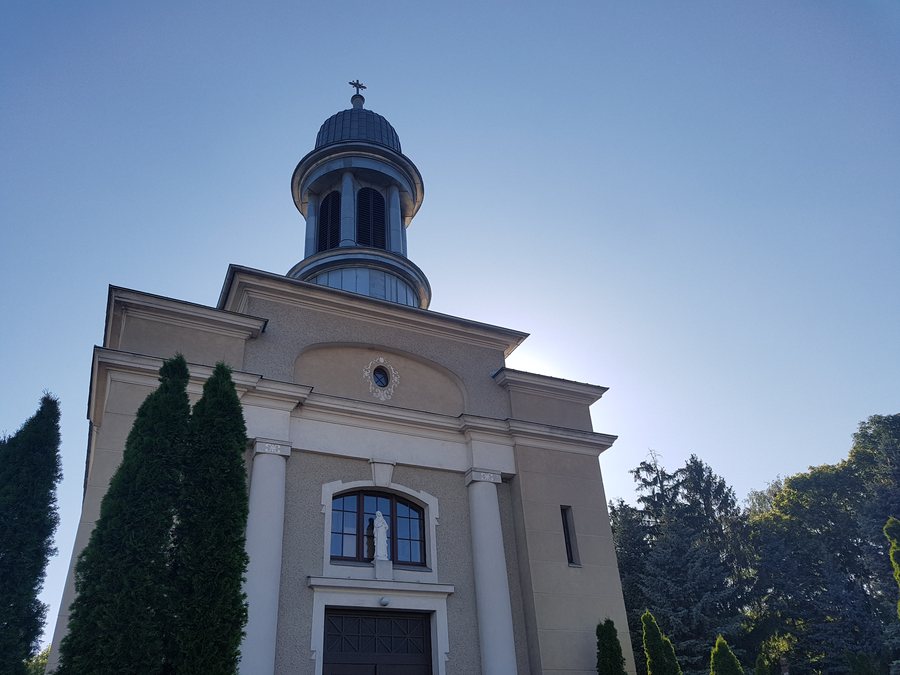
Łowyń at a glance
- Łowyń lies by Łowyńskie Lake in a depression in the moraine upland.
- The Church of the Assumption of Mary was built in 1927.
- The R-1 International Cycling Route runs through Łowyń between Lewice and Gorzyń.
- Another route sequence runs from Stare Osieczno via Łowyń to Wierzbno.
Which historical places and events should you know about?
The Church of the Assumption of Mary was built in 1927. A black stone plaque was unveiled in its porch on 15 August 2002, marking the 75th anniversary of the church’s construction. It commemorates participants in the Greater Poland Uprising, soldiers who fought for freedom and independence, and three local priests who were tortured to death at the Nazi camp in Dachau.
There is also a place of remembrance in the parish cemetery in Łowyń: the grave of Łukasz Kulik, a private from Pakosław. He was wounded in January 1919 during the uprising and murdered by Germans at the local railway station. The 1924 concrete monument was replaced by a stone plaque and a black granite headstone. The headstone bears a crowned eagle, a crossed rifle and sabre; the memorial was consecrated on 17 January 1996.
The dates mark different events: the church’s construction, the unveiling of the plaque and the consecration of the memorial. Together, these places offer insight into memories of the uprising and of people who died under Nazi rule.
What do the lake and the history of the mill tell us about the town?
Łowyń’s location is defined by two geographical features: it lies by Łowyńskie Lake and in a depression in the moraine upland. So when exploring the town’s landscape, both its proximity to the lake and its location within the upland are relevant.
The town’s history also includes a mill built before 1912. It was probably a post mill dating from the 18th or 19th century; it operated until 1939. Its classification as a post mill is uncertain. Both its early construction and the end of its operation in 1939 are relevant for understanding its timeline.
How do the routes associated with Łowyń differ?
The R-1 International Cycling Route runs through Łowyń between Lewice and Gorzyń. Near Gorzyń, it meets National Road 24.
Another route sequence starts in Stare Osieczno and passes through Sowia Góra, Międzychód, Zatom Stary, Ławica, Chalin, Prusim, Kamionna, the “Dolina Kamionki” nature reserve and Mnichy before reaching Łowyń. From there, it continues via Nowe Gorzycko to Wierzbno. Łowyń is listed at 51.1 kilometres and Wierzbno at 68.6 kilometres. The starting point of this sequence is therefore Stare Osieczno, not Łowyń. Unlike the R-1, for which the section between Lewice and Gorzyń is specified, this longer sequence places Łowyń between the start and the destination.
Discover more destinations: Bucharzewo, Kwilcz, Wielowieś, Tuchola, Kamionna, Zatom Nowy, Śródka, Łężeczki.
FAQ
When was the Church of the Assumption of Mary built?
The church in Łowyń was built in 1927. The memorial plaque in its porch was unveiled on 15 August 2002.
What does the plaque in the porch commemorate?
It commemorates participants in the Greater Poland Uprising, soldiers who fought for freedom and independence, and three local priests who were tortured to death at the Nazi camp in Dachau.
What is known about the historic mill?
A mill was built before 1912 and operated until 1939. Its presumed classification as a post mill dating from the 18th or 19th century is uncertain.
For the broader travel overview: Birnbaum.

