
Old Toruń: History and Memorials
Accommodation in Old Toruń
Old Toruń connects Toruń’s early history with memorials and several route references. The local history includes a Teutonic castle, a settlement and the first Toruń, as well as the period when Poppo von Osterna was the Land Master here. The memorials recall the founding of Toruń; the route information adds specific itineraries to these cultural and historical themes.
Old Toruń: key facts
- More than 790 years ago, a Teutonic castle, a settlement and the first Toruń stood here.
- From 1244 to 1247, Old Toruń was the seat of Land Master Poppo von Osterna and the capital castle of the Teutonic Order State.
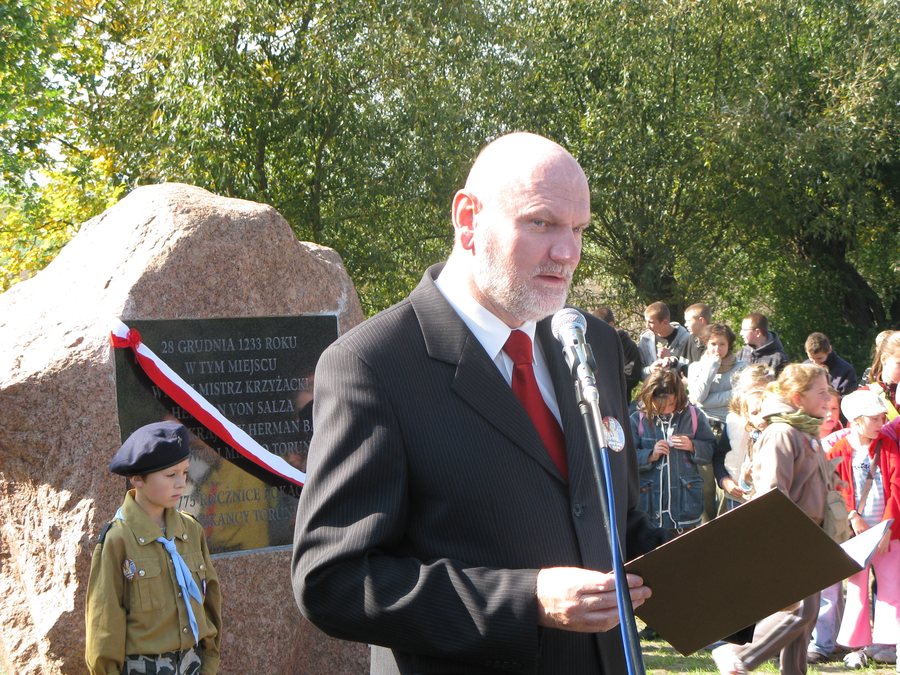
- In 2008, a seven-ton granite boulder bearing a plaque commemorating the founding of Toruń was installed next to the Volunteer Fire Brigade.
- On 27 September 2008, a commemorative oak was planted behind the boulder.
- The Toruń–Barbarka walking trail opened in 2008, was marked in red and passed through Old Toruń.
What history is associated with Old Toruń?
The early historical picture includes several elements: a Teutonic castle, a settlement and the first Toruń. The reference to more than 790 years places this local history in a broad timeframe. Another phase is precisely dated and concerns Poppo von Osterna. From 1244 to 1247, he was Land Master, based in Old Toruń; at the same time, the place was the capital castle of the Teutonic Order State.
These facts describe different aspects of the past. One mentions the castle, settlement and first Toruń; the other highlights a specific term of office and the place’s role as the capital castle at that time. When planning a cultural and historical trip, it is worth keeping these themes distinct rather than combining them into a single narrative. This makes both the place’s early history and the clearly defined period of Poppo von Osterna’s tenure recognizable.
What do the boulder, mural and oak commemorate?
The memorials refer to the founding of Toruń, but each highlights a different aspect. A seven-ton granite boulder was installed next to the Volunteer Fire Brigade in 2008. Its plaque commemorates the city’s founding. There is also a mural on the side wall of the fire station, which refers to a medieval legend: it tells of the city being founded beside a spreading oak.
On 27 September 2008, during the unveiling ceremony for the plaque, a commemorative oak was planted behind the boulder. The three motifs can be distinguished: the boulder bears the plaque, the mural draws on a legend, and the oak is connected with the commemorative date. Together, they refer to the city’s founding, without their individual meanings needing to be treated as identical.
Which routes pass through Old Toruń?
The red-marked Toruń–Barbarka walking trail opened in 2008 and passed through Old Toruń. Another route runs from Toruń via Przysiek, Stawy Przysieckie, Old Toruń, Zławieś Wielka, Skłudzewo and Czarnowo to Górsk. The return route to Toruń follows Old Toruń, the embankment and Szosa Bydgoska. This gives you both a specifically named walking trail and a route through several places with a return leg.
If you plan to include a tour in your itinerary, check the current route beforehand. This will let you tailor your plans to the route that interests you. The town’s historical role, its memorials and its routes offer different points of interest: some lead into the past, while others describe routes through or via Old Toruń.
How can you organize these themes when planning your trip?
For a cultural and historical focus, the information about the town’s early history and the memorials offer different perspectives: the castle, settlement and first Toruń sit alongside the commemoration of the city’s founding. For a trip that includes walking, the routes provide a separate point of reference. First consider which of these themes matters most to you; then you can make further travel decisions based on your own interests.
Discover more destinations: Lubicz Dolny, Ostaszewo, Czernikowo, Turzno, Cierpice, Różankowo, Gutowo and Chełmża.
FAQ
What historical role did Old Toruń play?
More than 790 years ago, a Teutonic castle, a settlement and the first Toruń stood here. From 1244 to 1247, Old Toruń was the seat of Land Master Poppo von Osterna and the capital castle of the Teutonic Order State.
Which memorials commemorate the founding of Toruń?
A seven-ton granite boulder bearing a commemorative plaque was installed next to the Volunteer Fire Brigade. The mural on its side wall draws on a medieval legend; a commemorative oak was planted behind the boulder on 27 September 2008.
What route information is available for Old Toruń?
The red-marked Toruń–Barbarka walking trail, opened in 2008, passed through the town. Another route runs through several places to Górsk and returns to Toruń via Old Toruń, the embankment and Szosa Bydgoska.
For the broader travel overview: Toruński.

