
Turzno: Palace Park, Chapel and Chopin’s History
Accommodation in Turzno
Turzno brings together a Neoclassical chapel in the town centre, a landscaped park, a Neo-Gothic garden pavilion and Chopin’s visits. For your trip planning, cultural history and nature take centre stage, with cycling and a specific PTTK hiking excursion adding to the picture. The Pałac Romantyczny hotel and conference complex is also part of the town’s history.
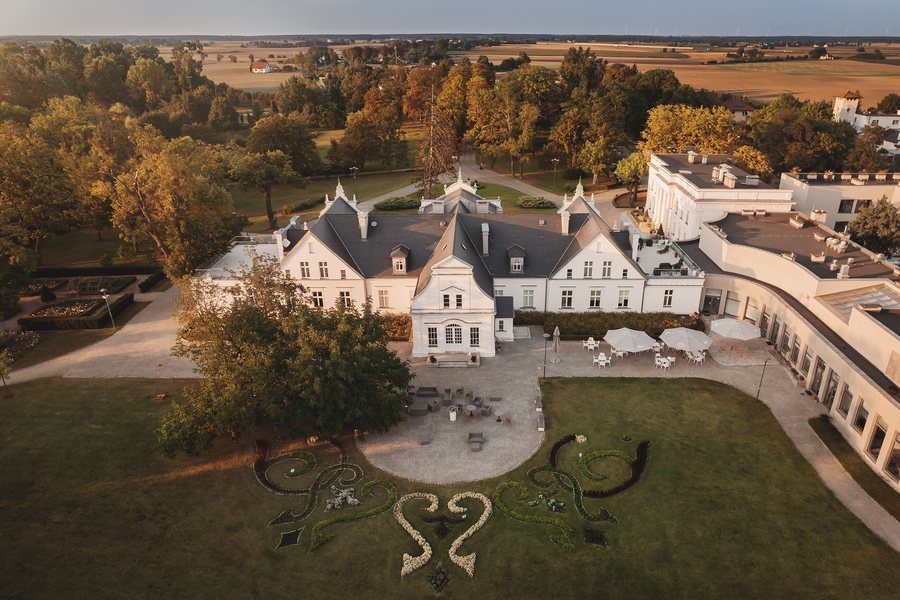
Turzno at a glance
- The Neoclassical chapel in the town centre was founded in 1800 by the Jeżewski family.
- The English landscape park surrounding the palace covers 16 hectares and contains 54 coniferous and deciduous tree species.
- Fryderyk Chopin visited Turzno once in 1825 and once in 1827.
What do the chapel, pavilion and Chopin’s visits tell us?
The chapel and pavilion differ in location, style and date of construction. The chapel stands in the town centre and was founded in 1800 by the Jeżewski family. Neoclassical describes a style inspired by antiquity; the term helps distinguish it from the Neo-Gothic garden pavilion. Zameczek stands behind the palace and was built around 1850 under Count Augustyn Działowski. It fell into disrepair after the war and was rebuilt in 2011. Today, it houses a chapel where weddings are often held.
Fryderyk Chopin visited Turzno once in 1825 and once in 1827. The years 1825 and 1827 fall between the founding of the chapel and the construction of the pavilion. The three references can therefore be read as successive milestones: the chapel of 1800, Chopin’s visits and the construction around 1850.
What makes the landscape park interesting?
The English landscape park surrounding the palace covers 16 hectares. It contains more than 50 species of coniferous and deciduous trees; the exact total is 54. Examples include Douglas fir, Caucasian wingnut, American tulip tree and swamp oak. The area and number of species describe two different aspects of the park: its 16 hectares indicate its size, while the tree species bring its botanical diversity to life. The park dates from the first half of the 19th century. Its origins therefore fall within the same broad period as Chopin’s visits in 1825 and 1827.
On a PTTK hiking excursion on 8 July 2026, participants walked along the paths of the palace park. Along the way, they completed tasks from the quest “Turzna historia niezwykła” to learn about the town’s history. This combination means the historical connection is not limited to the chapels and pavilion: during this excursion, it was also explored through activities along the route.
What role do the cycle route and accommodation play?
The Różankowo–Lulkowo and Kamionki Małe–Turzno cycle route was officially opened in Turzno on 10 September 2020. Cycling adds another travel theme alongside culture and the park. If you are considering the cycle route for a trip today, check the current condition of the route beforehand. The Pałac Romantyczny hotel and conference complex was officially opened on 14 February 2012. This opening date adds a more recent time marker alongside the chapel of 1800 and Chopin’s 19th-century visits. Turzno thus brings together older cultural history, a park landscape and more recent hotel history.
Discover more destinations: Chełmża, Dzikowo, Zławieś Wielka, Stary Toruń, Ostaszewo, Rogówko, Łysomice, Różankowo.
FAQ
When did Fryderyk Chopin visit Turzno?
He visited Turzno once in 1825 and once in 1827.
What makes the landscape park distinctive?
The English park surrounding the palace covers 16 hectares and contains 54 species of coniferous and deciduous trees, including Douglas fir, Caucasian wingnut, American tulip tree and swamp oak.
What is known about the Zameczek garden pavilion?
It was built around 1850 under Count Augustyn Działowski, fell into disrepair after the war, was rebuilt in 2011 and today houses a chapel where weddings are often held.
For the broader travel overview: Toruński.

