
Dzikowo: Wooden cottages and a nearby kettle lake
Accommodation in Dzikowo
Dzikowo combines rural architectural history with a geological feature in the surrounding area; its woodland landscape is best understood at the level of the Gmina Obrowo. This lets you distinguish the destination’s cultural and natural features.
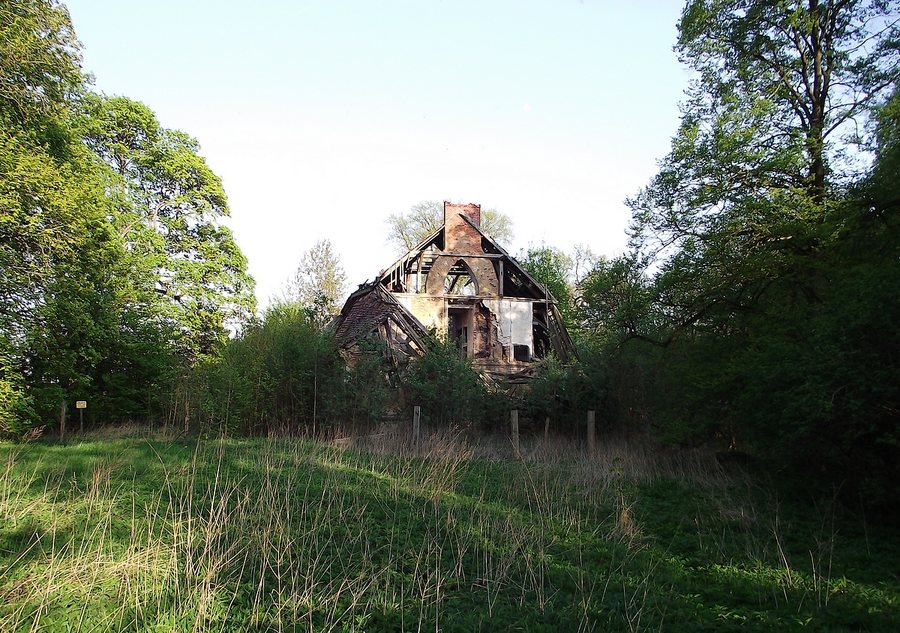
Quick facts about Dzikowo
- Dzikowo has wooden cottages dating from the late 19th and early 20th centuries, including one with a thatched roof.
- The largest woodland areas in the Gmina Obrowo lie in the south and west, including areas around Dzikowo.
- Nearby Jezioro Dzikowo is a kettle lake with a so-called double bottom.
How does Dzikowo fit into the landscape?
The largest woodland areas in the Gmina Obrowo lie in the south and west. These include areas around the villages of Sąsieczno, Osiek nad Wisłą, Dzikowo, Silno, Smogorzewiec, Stajenczynki, and Obory. The woodland extends across several village areas and should be understood at the municipal level. This scale is useful when planning your trip: Dzikowo is one of the areas named, while the forests form part of the wider landscape of the Gmina. This helps you distinguish a nature feature shared across the municipality from specific features within the village.
What wooden cottages are there in Dzikowo?
Dzikowo has wooden cottages dating from the late 19th and early 20th centuries; one of them has a thatched roof. The dates place the buildings in their historical context, while the roofing material highlights a specific architectural detail. For travelers interested in rural architecture, these offer two distinct points of interest: the cottages’ period and the distinctive roofing of one example. This allows you to consider the village’s cultural heritage alongside its natural and geological features.
What characterizes nearby Jezioro Dzikowo?
Jezioro Dzikowo is in the surrounding area. It is a kettle lake formed during an ice age when blocks of ice melted in a depression. It is also characterized by a so-called double bottom. The term “kettle lake” refers to how it formed, while “double bottom” describes another feature of the lake. Its geological history differs considerably in timescale from that of the wooden cottages: the lake formed during an ice age, while the buildings date from the late 19th and early 20th centuries. Natural history and architectural history therefore sit side by side on different timescales.
What themes can guide your travel decision?
For an initial comparison, you can distinguish three geographical points of reference: the wooden cottages in Dzikowo itself, the nearby lake, and the woodland areas in the Gmina Obrowo. If you are especially interested in rural architecture, the building style is the main focus; if you are interested in geology, the lake offers a different perspective. The woodlands, in turn, relate to the wider municipal area. This distinction helps you choose how to explore Dzikowo based on your own cultural and natural interests, without conflating the different themes.
Discover more destinations: Złotoria, Torun, Zławieś Wielka, Chełmża, Lulkowo, Czernikowo, Stary Toruń, Ostaszewo.
FAQ
What period do the wooden cottages date from?
They date from the late 19th and early 20th centuries. One of the cottages has a thatched roof.
How was Jezioro Dzikowo formed?
During an ice age, blocks of ice melted in a depression. Jezioro Dzikowo is a kettle lake and has a so-called double bottom.
Where are the largest woodland areas?
They lie in the south and west of the Gmina Obrowo. Dzikowo is among the village areas mentioned.
Go to the broader travel overview: Toruński.

