
Discover Uście Gorlickie
Accommodation in Uście Gorlickie
Uście Gorlickie offers specific points of interest for a trip focused on culture and routes: the blue-marked cross-border cycling trail passes through the village, a circular hike starts here, and the Greek Catholic parish church of St. Paraskevi dates from 1786.
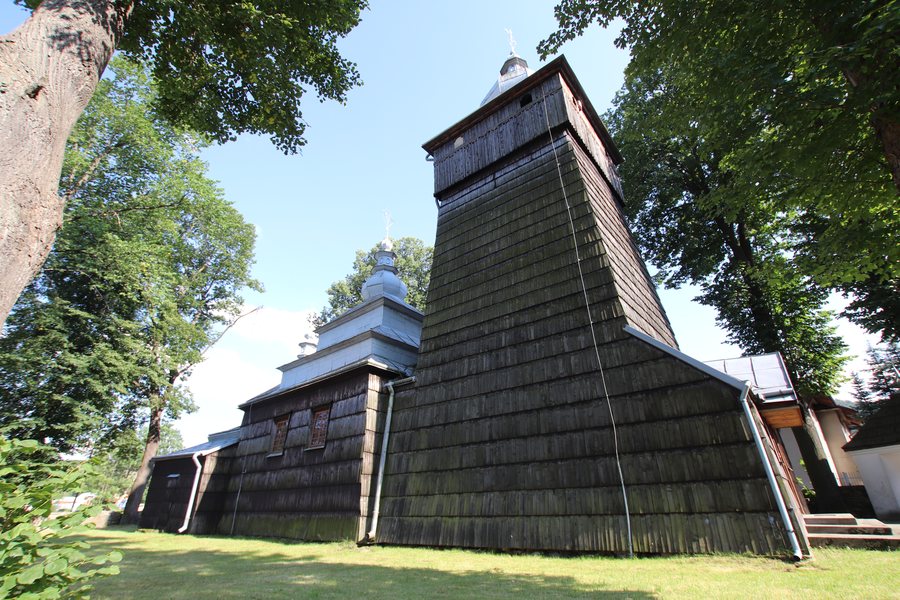 Uście Gorlickie - St. Paraskevi Greek Catholic church
Photo: Andrzej Otrębski via Wikimedia Commons, CC BY-SA 4.0
Uście Gorlickie - St. Paraskevi Greek Catholic church
Photo: Andrzej Otrębski via Wikimedia Commons, CC BY-SA 4.0
Quick facts about Uście Gorlickie
- The blue-marked cross-border cycling trail passes through Uście Gorlickie; check the current signage and conditions locally.
- The Uście Gorlickie–Sucha Homola–Uście Gorlickie circular hike starts in Uście Gorlickie. Check local conditions before setting out.
- The Greek Catholic parish church of St. Paraskevi is a West Lemko wooden church dating from 1786.
- A total of 59 people are buried at World War I Cemetery No. 57.
Which routes can you include in your plans?
For cyclists, the route of the blue-marked cross-border cycling trail is a specific point of reference: it passes through Uście Gorlickie. Before your trip, check the current signage and local conditions.
The Uście Gorlickie–Sucha Homola–Uście Gorlickie circular hike offers a different perspective. It starts in Uście Gorlickie and is identified as a circular hike. Unlike the cycling route, its starting point is explicitly stated. If you compare the two options, you can decide whether to consider a cycling route that passes through the village or a hike that starts in Uście Gorlickie. Check local conditions before setting out.
What makes the church and cemetery distinctive?
The Greek Catholic parish church of St. Paraskevi is a West Lemko wooden church dating from 1786. Its log construction and shingled walls give the building a distinctive form. The figurative and ornamental polychrome decoration in the Church of St. Paraskeva, which dates from 1938, is another feature. The construction date, structural design, and interior decoration offer different points of reference if you are interested in the village’s architecture and furnishings.
The church’s history of use also helps put it in context: Roman Catholic services were held there in the second half of the 20th century; Greek Catholic services have been held there since 1951. World War I Cemetery No. 57 adds another cultural and historical point of interest. A total of 59 people are buried there.
Which local details suit your travel interests?
If you are mainly interested in cycling or hiking routes, the different details about the route and starting point offer an initial guide. For cultural and historical interests, the focus is instead on the wooden church and its features, and on the history of the cemetery.
Discover more destinations: Gorlice, Ropa, Ropki, Lipinki, Biecz, Hańczowa, Stróżówka and Krzywa.
FAQ
Which cycling route passes through Uście Gorlickie?
The blue-marked cross-border cycling trail passes through Uście Gorlickie. Check the current signage and conditions locally.
What is known about the parish church of St. Paraskevi?
It is a West Lemko wooden church dating from 1786, with log construction and shingled walls. The figurative and ornamental polychrome decoration dates from 1938.
Where does the circular hike to Sucha Homola start?
The Uście Gorlickie–Sucha Homola–Uście Gorlickie circular hike starts in Uście Gorlickie. Check local conditions before setting out.
Go to the main travel overview: Gorlice.

