
Ropa
Accommodation in Ropa
Ropa lies in the valley of the Ropa River, surrounded by wooded hills. Buildings, an open-air exhibition and traces of the oil industry give the town a range of cultural highlights.
Ropa at a glance
Key features include the parish church of St. Michael the Archangel, a Baroque-Classical manor house and the manor farm complex. An exhibition presents miniatures of sacred and secular architecture from the Polish and Slovak parts of the Beskid Niski. The history of the oil industry is also visible: Ropa has numerous hand-dug oil wells and oil boreholes. In September, the Jarmark Świętego Michała is held in the courtyard of the manor farm complex.
What shapes the landscape and history of the town?
The Ropa River and its valley define the town’s landscape, with wooded hills all around. Travelers seeking a rural setting as well as culture will find both as distinct aspects of Ropa. The river and hills are concrete points of reference, not merely a generic landscape backdrop.
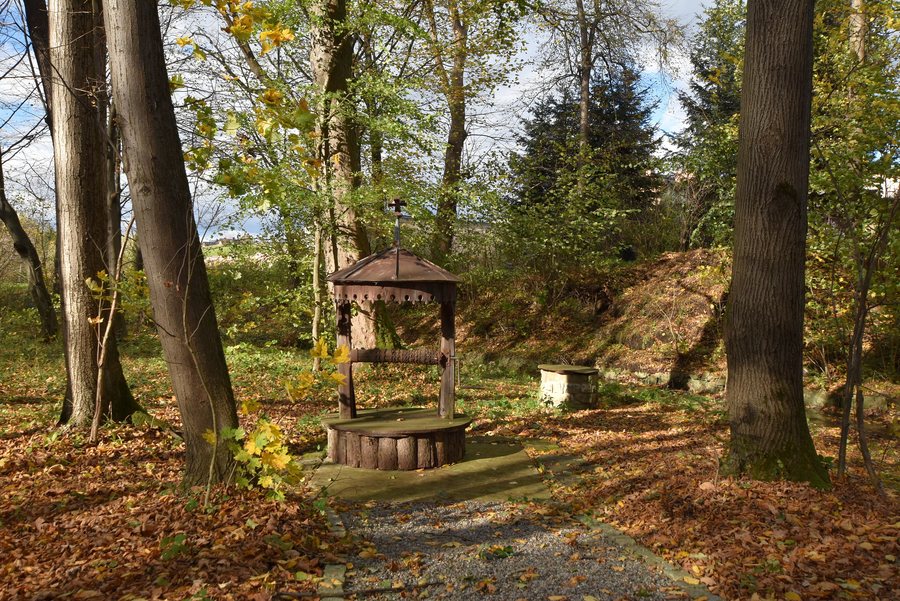
The numerous hand-dug oil wells and oil boreholes are another trace of the town’s history. Ropa lies on the Karpacko-Galicyjski Szlak Naftowy between Gorlice and Libusza. The town is therefore also part of a route devoted to the region’s oil history. The historic wells and boreholes offer a different perspective on the town than its church and manor house: here, the focus is on oil extraction.
Ropa is also on the Wawrzka–Gorlice, Dworzec PKP hiking trail. The hiking trail and the oil route are two distinct points of reference for planning a trip: one is designated as a hiking trail, the other as an oil route. The named routes can therefore be considered separately according to your interests, without combining them into a single route.
Which buildings tell the story of Ropa’s past?
The parish church of St. Michael the Archangel was built in 1761. Its two brick towers were added around 1800. The church contains, among other things, sculptures by Antoni Hybel, a local sculptor, painter and lute maker. Several aspects of the town’s history come together in this building: the church’s construction date, a later architectural addition and the work of an artist connected with the town.
The manor house also has a clearly documented building history: it was extensively remodeled in 1803 at the initiative of Stanisław Siemieński. The Baroque-Classical building stands in an English-style park. The First World War Cemetery No. 72 in Ropa, designed by Hans Mayr, and the Grunwald Monument, erected in 1910, add further historical themes to these sites. The monument takes the form of an artificial rock crowned with a cross.
What is there to discover at the manor farm complex and in the miniature park?
The courtyard of the manor farm complex features an open-air exhibition of sculptures depicting people connected with the town’s history. The complex is also surrounded by a rock garden, a bird garden and a herb garden. Those interested in local history can explore the sculpture exhibition as one way of learning about the town; the three gardens offer other distinct highlights. The courtyard is also the venue for the Jarmark Świętego Michała.
The miniature park is another open-air exhibition. It features 30 miniatures at a scale of 1:25, depicting sacred buildings and secular architecture from the Polish and Slovak parts of the Beskid Niski. The scale presents these buildings in miniature, and the selection includes both religious and non-religious architecture. The miniature park thus offers a cultural focus different from the historic buildings and sculptures in the town.
FAQ
When is the Jarmark Świętego Michała held?
The fair is held in September in the courtyard of the manor farm complex in Ropa. The program includes food tastings as well as presentations of crafts and folk arts.
What does the miniature park in Ropa feature?
The open-air exhibition comprises 30 miniatures at a scale of 1:25. They depict sacred and secular architecture from the Polish and Slovak parts of the Beskid Niski.
Which historic buildings and monuments are there in Ropa?
They include the parish church of St. Michael the Archangel, built in 1761; the manor house, extensively remodeled in 1803; the First World War Cemetery No. 72; and the Grunwald Monument, erected in 1910.
Which routes are associated with Ropa?
Ropa lies on the Karpacko-Galicyjski Szlak Naftowy between Gorlice and Libusza, as well as on the Wawrzka–Gorlice, Dworzec PKP hiking trail.
For the broader travel overview: Gorlice.

.jpg)