
Discover Szymbark: Nature and Architectural Heritage
Accommodation in Szymbark
Szymbark brings together natural features and a distinctive architectural history: a protected sycamore maple forest, a landslide lake, and historic buildings give the place a range of points of interest. If you are looking for a hotel for a trip to Szymbark, these themes can help you decide whether nature, architecture, or open-air exhibits should shape your plans.
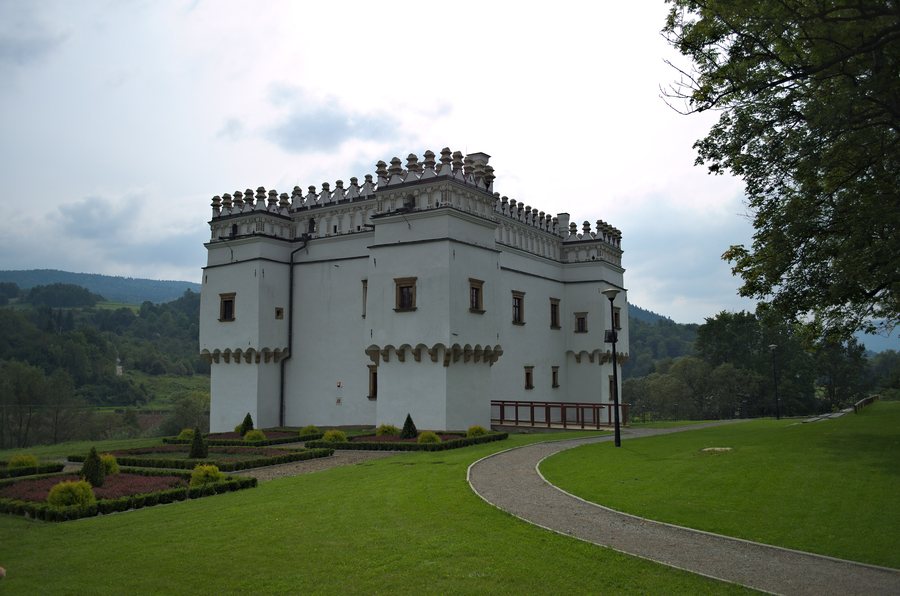
Szymbark at a glance
The Jelenia Góra Nature Reserve protects a well-preserved sycamore maple forest in Szymbark, where hart’s-tongue fern (Phyllitis scolopendrium) grows. Nearby is Beskidzkie Morskie Oko, a lake formed by the Szklarka landslide. Buildings include the wooden Church of St. Wojciech and the brick Kasztel. The educational park associated with the Skansen Wsi Pogórzańskiej features open-air exhibits and sensory gardens; a paved section of a pedestrian and cycle path was completed in 2024.
What natural features define Szymbark?
The Jelenia Góra Nature Reserve is focused on protecting a well-preserved section of sycamore maple forest. The presence of hart’s-tongue fern is a distinctive natural feature of the area and gives nature enthusiasts a specific point of interest. Beskidzkie Morskie Oko offers a different landscape story: the landslide lake was formed by Szklarka, the largest landslide in the Polish Carpathians, and lies close to the nature reserve.
The lake’s changing water level is part of how its natural character should be understood. In summer, it may dry up partly or completely; water levels can vary. The forest and the lake thus represent different natural themes: a protected area with a named plant species, and a body of water whose appearance can change seasonally.
Which buildings tell the story of Szymbark?
The Church of St. Wojciech is a wooden church built of larch and dates from 1782. Another small Orthodox church stands in the hamlet of Wólka. It is dated to 1790, although other records may give different years. The two churches offer a tangible introduction to the area’s architectural history, while the date for the church in Wólka should not be treated as undisputed.
The brick Kasztel has a different architectural profile. The two-storey building has a basement and four square corner alkierz extensions. Its richly decorated attic walls complete its description. Compared with the wooden churches, these features help identify the Kasztel as a distinct building type among the local structures, without reducing the buildings to a shared architectural form.
What else do the park and cycle path offer?
The educational park associated with the Skansen Wsi Pogórzańskiej focuses on the history of rural architecture and machinery along the Polish-Slovak border, and features open-air exhibits and sensory gardens. Its exhibits are adapted to the needs of people with disabilities. This statement refers to the exhibits and describes their adaptations; it does not make a blanket claim about every part of the site.
Cycling is another theme: in May 2024, a 153.52-metre paved section of a pedestrian and cycle path was completed in Szymbark. It is part of a cycle route running from the Szymbark stop to the municipal boundary of Ropa. The section mentioned is one part of the route; this does not mean the entire planned route has been completed. If you would like to include it in your current plans, check its usability beforehand.
Consider which of these features matter for your trip, then look for hotels in Szymbark. This keeps your choice aligned with your interests rather than assuming that a single attraction points to a particular place to stay.
Discover more destinations: Krzywa, Sękowa, Kwiatonowice, Strzeszyn, Lipinki, Klimkówka, Czarne, Wysowa-Zdrój.
FAQ
What is Beskidzkie Morskie Oko?
It is a landslide lake in Szymbark, near the Jelenia Góra Nature Reserve. It was formed by the Szklarka landslide; in summer, it may dry up partly or completely.
Which historic buildings are mentioned in Szymbark?
They include the wooden Church of St. Wojciech, built of larch in 1782; the small Orthodox church in Wólka, dated to 1790; and the brick Kasztel with four square corner extensions.
What does the educational park include?
The park associated with the Skansen Wsi Pogórzańskiej features open-air exhibits and sensory gardens. Its exhibits are adapted to the needs of people with disabilities.
Has the entire cycle route been completed?
The description refers to a 153.52-metre paved section that is part of the cycle route from the Szymbark stop to the municipal boundary of Ropa. This information concerns that section.
For the broader travel overview: Gorlice.

