
Discover Tymbark
Accommodation in Tymbark
Tymbark offers cultural and historical landmarks, from a baptismal font dating to 1541 to routes with clearly identified stops. If you are considering the town as a travel destination, you can plan around your interests: church art, historical remembrance, or a route associated with Karol Wojtyła.
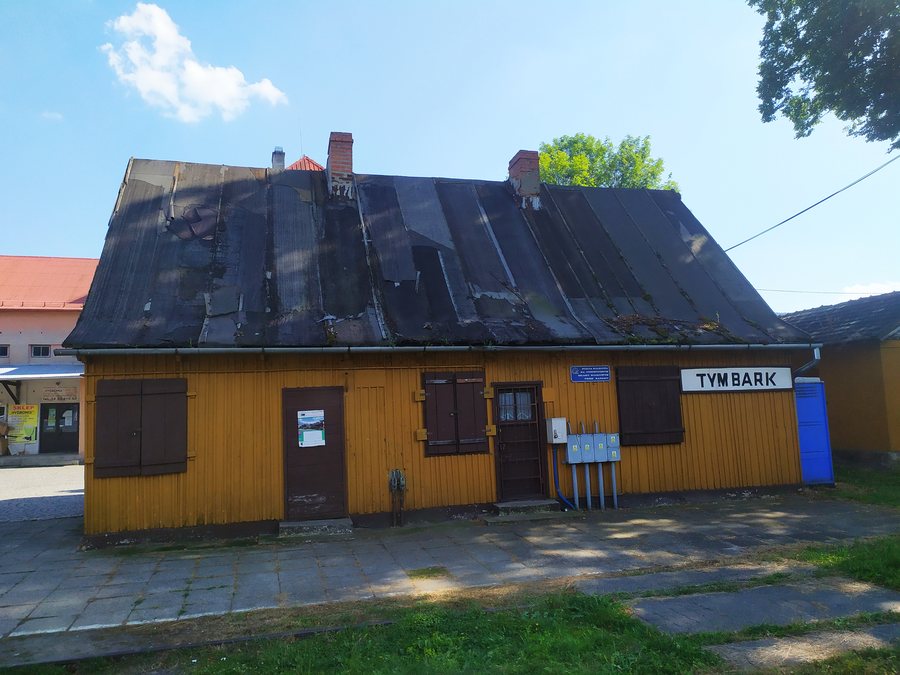
Tymbark at a glance
- The church in Tymbark has a Gothic-Renaissance baptismal font dating to 1541, which comes from the old church.
- A branch of the Szlak Papieski leads from Tymbark via Łopień to Chyszówki.
- The market square is the starting and ending point of the route about the history of the German occupation.
- The Tymbark Public Municipal Library has a lending service, several reading rooms, and conference and exhibition rooms.
- A sandstone chapel donated by residents was built in 1870 and moved to its current location beside the parish church in 1975.
What cultural traces can you discover in Tymbark?
The baptismal font in the church links a specific year with a reference to its predecessor building: it comes from the old church and is classified as Gothic-Renaissance in style. For visitors interested in sacred art, this identifies a particular object rather than focusing only on a general church visit.
The sandstone chapel also has a clearly defined history. Residents of Tymbark donated it, and it was built in 1870. Its current location beside the parish church dates from its relocation in 1975. The two years mark different events: 1870 its construction, and 1975 its move. This makes it possible to place the chapel in its historical context without conflating its building history with the origins of the baptismal font.
Military Cemetery No. 365 was established as a separate area beside the existing parish cemetery. Its location is therefore precisely described: it is next to the cemetery, not part of the parish church. Together with the church objects, it offers another way to explore the town’s history.
How do the routes in Tymbark differ?
If you are interested in routes, it helps to distinguish between two different themes. A branch of the Szlak Papieski leads from Tymbark via Łopień to Chyszówki. Information boards with maps of the routes Karol Wojtyła traveled were installed beside the railway station, on the market square, and beside the SKR. These landmarks connect the theme to several named locations in Tymbark.
Another route is devoted to the history of the German occupation. The market square is its central point and also its starting and ending point. From there, the route leads to several historic sites from that period. It comprises six stops about the underground activities of residents of Tymbark and the surrounding area from 1939 to 1945. Each stop has information boards and photographs from the occupation period describing important events at that location. If you are planning your visit around these boards, check the current situation on site beforehand.
The two routes therefore have different focuses: one leads via Łopień to Chyszówki; the other links historic sites through its stops and the market square. This distinction can help you decide in advance which theme you would like to give more consideration to when planning your trip. No information about walking times or current trail conditions is available here, so do not assume a particular duration based solely on the stops or locations mentioned.
What facilities and landmarks are there?
The Tymbark Public Municipal Library, named after Captain Tadeusz Paolone, includes a lending service, a reading room, an internet reading room, a national memorial site, a conference room and an exhibition room. If you are planning a visit, check the current visitor regulations in advance. The areas listed show the range of functions the library brings together, but do not in themselves indicate specific opening hours.
The market square is also an important landmark: it is both the center and the starting and ending point of the route about the history of the occupation. This provides a clear location for planning, while the stops structure the route’s historical content. This lets you consider separately which theme interests you and which facilities or landmarks you would like to visit.
Discover more destinations
Discover more destinations: Jodłownik, Szczawa, Poręba Wielka, Kasina Wielka, Niedzwiedz K Limanowej, Mszana Dolna, Raba Nizna, Kamionka Mała.
FAQ
Where does the branch of the Szlak Papieski lead?
It leads from Tymbark via Łopień to Chyszówki.
What can you learn on the route about the history of the German occupation?
Its six stops cover the underground activities of residents of Tymbark and the surrounding area from 1939 to 1945. Information boards and photographs describe important events at the respective locations.
What facilities does the municipal library have?
The library includes, among other things, a lending service, two reading rooms, a national memorial site, and conference and exhibition rooms. Check the current visitor regulations before your visit.
Go to the main travel overview: Limanowa.

