
Podwilk: Nature Conservation and Church Art
Accommodation in Podwilk
Podwilk can be explored through two distinct themes: the Bembeńskie Nature Reserve, with its protected plant communities, and St. Martin’s Church, with its distinctive architectural and interior features. This can help you decide when planning your trip whether you are more interested in nature, religious architecture, or both.
Podwilk at a glance
- The Bembeńskie Nature Reserve was established in 2001.
- It covers 40.54 hectares and consists of two separate parts.
- Protected plant species include the soft-haired knapweed.
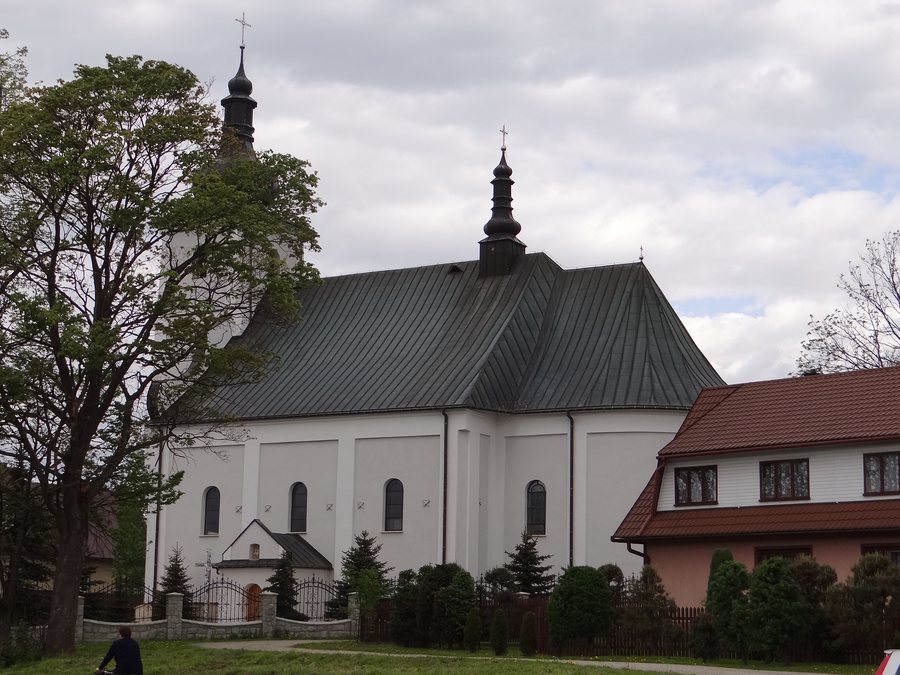
- St. Martin’s Church has bulbous tent roofs on the tower and roof turrets.
- A bell dating from 1702 hangs in the church tower.
What does the Bembeńskie Nature Reserve protect?
The nature reserve was established to protect mountain spruce stands, black and grey alders, and protected and rare subalpine herbaceous plant species. The reason for its protection therefore encompasses both specific trees and a group of plants classified by their altitudinal zone. For nature enthusiasts, the area offers a tangible connection to the plant communities protected in Podwilk.
At 40.54 hectares and divided into two separate parts, the area is described precisely in spatial terms. Its size and division add two useful details to the reason for its protection: they show which area the name refers to and that it does not consist of one continuous tract. The soft-haired knapweed is a specifically named protected species. It provides a concrete example of the general reference to rare and protected plants.
If nature and plant life are a particular focus when you travel, you can use this information to guide your choice of theme. The nature reserve offers a different way of exploring from the architectural and art-historical details of the church.
What are the distinctive features of St. Martin’s Church?
The bulbous tent roofs on the tower and roof turrets of St. Martin’s Church stand out as a characteristic architectural feature. They are a clearly identifiable element of the church’s design and offer a concrete starting point if you are interested in religious architecture. They can also be considered alongside the surviving interior features, although the two topics tell different stories: the roof shapes the building’s appearance, while the surviving objects offer insight into its former furnishings.
These surviving features include a pulpit with a relief of Saint John the Baptist, a side altar, and two Rococo confessionals. There is also a stucco relief of Saint Wendelin above the sacristy door. These details make the church interesting to culture enthusiasts beyond its exterior form. You can consider different aspects: the furnishings mentioned, the relief above the sacristy door, and the design of the tower and roof turrets.
Another detail that can be dated is in the tower: a bell dating from 1702 hangs among bells from the interwar period. It is half a metre in diameter. This combination of a specifically dated bell and bells from a later period adds another aspect of church history to the architectural features.
How should you choose the focus of your trip?
The nature reserve offers a clearly defined focus on protected plant communities; St. Martin’s Church offers a cultural focus encompassing architecture, furnishings, and a bell. If both themes appeal to you, you can consider them together without reducing them to the same type of trip. You can then search for a hotel in Podwilk and compare accommodation options based on your own travel plans.
Discover more destinations: Czorsztyn, Łapsze Niżne, Grywałd, Rabka-Zdrój, Raba Wyżna, Dursztyn, Chyżne, Mizerna.
FAQ
When was the Bembeńskie Nature Reserve established?
It was established in 2001 to protect specific trees and protected and rare subalpine herbaceous plant species.
Which protected plant species is named for the area?
Protected plant species include the soft-haired knapweed.
What is known about the bell in the tower of St. Martin’s Church?
A bell dating from 1702 hangs among bells from the interwar period and is half a metre in diameter.
Go to the regional travel overview: Nowotarski.

