
Discover Juszczyn
Accommodation in Juszczyn
Juszczyn brings together the landscape of the Pasmo Policy range and traces of a long local history.
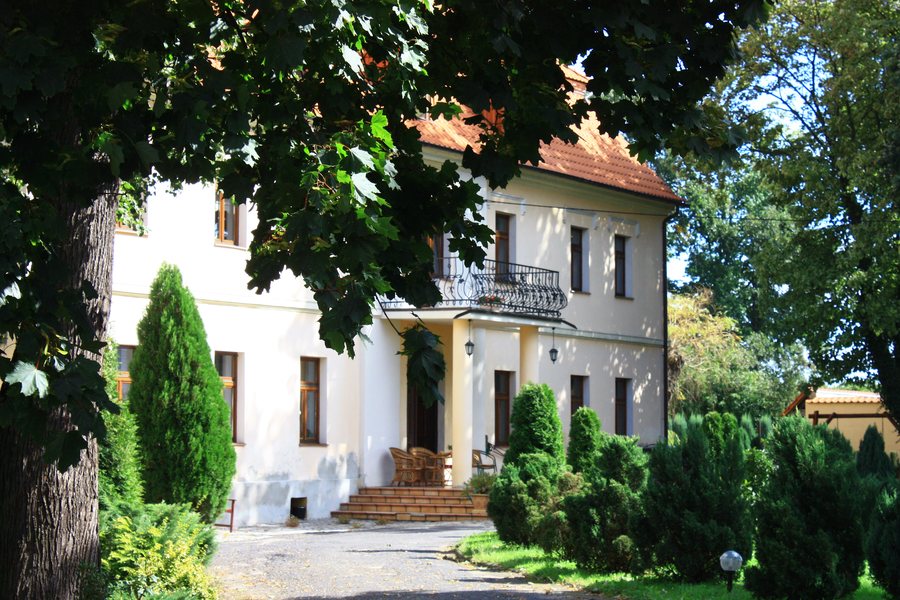
Juszczyn at a glance
Juszczyn lies in the Pasmo Policy range and stretches picturesquely along the valley of the Skawa River. In the upper part of the village, the side valley of the Cadyńka stream runs through the area; Juszczyn Polany lies at the foot of Mount Naroże. Forested slopes, clearings, and paths define the surroundings. Local points of interest also include a former glassworks, the parish church of Our Lady of Consolation, and historic chapels and roadside shrines.
What kind of landscape defines Juszczyn?
Its setting in the Skawa Valley and the forested mountain slopes give Juszczyn a rural character. The valley of the Cadyńka stream is dotted with numerous picturesque clearings and paths. They invite visitors to relax and unwind throughout the year. If landscape and peaceful impressions are what you are seeking on your trip, you can take these features into account when choosing your destination without equating Juszczyn with a single viewpoint or a specific route.
The settlement pattern is also part of the local landscape: Juszczyn retains clear traces of an earlier pastoral and forest-clearing settlement. Separate hamlets lie in the woods. The place name alone therefore does not refer to a single compact area; the locations described range from the lower part to higher settlements and the Cadyńka side valley. Juszczyn Polany stretches along the stream at the foot of Naroże.
What historical traces can you find in Juszczyn?
A glassworks stood at Jędrzejowa Rola, in the upper part of Juszczyn in the Cadyńka side valley, during the 17th and 18th centuries. It was located at the site of today’s Hucisko. Glass waste and brick fragments from the former furnaces can be found in the ground at Hucisko. These remains point to the area’s former glassmaking and provide a different historical focus from the religious buildings and landmarks in the village.
A much later chapter is commemorated by the Pomnik Straconych monument. It commemorates the shooting of 13 people at Osiedle Bory during the Second World War. The memorial is thus connected to a specific event and location. When exploring Juszczyn’s history, this can be distinguished from the traces of the earlier pastoral and forest-clearing settlement and the glassworks.
What churches, chapels, and roadside landmarks are there?
The parish church of Our Lady of Consolation stands in the lower part of Juszczyn. Its modern architecture dates from the 1970s. The main altar features an approximately 170-year-old image of the Virgin Mary from the so-called Żywiec school. Plaques on the bell tower wall commemorate the work of Solidarity chaplain Adolf Chojnacki. The church thus brings together architectural, religious, and commemorative associations. Nearby stands a stone column chapel with an iron cast of the Crucifixion scene dating from the 19th century.
Other religious landmarks are located in different parts of the village. At the upper edge of the continuous built-up area in Osiedle Zgudowa stands an old house chapel dating from the first half of the 19th century. Inside is a stone figure of Christ falling under the cross. In Osiedle Bory stands a wayside shrine depicting Christ, also from the first half of the 19th century. In Osiedle Mirochowe there is a wayside shrine depicting Christ crucified. It was erected by residents of the Mirochowa, Kachlowa, and Majchrzakowa settlements.
There is also a brick chapel on the way to Juszczyn Polany, with a stone statue of Christ falling under the cross from the first half of the 19th century. If you are interested in religious art and local memorials, you can take these different motifs and locations into account when exploring Juszczyn.
Village areas and route
The place names help distinguish the areas described: the parish church is in the lower part, Hucisko is in the upper area at the site of the former glassworks, and Juszczyn Polany extends along the Cadyńka. At the upper edge of the continuous built-up area, the yellow hiking trail crosses a bend in the paved road near Osiedle Zgudowa. If you are looking for a hotel or other accommodation in Juszczyn, you can first decide whether landscape, local history, or religious heritage is the main focus of your trip. Find more village pages for Jordanów, Zachełmna, Sidzina, Tarnawa Dolna, Lachy, Kurów, Białka, and Budzów.
FAQ
Where is Juszczyn?
Juszczyn lies in the Pasmo Policy range and along the Skawa Valley.
What traces recall the former glassworks?
Glass waste and brick fragments from the former furnaces can be found in the ground at Hucisko.
Where does the yellow hiking trail cross a paved road?
At the upper edge of Juszczyn’s continuous built-up area, by a bend in the road near Osiedle Zgudowa.
To the broader travel overview: Sucha.

