
Discover Sidzina
Accommodation in Sidzina
You can get to know Sidzina through its distinctive local features: the open-air museum, the church in the center, prominent oak trees and details about two hiking trails offer different points of interest. Kołoc sidziński adds a named savory specialty to the mix.
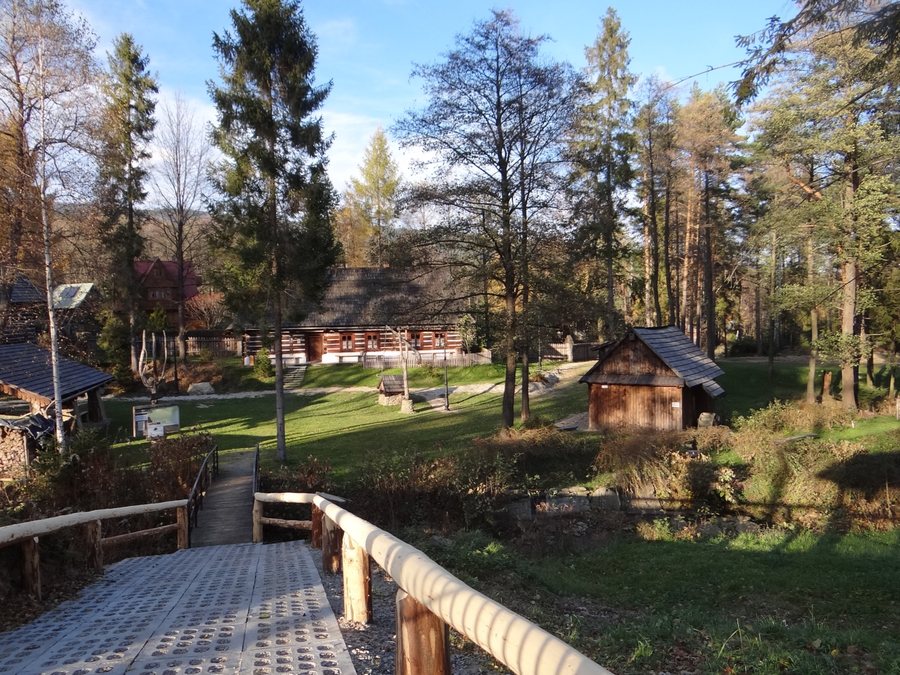
Sidzina at a glance
Skansen w Sidzinie (the open-air museum in Sidzina) is located in Binkówka by the Kamycko stream and has been in continuous operation since 1963. St. Nicholas Parish Church stands in the center; it dates from 1825 and was built in the so-called Josephine style.
The blue hiking trail passes the church, an oak tree and an obelisk dating from 1963. The obelisk commemorates the 400th anniversary of the documented founding of the village. The green hiking trail also starts in Sidzina. The main bus stop in the center is traditionally called Sidzina-dąb.
Which cultural sites and stories shape Sidzina?
For a cultural focus, you can visit the open-air museum and St. Nicholas Parish Church. The museum’s connection to the area goes hand in hand with a long history of operation: it has been in continuous operation since 1963. Its location in Binkówka by the Kamycko stream also provides a specific point of reference within Sidzina.
The church adds a different historical dimension. It dates from 1825, and its architecture is attributed to the so-called Josephine style. The obelisk along the blue hiking trail also points to the village’s history: the monument, erected in 1963, commemorates the 400th anniversary of the documented founding of the village. Together, the church, open-air museum and memorial offer different ways to explore Sidzina’s history.
What is known about the hiking trails?
The information about the two hiking trails helps distinguish their respective features. In Sidzina, the blue trail passes the church, an oak tree and the obelisk. If you are interested in combining hiking with local history, you will find several specific points of interest along this route.
The green hiking trail starts in Sidzina. For current trail conditions, it is advisable to check the local signs. When planning, you can treat the blue and green trails as different points of reference: several landmarks are named along the blue trail, while the green trail is noted as starting in Sidzina.
What do local specialties and place names tell us?
Kołoc sidziński is a savory, well-seasoned cake resembling a round loaf of bread, made from cheese dough and bread dough. The name refers to a local dish with an unusual combination of two types of dough. It adds a local culinary dimension to your trip planning.
The traditional name Sidzina-dąb is also a useful detail for finding your way: that is the name of the main bus stop in the center. If you are looking for accommodation in Sidzina, you can first consider whether culture, hiking trails, local cuisine or getting around the center is the main priority for your trip. Then compare the details provided by each accommodation.
Discover more destinations: Krzeszów, Maków Podhalański, Lachowice, Hucisko, Zachełmna, Jordanów, Juszczyn, Zembrzyce.
FAQ
Where is Skansen w Sidzinie?
The open-air museum is in Binkówka, Sidzina, by the Kamycko stream. It has been in continuous operation since 1963.
What does the blue hiking trail in Sidzina pass?
It passes the church, an oak tree and the obelisk dating from 1963. The obelisk commemorates the 400th anniversary of the documented founding of the village.
What is Kołoc sidziński?
It is a savory, well-seasoned cake resembling a round loaf of bread, made from cheese dough and bread dough.
What is the main bus stop in the center called?
It is traditionally called Sidzina-dąb.
Go to the higher-level travel overview: Sucha.

