
Tarnawa Dolna – Excursions and Church History
Accommodation in Tarnawa Dolna
Tarnawa Dolna offers ideas for travel plans that include excursions along forest trails and an interest in local history. The village stretches along the Tarnawka stream; its history dates back to the 14th century.
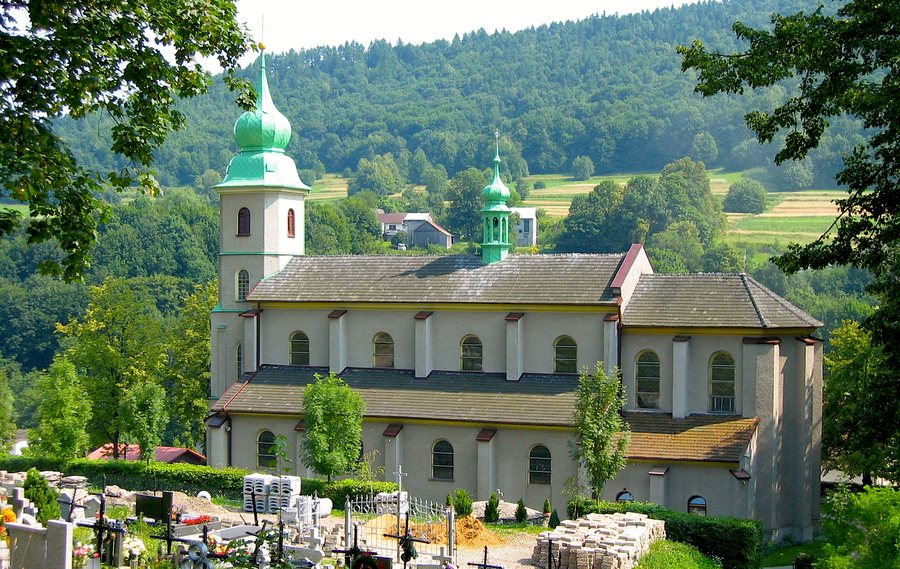
Tarnawa Dolna at a glance
- Tarnawa Dolna was established in the 14th century during the settlement of the Skawa Valley.
- The village stretches along the Tarnawka stream.
- It is a starting point for excursions along forest trails to Prorokowa Góra, Tarnawska Góra and Leskowiec.
- The present-day brick Church of St. John Cantius was built between 1878 and 1882.
Which excursion destinations can you include in your plans?
Tarnawa Dolna is a starting point for excursions along forest trails to Prorokowa Góra, Tarnawska Góra and Leskowiec. These three names give you specific destinations to consider as you plan, if you would like to include nature excursions in your trip. The forest trails provide a common setting for the excursion options described; you can treat the named destinations as individual landmarks.
When structuring your days, you can first decide which of these destinations interests you. This makes choosing your destinations a separate step in your planning: you can use their names as a guide and make excursions one of the focuses of your stay, without conflating them with the village’s cultural and historical heritage.
What defines the landscape and local history?
The Tarnawka stream is a notable geographical landmark: Tarnawa Dolna stretches along its course. Together with the village’s history, this provides a concise framework for understanding the local area. Tarnawa Dolna was established in the 14th century during the settlement of the Skawa Valley.
For your travel plans, the landscape and history offer different perspectives on the same destination. If you prefer excursions, you can keep the three named destinations in mind; if you are interested in the past, the church and historical objects offer specific points of interest.
What historical details does the church offer?
The present-day brick Church of St. John Cantius was built between 1878 and 1882 and consecrated by Bishop Albin Dunajewski on 3 September 1882. It has a three-nave layout. The presbytery is narrower than the nave and ends in a pentagonal apse.
The church contains a late Baroque altar cross donated by the Tarnowski family. It also houses the painting “Zwiastowanie,” painted by Józef Maultz in 1846. A stone baptismal font dates from the first half of the 19th century.
A statue of St. Anthony in Tarnawa Dolna also belongs to the village’s history and is dated to the 18th century. Together with the information about the church, it offers another cultural and historical perspective. When comparing accommodations, you can keep your preferred focus for the trip in mind: excursions along forest trails, the landscape by the Tarnawka stream, or the village’s history and architecture.
Discover more destinations: Jordanów, Krzeszów, Juszczyn, Bienkówka, Kurów, Maków Podhalański, Sidzina and Zembrzyce.
FAQ
Which destinations are named for excursions along forest trails?
The destinations named from Tarnawa Dolna are Prorokowa Góra, Tarnawska Góra and Leskowiec.
When was the Church of St. John Cantius built and consecrated?
The present-day brick church was built between 1878 and 1882. It was consecrated by Bishop Albin Dunajewski on 3 September 1882.
Which historical objects are associated with Tarnawa Dolna?
The church contains a late Baroque altar cross donated by the Tarnowski family, the painting “Zwiastowanie,” painted by Józef Maultz in 1846, and a stone baptismal font from the first half of the 19th century. A statue of St. Anthony in Tarnawa Dolna dates from the 18th century.
For the broader travel overview: Sucha.

