
Łowicz: Old Town, Architecture and Folklore
Accommodation in Łowicz
Łowicz brings together distinctive Old Town squares, sacred architecture and Księżacy folklore.
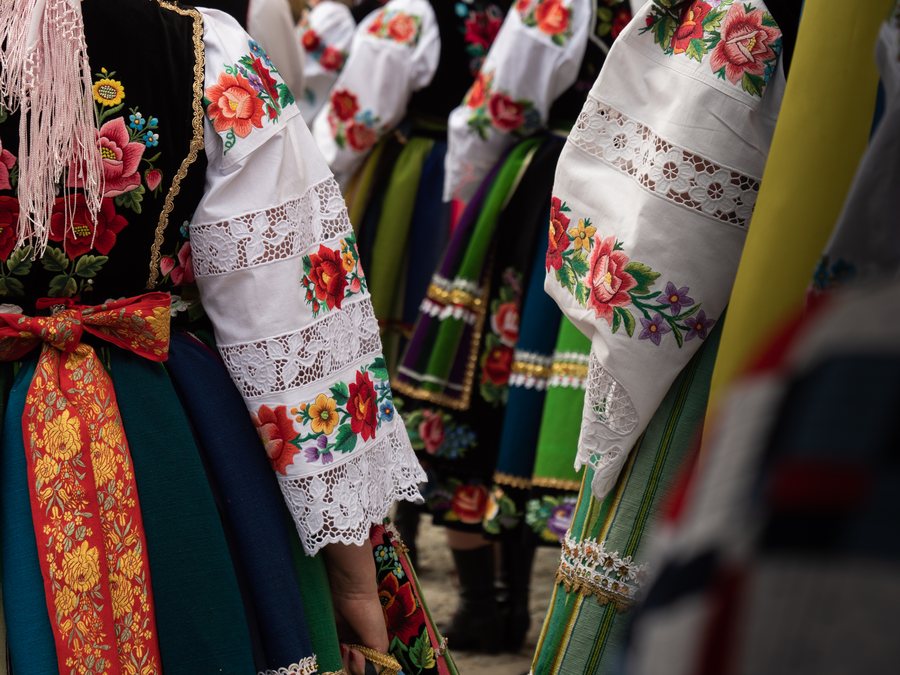 File:Łowicz traditional costume, Poland 01.jpg
Photo: Emilia Wiśniewska via Wikimedia Commons, CC BY-SA 4.0
Łowicz at a glance
- Stary Rynek is the heart of Łowicz’s Old Town; among the landmarks there are Brama Prymasowska and the Renaissance town house of the Cebrowski family.
- Nowy Rynek is shaped like an equilateral triangle and is lined with town houses dating from the 17th century.
- Local cultural figures and folk ensembles take part in the Corpus Christi procession, which is considered a well-known example of Księżacy folklore.
What gives the Old Town squares their character?
A variety of historical details come together at Stary Rynek. Brama Prymasowska was built in the mid-17th century. The Renaissance town house of the Cebrowski family has cloisters leading to its courtyard. The square is also home to a monument to the sons of the Łowicz region, erected in 1927, and a monument to Pope John Paul II, unveiled in 2000. The central square thus features both buildings and memorials from different periods.
Nowy Rynek offers a different perspective: its triangular shape clearly sets it apart from a rectangular square, and its buildings include town houses dating from the 17th century. Comparing the two Ryneks highlights two distinct aspects of the townscape: the historic buildings around the squares and their distinctive layouts.
What architecture can you discover?
Łowicz Town Hall is considered one of the most remarkable examples of neoclassical architecture in Poland. By contrast, the Piarist Church features Baroque architecture and a monumental façade. The romantic ensemble of General Klicki adds the architectural history of the early 19th century: built to a design by K. Krauze, it comprises a defensive tower, a palace, a chapel and a gatehouse.
These buildings represent different architectural forms and periods. If you are especially interested in architecture, you can explore the classical, Baroque and Romantic examples as distinct highlights of Łowicz’s cultural history.
What local traditions can you experience?
Local cultural figures and folk ensembles can be seen at the Corpus Christi procession in Łowicz. The colourful procession is considered a particularly well-known example of living Księżacy folklore. Łowicz and the surrounding region are also known for multicoloured striped costumes and folk-art papercuts. Together, these traditions offer a glimpse into different forms of local culture; the procession itself is a religious event, while costumes and papercuts are also part of folk art.
What does the wider Łowicz destination offer?
In the wider Łowicz destination, Muzeum w Łowiczu has permanent exhibitions on the history of the town and region, as well as on the ethnography of the Duchy of Łowicz. The former Chapel of St Charles Borromeo also houses a permanent exhibition of Polish Baroque art. Next to the museum is a small open-air museum with two rural farmsteads and a coach house.
The palace in the Gen. Klicki complex is also part of this wider cultural offering: it houses a gallery of contemporary paintings by Zofia and Roman Artymowski, as well as a memorial room dedicated to Gen. Klicki. If you are planning a specific visit to the gallery, check the current visitor arrangements in advance. The remains of 12 Polish primates rest in the crypts of Łowicz Cathedral. The food festival “Księżackie Jadło” is also a regular fixture on Łowicz’s cultural calendar.
What viewpoints and routes can round out your visit?
A viewing terrace on the north tower of Łowicz Cathedral Basilica offers views of the town and its surroundings. As visitor arrangements may change, it is worth checking in advance if you are planning your visit around the viewpoint.
Two different details are useful when planning regional routes: the green-marked Szlak Ziemi Łowickiej is 123 kilometres long, passes through the north-western part of Łowicz County and also includes Łowicz. The Szlak Książęcy shares part of its route with the Łowicz section of the Way of St James. The routes therefore differ both in their stated length and in their links to other trails. Route conditions can change; check them before planning your journey.
Discover more destinations: Nieborów, Brzozów.
FAQ
What is special about Nowy Rynek?
The square is shaped like an equilateral triangle and is lined with town houses dating from the 17th century.
What should you know before visiting the viewing terrace?
The terrace is on the north tower of the Cathedral Basilica. Check the current visitor arrangements before your visit.
What can you see at Muzeum w Łowiczu?
In the wider Łowicz destination, permanent exhibitions explore the history of the town and region, as well as the ethnography of the Duchy of Łowicz. Polish Baroque art is on display in the former Chapel of St Charles Borromeo.
Go to the wider destination overview: Łowicz.

