
Sieradz
Accommodation in Sieradz
Sieradz offers a specific reason to consider cultural history and getting there together: the city’s historic buildings and museum experiences sit alongside important rail and road connections. Which of these aspects matters for your stay depends on whether you are mainly interested in architecture, regional history, or a particular way of travelling there.
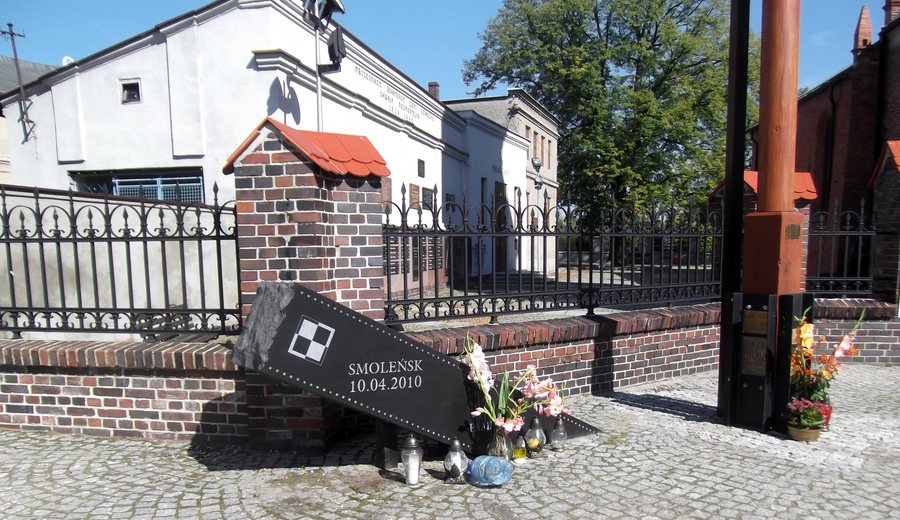
Sieradz at a glance
Sieradz is home to the parish church, now the Minor Basilica of All Saints, a stone building dating from the 14th century, as well as the town theatre, a brick building dating from before 1874. A former Dominican monastery complex is also part of the cityscape; it is now used by the Ursulines. The Sieradzki Ethnographic Park lies between the Żeglina River and the Paradzianka Reservoir, at the foot of the historic castle hill.
The two-track railway line No. 14 from Łódź Kaliska to Tuplice in Lubusz Voivodeship and the 120-kilometre Sieradzka eSka cycling route pass through Sieradz. For travel by road, the S8 expressway between Wrocław, Łódź, and Białystok, with its Sieradz Wschód and Sieradz-Południe junctions, is a useful reference point.
Which buildings tell the story of the city?
The Minor Basilica of All Saints combines a medieval origin with later extensions: the stone building dates from the 14th century and was extended in 1648–1682 and again in 1930. The town theatre was built of brick before 1874. It was remodelled in 1900 and 1924, and again after 1950. These distinct building histories offer two perspectives on the development of historic buildings in Sieradz.
The timeline is particularly important for the former Dominican monastery: the complex is now used by the Ursulines. Its stone Church of St. Stanislaus was built in 1230–1250 and later remodelled after 1331 and in 1693–1718. Another example is the former wooden manor house, “dworek modrzewiowy,” built in 1860. It was restored in 1978–1980 and designed in the so-called Swiss style.
A former brick inn dating from the first half of the 19th century has also found a later cultural use: today, the building houses the Bureau of Art Exhibitions. It was extended in the early 20th century and restored in the neoclassical style in 1982–1987. In the wider travel area, Sieradz County in Łódź Voivodeship is part of the so-called Sieradz cultural region.
What does the ethnographic park offer?
The Sieradzki Ethnographic Park offers a different focus from the historic buildings in the city. It hosts craft workshops, museum lessons, and demonstrations of traditional techniques. Its location between the Żeglina River and the Paradzianka Reservoir, at the foot of the historic castle hill, places the park in a clearly defined part of Sieradz. A visit therefore combines insights into traditional techniques with the distinctive setting of the grounds.
The park is open to visitors from 15 April to 15 October: Tuesday to Friday from 10:00 to 16:00, and Saturday and Sunday from 10:00 to 17:00. It is closed on Mondays. Wheelchair users can visit the grounds and the exhibition pavilion containing agricultural equipment. This information applies to the grounds and the pavilion mentioned.
Which museum experiences and routes suit your interests?
The Muzeum Okręgowe in Sieradz collects, studies, and makes available for exhibition monuments and historical objects relating to the history of the Sieradz region. Since 2006, it has taken part in the “Noc Muzeów” event, preparing openings of temporary exhibitions, concerts, meetings with regional historians and collectors, film screenings, children’s workshops, and multimedia presentations. For blind and visually impaired visitors, the museum offers a free guided tour of its exhibitions by prior telephone appointment.
If you prefer to explore by bike, the Sieradzka eSka offers a designated route that passes through Sieradz. Around 60 percent of its total 120 kilometres run on paved roads; the rest follows gravel and sand.
When planning a stay in Sieradz, you can start by considering two questions separately: which cultural themes would you like to explore, and which transport connection is relevant to your journey? The two-track railway line No. 14 from Łódź Kaliska to Tuplice passes through the city; it is a main line of national importance. By road, the S8 connects Sieradz to the corridor between Wrocław, Łódź, and Białystok via the Sieradz Wschód and Sieradz-Południe junctions. This information provides a framework for choosing Sieradz as a place to stay, but does not replace checking specific connections.
For further orientation, see the pages for Błaszki, Bronisławów, Szczawno, Sieradz, Warta, Ligota, and Gmina Złoczew. You can also visit Tomaszowski as a destination at the same level.
FAQ
When is the Sieradzki Ethnographic Park open?
It is open from 15 April to 15 October, Tuesday to Friday from 10:00 to 16:00, and Saturday and Sunday from 10:00 to 17:00. It is closed on Mondays.
How long is the Sieradzka eSka cycling route?
The route is 120 kilometres long and passes through Sieradz. Around 60 percent runs on paved roads, with the rest on gravel and sand.
What assistance does the Muzeum Okręgowe offer blind and visually impaired visitors?
The museum offers a free guided tour of its exhibitions by prior telephone appointment.
For the broader travel overview: Lodz.

