
Discover Błaszki: Church, History and Routes
Accommodation in Błaszki
For planning a trip to Błaszki, three themes stand out: St. Anne’s Church, historic features of the town and two routes through it. This will help you decide whether architectural history or cycling is more important to your trip.
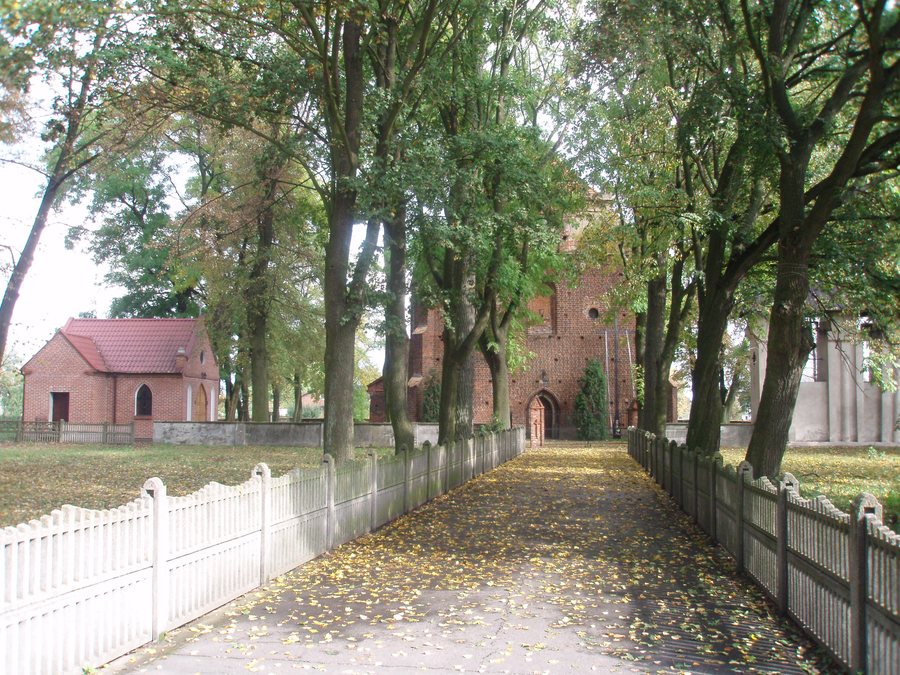 File:Aleja od strony zachodniej do kościoła w Kalinowej, gm. Błaszki, pow.sieradzki.JPG
Photo: Dżasta via Source, CC BY-SA 3.0 pl
Key facts about Błaszki
- St. Anne’s Church is built in the Baroque style, has three naves and a 46-metre-high tower.
- The red Szlak powstańców 1863 r. is 50 kilometres long; its route through Błaszki lists three local points of interest.
- The yellow-marked Sieradzka eSka cycling route passes through Błaszki and is 132 kilometres long, including the connecting section.
- The large historic market square is now divided into two squares.
What does the construction history of St. Anne’s Church tell us?
St. Anne’s Church combines a clear description of its architectural form with a complex construction history. “Three-naved” means that the church interior is divided into a central nave and two side aisles. Together with its 46-metre-high tower, this describes both the interior layout and a distinctive dimension of the building. The church is built in the Baroque style.
It was built between 1779 and 1785 on the site of an earlier wooden church. Its founder was Ignacy Lipski, the owner of Błaszki at the time. Two years after construction was completed, a fire destroyed the church; it was rebuilt in 1789. The sequence of the earlier building, the new church and its reconstruction places its origins in several specific historical stages. In 1810, the church was enclosed by a wall with two chapels that served as ossuaries.
Which works of art and architectural details are noteworthy?
The high altar features an image of St. Anne painted by J. Balukiewicz in 1889. The church has six altars in total. The main altar and two side altars are made of stucco; two portable altars are made of wood and designed in the Baroque style. The materials and design help distinguish the altars described.
The chancel also contains a classicist marble monument to General Józef Lipski, who died in 1817. The monument bears the Grabie coat of arms. The church’s features therefore include a range of forms: stucco and wooden altars, as well as a marble monument with its own heraldic motif.
Which historic features of the town complement a visit to the church?
Błaszki’s large historic market square is now divided into two squares. This distinction between the historic singular name and its present-day division into two is useful for getting your bearings. Two historic buildings also provide specific points of reference in the townscape: the “Błaszkowianka” community hall dates from the turn of the 19th and 20th centuries and is listed as a historic monument. The municipal bathhouse dates from the early 20th century and is also listed as a historic monument.
The community hall and bathhouse represent different types of buildings; St. Anne’s Church adds sacred architecture to the town’s history. The names “Błaszkowianka” and the bathhouse also appear along the red Szlak powstańców 1863 r. The historic buildings and the route can therefore be considered as two distinct topics when planning, rather than being reduced to a single attraction.
How do the routes through Błaszki differ?
The 50-kilometre red Szlak powstańców 1863 r. passes through Błaszki. The section described there includes the “Błaszkowianka” community hall, St. Anne’s Church and the bathhouse. Its colour marking, total length and these three local points of reference provide specific guidance about the route. Check local trail conditions before setting out.
The yellow-marked Sieradzka eSka is specifically a cycling route. It is 132 kilometres long, including the connecting section, and also passes through Błaszki. If you are looking specifically for a cycling route, this name provides a clear point of reference. The two routes differ in their markings, lengths and the local features mentioned along their courses, allowing you to compare them according to your interests.
Discover more destinations: Sieradz, Bronisławów, Szczawno, Warta, Gmina Złoczew, Ligota.
FAQ
How long are the two routes through Błaszki?
The red Szlak powstańców 1863 r. is 50 kilometres long. The yellow-marked Sieradzka eSka cycling route is 132 kilometres long, including the connecting section.
Which works of art and altars are mentioned at St. Anne’s Church?
The high altar features an image of St. Anne painted by J. Balukiewicz in 1889. The church has six altars; three are described as stucco altars, while two portable altars are made of wood and designed in the Baroque style. The chancel contains the marble monument to General Józef Lipski.
Which buildings are mentioned along the red Szlak in Błaszki?
The route mentions the “Błaszkowianka” community hall, St. Anne’s Church and the bathhouse.
See the main travel overview: Sieradz.

