
Wieruszów
Accommodation in Wieruszów
Wieruszów lies between two riverbanks and combines a distinctive setting on the Prosna and Niesób with a wealth of historic traces.
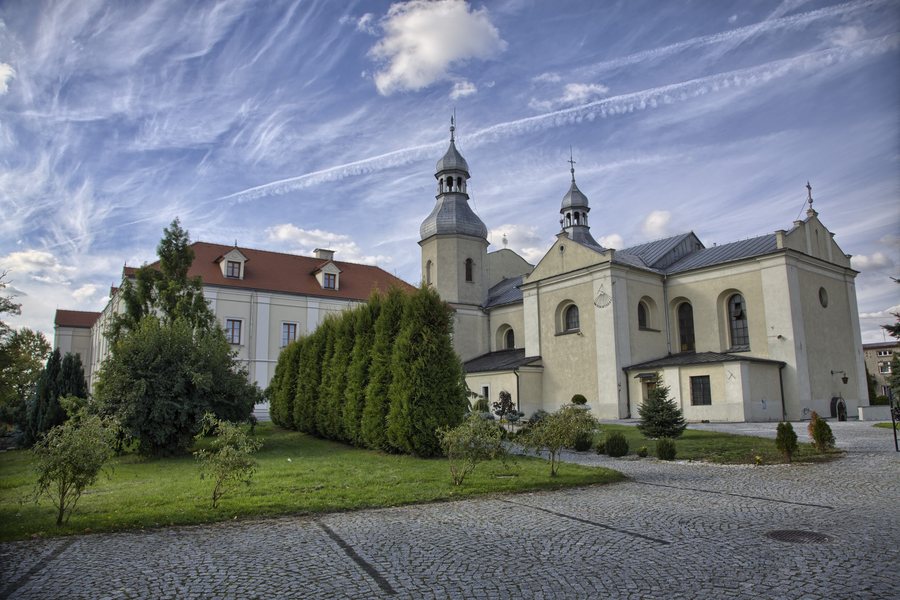 File:Zespół klasztorny Paulinów w Wieruszowie.jpg
Photo: Artur Nawojski via Wikimedia Commons, CC BY-SA 3.0 pl
File:Zespół klasztorny Paulinów w Wieruszowie.jpg
Photo: Artur Nawojski via Wikimedia Commons, CC BY-SA 3.0 pl
Wieruszów at a glance
The Prosna flows through Wieruszów; the town lies on both banks and at the mouth of the Niesób. Its history includes a Pauline monastery, churches in various architectural styles, and traces of a castle and a later residence. Wieruszów–Miasto railway station is in the town, on railway line 181 between Wieluń Dąbrowa and Kępno. The riverside setting, history, and railway connections are distinct aspects of the destination.
Which churches and historical themes define the town?
The Pauline monastery in Wieruszów dates back to 1401. At that time, Bernard Wierusz, a judge from Wieluń, founded the monastery beside the wooden Church of the Holy Spirit on the Prosna, outside the town gates. This account places the monastery’s origins at a specific time and location. It offers a distinct perspective on Wieruszów’s history alongside the visible traces of the castle complex.
The Pauline Basilica has a Baroque interior. Eight side altars, richly adorned with sculptures and gilding, are particularly striking. Their number and design give the interior a distinctive character: visitors interested in sacred art and Baroque forms will find a specific architectural feature here. The church in Podzamcze offers a different historical and architectural perspective.
The Neo-Romanesque Protestant church in Podzamcze was built in 1888 for the German population that had settled there during the Partitions of Poland. This population was organised in the Protestant congregation established there in 1893. The brickwork, the tower’s pyramidal tent roof, and the partly slate-covered roofs describe the building’s exterior. Its origins and specific architectural features both offer ways to appreciate the church.
What traces of the castle and residence can be seen?
At the site of Wieruszów Castle, remnants of the foundations and traces of the moat are visible on the former castle mound. These remains give an idea of which parts of the former complex can still be identified at the site: foundations and a moat, not a fully preserved castle building.
A later residence in Wieruszów was built on a square plan, with semicircular towers at the corners. A moat and a terraced park surrounded the complex. These features distinguish the described residence from the remains visible on the former castle mound. For travellers interested in history, there are thus two distinct architectural points of reference: structural traces at the former castle site and the recorded form of a later residence.
The town’s Jewish history was also part of a historical walking tour: it was planned as the theme of the fourth walk through Wieruszów. This adds another aspect of the town’s history alongside its churches and architecture.
How can you assess Wieruszów as a place to stay?
When choosing accommodation in Wieruszów, you can first decide whether a hotel or another type of accommodation suits your travel plans. To compare other destinations, you can also visit Sokolniki and Bolesławiec-Chróścin.
FAQ
Which rivers does Wieruszów lie on?
Wieruszów lies on both banks of the Prosna, at the mouth of the Niesób.
What is special about the Pauline Basilica?
Its Baroque interior includes eight side altars richly adorned with sculptures and gilding.
What remains are visible at the former castle site?
Remnants of the foundations and traces of the moat are visible on the former castle mound.
For the broader travel overview: Wieruszowski.

