
Ciechanowice: Palace History and Park
Accommodation in Ciechanowice
Ciechanowice offers two distinct points of interest: the history of the Pałac w Ciechanowice and the recreational areas on Wzgórze parkowe. A medieval fortification originally stood at the palace site; on the hill, paths link the recreational areas, and there is also a historic stone slab, information boards, and benches.
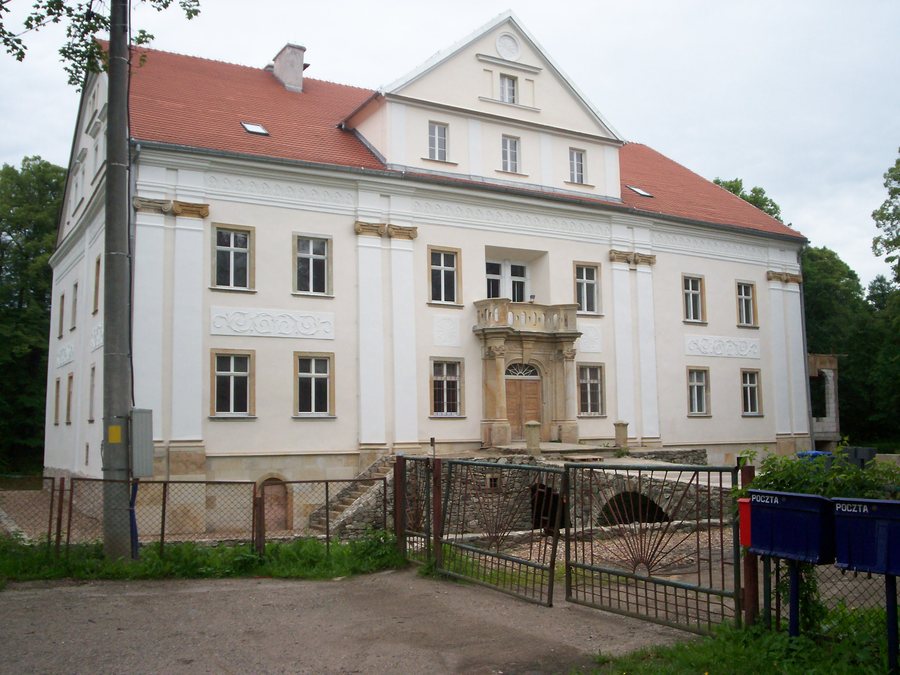
Key facts about Ciechanowice
- The Pałac w Ciechanowice stands on the right bank of the Bóbr.
- A medieval fortification originally stood at the site.
- Only the moat and a stone bridge remain from the fortification.
- Wzgórze parkowe has paths, information boards, and benches, as well as a historic stone slab from the 19th century.
What history lies behind the Pałac w Ciechanowice site?
A medieval fortification originally stood at the Pałac w Ciechanowice site. Only the moat and a stone bridge remain. The medieval date refers to the former fortification. The moat and bridge are two distinct surviving features: the moat is a landform, while the bridge is a stone structure. They provide tangible points of reference for the site’s history. The palace stands on the right bank of the Bóbr; this setting adds a geographical point of reference within Ciechanowice to its architectural history.
It is important to distinguish between the former fortification and its remains. The information refers to a fortification that once stood at the site and two surviving features. This helps define the site’s historical significance more precisely, without equating the bridge or moat with the entire fortification. If you are interested in older architectural and landscape features, you can distinguish here between a stone structure, a landform, and the palace’s location on the riverbank.
What characterises Wzgórze parkowe?
On Wzgórze parkowe, paths link the individual recreational areas. Information boards and benches add information and places to sit. The different features therefore serve distinct purposes: paths connect the areas, boards provide information, and benches offer seating. Together, they create a different focus from the palace site, where the history of a former fortification takes centre stage.
There is also a historic stone slab from the 19th century on the hill. It is a single historic object within this area and adds a distinct historical note. The date refers to the stone slab; the medieval designation, by contrast, refers to the former fortification at the palace site. Comparing the two local features helps you distinguish these two different historical periods. The themes also differ: the Pałac w Ciechanowice is associated with the remains of a fortification, while Wzgórze parkowe features connected recreational areas and a historic slab.
Which focus suits your travel interests?
You can compare the different features to decide what suits your trip. The palace site combines its medieval past with its location on the right bank of the Bóbr. Wzgórze parkowe offers paths between recreational areas, information boards, benches, and a stone slab from the 19th century. If you are especially interested in architectural history, the former fortification is the main attraction. If you would rather explore the layout of a recreational area and learn about a single historic object, Wzgórze parkowe offers a different focus. This lets you choose what to see in Ciechanowice based on the themes you would most like your trip to include.
Discover more destinations: Kamienna Góra, Szarocin, Lubawka, Czarnów, Marciszów, Chełmsko Śląskie, Leszczyniec.
FAQ
Which remains of the medieval fortification have survived?
The moat and a stone bridge have survived.
Where is the Pałac w Ciechanowice?
The palace stands on the right bank of the Bóbr.
What is on Wzgórze parkowe?
Paths link individual recreational areas; there are also information boards, benches, and a historic stone slab from the 19th century.
For the broader travel overview: Kamiennogórski.

