
Leszczyniec
Accommodation in Leszczyniec
Leszczyniec combines a location along the Świdnik and Wilczyniec streams with historic buildings and documented hiking trails. If you choose a stay based on the landscape, architectural history, or hiking, the place offers several specific points of interest.
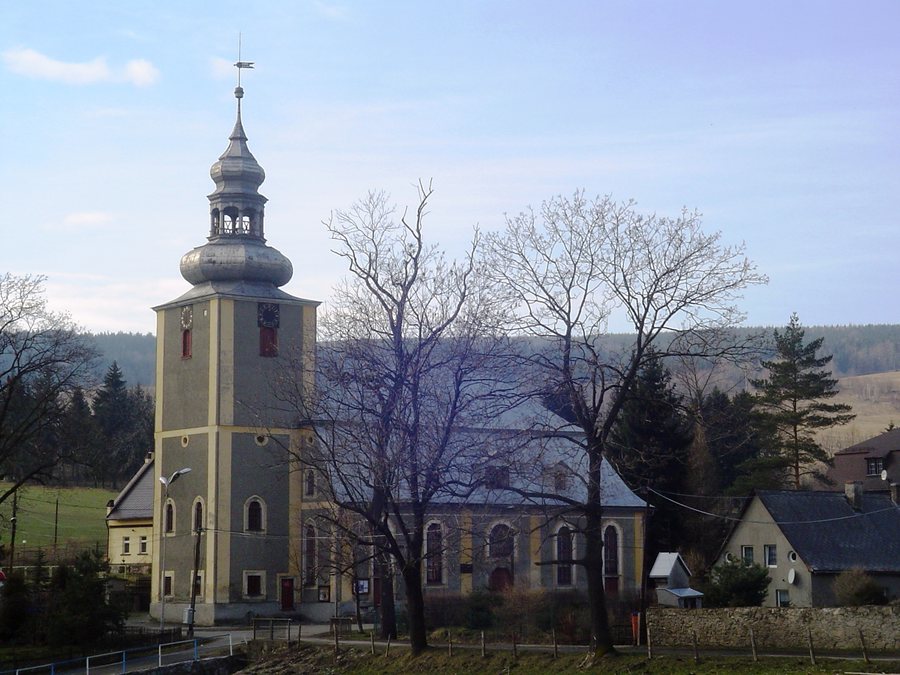
Leszczyniec at a glance
Leszczyniec lies between the Rudawy Janowickie and the Wzgórza Bramy Lubawskiej. In the upper part of the village, near Rozdroże pod Bobrzakiem at the edge of the forest, stands the Wapiennik, a shaft kiln used for industrial lime burning dating from the 19th century. The Baroque parish church of św. Bartłomieja is in the lower part. A black hiking trail connects Leszczyniec and Pisarzowice over 7.2 km; another black connecting trail leads to the major hiking trail junction at Przełęcz pod Bobrzakiem.
What kind of landscape defines Leszczyniec?
Its location between two mountain and hill landscapes, as well as along the Świdnik and Wilczyniec streams, provides a clear geographic reference. Different locations are also identified within the village: the Wapiennik stands in the upper part of Leszczyniec at the foot of the Rudawy Janowickie, while the Baroque parish church is in the lower part. These details help place the described sights geographically without combining them into a single stop.
Those interested in local architectural history will find a building with an industrial function alongside the churches. For hikers, the two black trails described offer additional, distinct points of interest. Leszczyniec can thus be assessed through specific landscape features, buildings, and trail destinations.
What is the Wapiennik?
The Wapiennik is a shaft kiln designed for industrial lime burning. Its structure is made of fieldstone, and it dates from the 19th century. This distinguishes it in function and construction from the village’s religious buildings: here, the focus is on a technical structure, not a church. Its location near Rozdroże pod Bobrzakiem, at the forest edge in the upper part of Leszczyniec, connects this historic site with a precisely identified place in the landscape.
Its name and function provide a specific point of entry for those interested in cultural history and the village’s development. The Wapiennik should be understood as an industrial lime kiln. Its dating to the 19th century refers to this structure and should be distinguished from the churches, which have different dates.
How do the churches differ?
The cemetery chapel in Leszczyniec was the former parish church. The building was erected in 1593 and altered in the 18th and 19th centuries. The Baroque parish church of św. Bartłomieja is a different building: it was originally Protestant, was built in 1751–1754, and was renovated in the 20th century. The buildings’ histories therefore encompass different construction dates and alterations; each date given belongs to the building it refers to.
The location of the parish church of św. Bartłomieja is also useful for orientation: it is in the lower part of Leszczyniec, while the Wapiennik is in the upper part. Those interested in the village’s history can consider the former parish church and the Baroque church as separate topics. Their different functions and construction dates mean the two buildings should not be conflated.
Which hiking trails are described?
A black hiking trail connects Leszczyniec and Pisarzowice and is 7.2 km long. This length applies specifically to this trail. A separate black connecting trail leads from Leszczyniec to the major hiking trail junction at Przełęcz pod Bobrzakiem. No length is given for this connecting trail. The destinations differ too: one trail connects two villages, while the other leads to a hiking trail junction.
If hiking is important to your travel decision, these details give you two different trail options that you can consider separately. The 7.2 km length applies to the trail between Leszczyniec and Pisarzowice; for the trail to Przełęcz pod Bobrzakiem, the destination is specified instead. This makes clear which information applies to each route.
Other destinations in this selection: Kamienna Góra, Ciechanowice, Szarocin, Czarnów, Chełmsko Śląskie, Lubawka, Marciszów.
FAQ
How long is the hiking trail to Pisarzowice?
The black hiking trail between Leszczyniec and Pisarzowice is 7.2 km long.
What does the black trail to Przełęcz pod Bobrzakiem connect?
It leads from Leszczyniec to the major hiking trail junction at Przełęcz pod Bobrzakiem.
When was the parish church of św. Bartłomieja built?
The Baroque church was built in 1751–1754 and renovated in the 20th century.
To the higher-level travel overview: Kamiennogórski.

