
Discover Bad Langenau
Accommodation in Bad Langenau
Bad Langenau combines its location at the foot of the Góry Bystrzyckie and on the Nysa Kłodzka with a spa park and spa history. If you are comparing destinations, you will find information here about the landscape, mineral water and historic buildings.
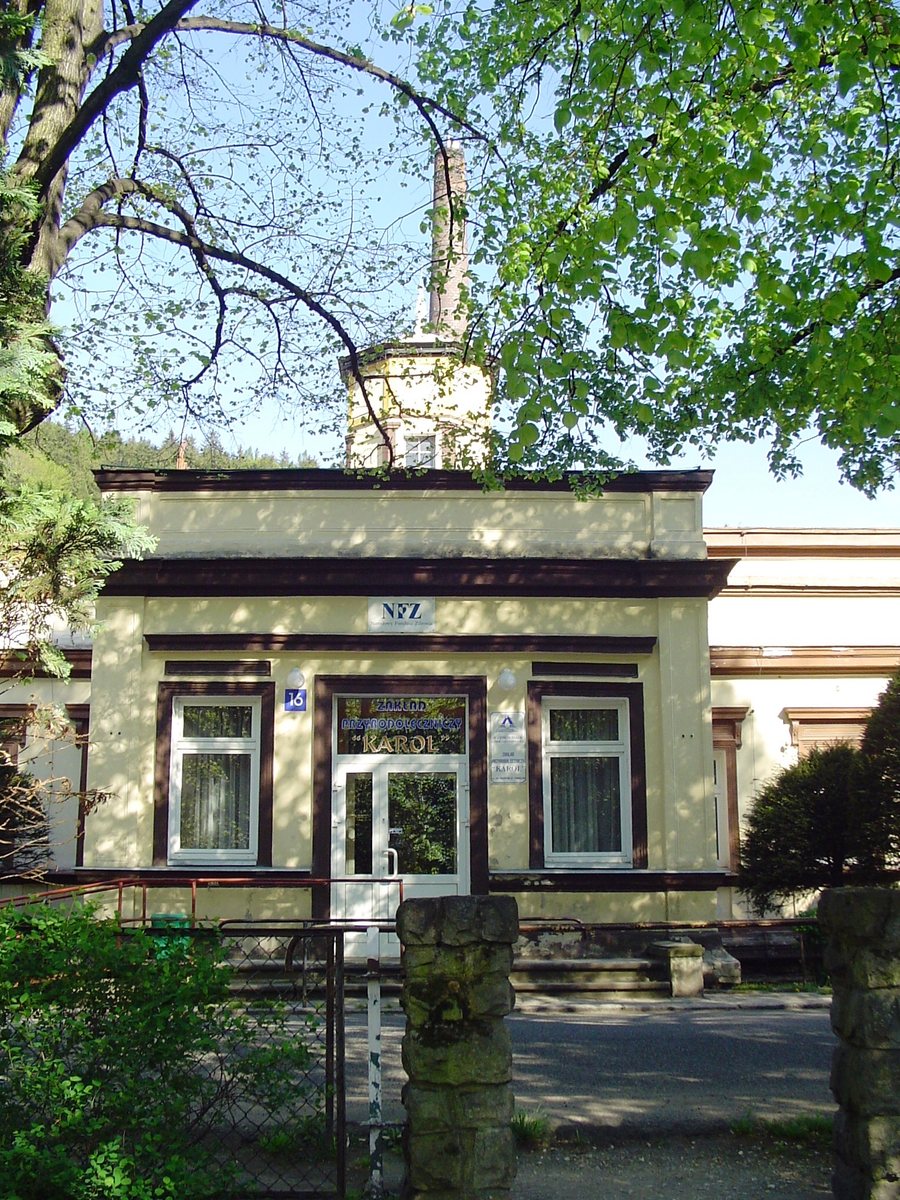 File:Długopole Zdrój (Bad Langenau) (2009).JPG
Photo: Edward Knapczyk via Wikimedia Commons, CC BY-SA 3.0 PL
File:Długopole Zdrój (Bad Langenau) (2009).JPG
Photo: Edward Knapczyk via Wikimedia Commons, CC BY-SA 3.0 PL
Key facts about Bad Langenau
Bad Langenau, known in Polish as Długopole-Zdrój, lies on the banks of the Nysa Kłodzka and at the foot of the Góry Bystrzyckie. The spa climate is considered particularly valuable because of the town’s location in a sunny, sheltered valley. The spa park has a mineral water pump room and walking paths; Park Zdrojowy covers about 30 hectares today. A railway station in Długopole made it possible for spa guests to travel there in the late 19th century.
How do the valley, river and mountains shape the town?
Bad Langenau’s location can be described using two prominent points of reference: the banks of the Nysa Kłodzka and the foothills of the Góry Bystrzyckie. The valley adds to this description of the landscape by giving the town its spa character: it is considered sunny and sheltered, and the spa climate is therefore regarded as particularly valuable.
If you pay attention to the landscape when choosing a destination, you will find riverbanks and a mountain setting side by side here. This gives you a concrete idea of the surroundings without implying specific routes or distances. At the same time, the reference to the spa climate shows that the valley setting is also important in describing the spa town.
What pump rooms and parks are there?
The spa park is in the centre of Długopole and has a mineral water pump room as well as walking paths. Park Zdrojowy is said to cover about 30 hectares today. This figure should be understood as an approximation: it indicates the size of the park, not its exact boundaries.
There is another pump room at the Zakład Przyrodoleczniczy Karol. It offers local mineral waters and direct access to the source of the bicarbonate water “Renata”. It contains iron, calcium, potassium, sodium, magnesium and silicon. This makes it possible to distinguish between the two water venues based on the stated features: the spa park has a pump room and walking paths, while Karol also has the Renata spring and its listed constituents.
Which historic buildings define Bad Langenau?
The Neo-Gothic Chapel of the Sacred Heart of Jesus stands beside Szpital Uzdrowiskowy Mieszko, built in 1881. The chapel’s location next to the hospital connects two named buildings, while the year places the hospital’s history in context.
A bathhouse in Park Zdrojowy was built in 1834 and remodelled in 1906. Today it is used as Sanatorium Dąbrówka. Its construction date, remodelling and current use give the building several historical points of reference. To help you find your way around the town, it is useful to distinguish the buildings not only by their architecture but also by their individual histories.
What does the railway station’s history tell us about travel to the town?
The railway station in Długopole, built in 1882, made travel to the town convenient for spa guests at the time. This historical role forms part of the spa town’s development and shows that accessibility was already important to visitors back then. It describes travel at the time, not current rail services.
Discover more destinations: Sokolec, Lewin Kłodzki, Miedzygorze, Lasówka, Bad Landeck, Bystrzyca Kłodzka, Wójtowice and Jugów.
FAQ
Where is Bad Langenau?
Bad Langenau lies on the banks of the Nysa Kłodzka and at the foot of the Góry Bystrzyckie. The valley is described as sunny and sheltered.
How do the pump rooms differ?
A mineral water pump room and walking paths are listed for the spa park. Karol has local mineral waters and direct access to the source of the bicarbonate water Renata.
Which historic buildings are associated with the spa town?
The Neo-Gothic chapel stands beside Szpital Uzdrowiskowy Mieszko, built in 1881. The bathhouse in Park Zdrojowy dates from 1834, was remodelled in 1906 and is now used as Sanatorium Dąbrówka.
For the higher-level travel overview: Kłodzki.

_(2009).JPG)