
Discover Lewin Kłodzki
Accommodation in Lewin Kłodzki
Gothic, Renaissance, and Baroque features in the parish church and a stone railway viaduct give Lewin Kłodzki two distinct points of interest for planning your trip. The historic buildings and their dates can help you put the local attractions in context before looking for a hotel for your stay.
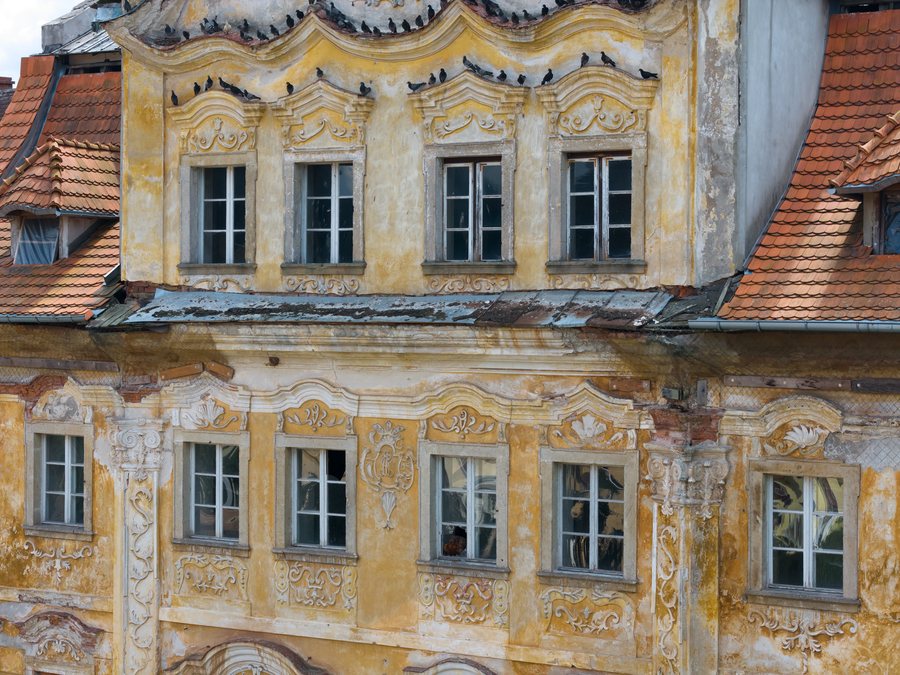 File:2024 Lewin Kłodzki, pl. Kościuszki 18 (7).jpg
Photo: Jacek Halicki via Wikimedia Commons, CC BY-SA 4.0
File:2024 Lewin Kłodzki, pl. Kościuszki 18 (7).jpg
Photo: Jacek Halicki via Wikimedia Commons, CC BY-SA 4.0
Quick facts about Lewin Kłodzki
- The parish church of St. Michael the Archangel combines Gothic, Renaissance, and Baroque features.
- Its historic furnishings include a Renaissance altar from 1618 and a pulpit from 1620.
- A statue of St. John of Nepomuk, donated in 1717 by Georg Stanke, Adam’s son, stands in the market square.
- The stone railway viaduct was built from 1903 to 1905 to a design by Italian engineers. It is 120 metres long and rises up to 27 metres above the valley.
What cultural history does the parish church reveal?
The parish church of St. Michael the Archangel can be described through several periods: its architecture features Gothic, Renaissance, and Baroque elements. This offers a broader frame of reference than considering just one architectural style. The dates of the altar and pulpit add their own chronological markers: the Renaissance altar dates from 1618, and the Renaissance pulpit from 1620.
Another item of church furnishings is the side altar of the Christ Child, also known as the “Friendship of Christ.” It was donated by Ignatz Strauch in 1772. Along with the two Renaissance objects, it provides a series of specific dates spanning the early 17th to the 18th century. You can use these details as distinct historical points of reference without reducing the objects or the architecture to a single period.
The market square offers another point of historical interest: it is home to a statue of St. John of Nepomuk, donated in 1717 by Georg Stanke, Adam’s son. The recorded details of the town thus place a church furnishing and a monument in the market square side by side. The different names of the donors and dates help you distinguish the individual objects.
What makes the railway viaduct special?
The railway viaduct offers a different focus from the church buildings. It was built between 1903 and 1905 to a design by Italian engineers and is made entirely of stone. Its structure is defined by multiple arches and piers. At 120 metres long and up to 27 metres above the valley, its measurements give you a concrete sense of the scale of the structure.
The measurements and construction answer different questions: the length describes the viaduct’s span, while the height indicates its position above the valley; arches and piers describe features of its construction. Together with its date of construction, they give a factual impression of what distinguishes the structure, without equating it with the church’s architecture. If you are interested in the history of construction, you have two clearly distinct subjects to explore: historic church architecture and a stone railway viaduct.
What role do road and rail play?
The viaduct spans International Route No. 8. It is also part of railway line No. 309, which connects Kłodzko with Kudowa-Zdrój. These two connections link the structure to different transport networks: road and rail.
The local attractions can provide an initial guide when choosing accommodation: would you like your trip planning to focus primarily on architecture and historic furnishings, or are you also interested in the viaduct, its construction, and its role in road and rail transport? The facts listed here can help you sort out these interests. Compare the available accommodation based on the information that matters to your specific travel plans.
Discover more destinations: Idzików, Raszków, Miedzygorze, Nowa Morawa, Kletno, Leśna, Radochów, Jodlow.
FAQ
Which architectural styles can be found in the parish church?
The parish church of St. Michael the Archangel features Gothic, Renaissance, and Baroque elements. Its furnishings include, among other things, a Renaissance altar from 1618, a Renaissance pulpit from 1620, and a side altar of the Christ Child donated in 1772.
When was the railway viaduct built?
The viaduct was built between 1903 and 1905 to a design by Italian engineers. It is made entirely of stone and consists of multiple arches and piers.
What transport connections does the viaduct have?
It spans International Route No. 8 and is part of railway line No. 309 between Kłodzko and Kudowa-Zdrój.
For the main travel overview: Kłodzki.

.jpg)