
Idzików – Village Church, Hiking Trail and Rock Formation
Accommodation in Idzików
Idzików can be explored through its routes, architectural history and local folklore. A yellow-and-blue marked hiking trail passes through the village; the Parish Church of the Assumption of the Blessed Virgin Mary preserves older architectural features and furnishings from different periods. The Pasterskie Skały rock formation is also located near Idzików. These highlights provide concrete points of reference for planning your trip.
Idzików at a glance
- A hiking trail marked with a yellow shell on a blue background runs from Międzygórze via Góra Igliczna and Marianówka to Idzików, and continues to Bystrzyca Kłodzka.
- The parish church combines preserved architectural details with furnishings from different periods, including a baptismal font from 1585 and a pulpit from 1679.
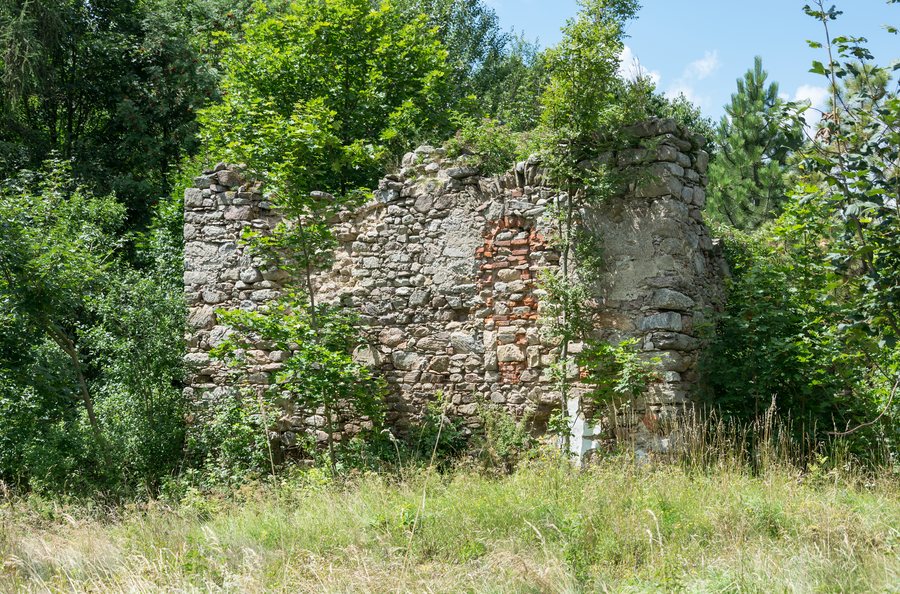
- The remains of Górny Dwór lie on the eastern edge of the village and are of historical and scientific value as evidence of the village’s history.
- Pasterskie Skały is a rock formation on a low ridge near Idzików, associated with a medieval legend about local shepherds.
Which cultural sites define Idzików?
Idzików’s cultural sites offer different ways to explore the village’s history. The remains of Górny Dwór on the eastern edge of the village are of historical and scientific value as evidence of its past. At the parish church, by contrast, individual architectural forms and furnishings can be identified. Those interested in history can distinguish between the remains of Górny Dwór and the church’s specific design details, rather than viewing both places in the same way.
What is noteworthy about the Parish Church of the Assumption of the Blessed Virgin Mary?
The parish church stands on an irregular platform elevated above the village’s main street. It is partly enclosed by a churchyard wall with a gate; a Baroque figure of St John of Nepomuk, dated 1747, stands at the gate. The layout brings together several clearly distinct elements: the church’s elevated position, the wall, and the gate with its dated figure.
The interior also brings together a range of design features. Neo-Baroque polychrome decoration sits alongside predominantly Neoclassical ornament. In the older western part of the nave, remains of a Gothic portal, as well as a pointed-arch entrance and pointed-arch windows, have been preserved. There are also clearly discernible remains of a Late Gothic–Renaissance church.
The furnishings include a Baroque-Rococo high altar with altar rails from around 1760, probably from the workshop of Michael Ignatz Klahr the Younger; an early Baroque wooden pulpit from 1679; and a stone Renaissance baptismal font from 1585. The different forms and dates help you navigate the church: its architectural features, interior design and individual furnishings can be considered as distinct aspects rather than as a single stylistic picture.
What legend is associated with Pasterskie Skały?
The Pasterskie Skały rock formation lies on a low ridge near Idzików. Its name comes from a medieval legend. According to the story, local shepherds scorned bread in the 14th century and, out of arrogance, were turned to stone. Their silhouettes are said to have remained as the rocks rising above Idzików. The story is a legend, not a confirmed historical event. It offers a different perspective from the architectural history of the parish church: here, the focus is on the origin of the name and the traditional explanation of the rock formations.
How do the routes through Idzików differ?
The marked hiking trail and another route itinerary differ mainly in their courses. The hiking trail starts in Międzygórze and ends in Bystrzyca Kłodzka, passing through Góra Igliczna, Marianówka and Idzików along the way. The other route itinerary starts in Bystrzyca Kłodzka, passes through Wilkanów, Międzygórze, Igliczna, Szklary, Marianówka and Idzików, among other places, continues to Pławnica, and returns to Bystrzyca Kłodzka.
The first description therefore gives a marked hiking route linking a series of places between Międzygórze and Bystrzyca Kłodzka. The second describes a circular route with additional stops and a return to Bystrzyca Kłodzka. These different starting and ending points can help you choose the route description best suited to your plans. If you intend to follow the second route itinerary, check current road conditions beforehand.
Discover more destinations: Lądek-Zdrój, Kłodzko, Długopole-Zdrój, Radków, Potoczek, Nowa Ruda, Bielice, Domaszków.
FAQ
How is the hiking trail marked?
It is marked with a yellow shell on a blue background and runs from Międzygórze via Góra Igliczna, Marianówka and Idzików to Bystrzyca Kłodzka.
Which furnishings in the parish church are dated?
The furnishings include a wooden pulpit from 1679, a stone baptismal font from 1585 and a high altar with altar rails from around 1760. The attribution of the altar to the workshop of Michael Ignatz Klahr the Younger is tentative.
What does the Pasterskie Skały legend tell?
It tells of shepherds who are said to have scorned bread in the 14th century and been turned to stone out of arrogance. Their silhouettes are said to have remained as rocks above Idzików.
Go to the broader travel overview: Kłodzki.

