
Discover Haynau: Museum, Water Tower and Hornbeam
Accommodation in Haynau
Get to know Haynau through its distinctive natural and cultural features: a hornbeam with seven branches, a water tower dating from 1915, and the history of the museum.
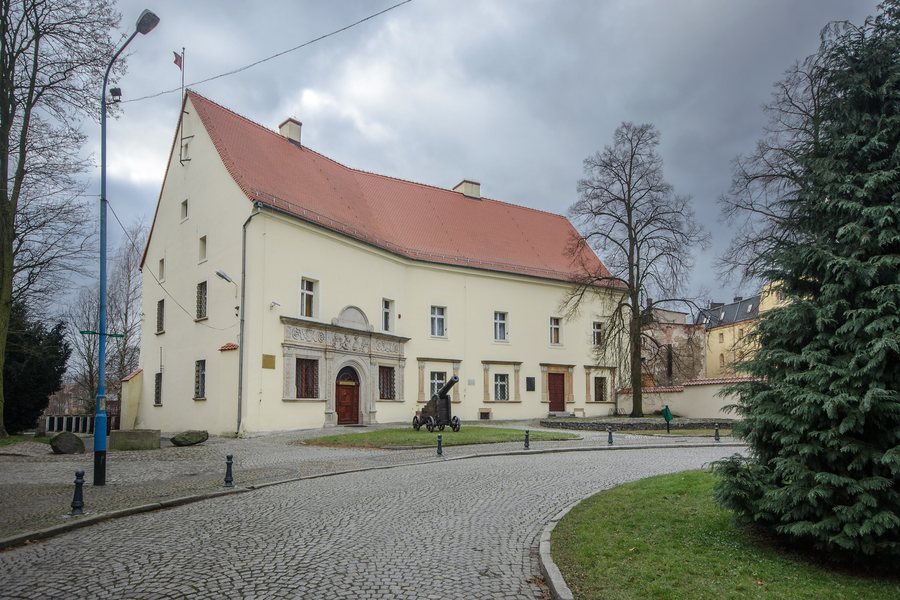
Haynau at a glance
- The hornbeam “Siedmiu Wspaniałych” in “Mały” Park has seven branches and came second in a vote for Lower Silesia’s natural monument.
- The water tower in Piastowski Park was built in 1915 using reinforced concrete.
- The history of museum activity in Chojnów dates back to 1906; the collections were moved in 1933.
- The Muzeum Regionalne w Chojnowie invites visitors to an educational outdoor treasure hunt with a walking time of 30 minutes.
- The museum is not fully accessible; wheelchair users can visit the exhibitions on the ground floor and the garden.
What natural and architectural features can you find in Haynau?
One of Haynau’s natural highlights is the hornbeam “Siedmiu Wspaniałych” in “Mały” Park, part of Park Śródmiejski in Chojnów. Its seven branches are a distinctive feature. The result of the vote also provides a special point of reference: the tree came second in the vote for Lower Silesia’s natural monument. This attraction therefore draws attention both to the tree’s shape and to its mention in the vote.
The water tower in Piastowski Park offers a different point of interest: it was built in 1915 using reinforced concrete, then a modern construction method. The tree and the tower offer different starting points for your interests—nature on the one hand and architectural history on the other. You can also consider the two facts separately when planning your trip.
What does the museum’s history tell us?
The history of museum activity in Chojnów dates back to 1906. In 1908, the museum opened in the renovated Baszta Tkaczy. In 1933, the collections were moved to the castle of the Piasts of Legnica and Brzeg. These dates trace a development through several stages: from the beginnings of museum activity, to its original premises, and then to the later relocation of the collections.
The Muzeum Regionalne w Chojnowie also invites visitors to the educational outdoor treasure hunt “Najazd Husytów na Chojnów.” The listed walking time is 30 minutes. This specific time can help you account for the time required for the tour when planning your day; it refers to the walking time for the outdoor treasure hunt.
What should you know about access and accommodation?
The Muzeum Regionalne w Chojnowie building is not fully accessible. Wheelchair users can visit the exhibitions on the ground floor and the garden. If these areas matter to your plans, you can tailor your choices accordingly and take the stated visiting options into account.
The Baszta Tkaczy in Chojnów can be visited by prior arrangement. Make arrangements with the museum before your trip. The Baszta is also where the museum opened in 1908; its historical role and the current visiting requirement are separate aspects.
When choosing a hotel, it helps to first decide what you want to focus on during your stay: are you mainly interested in the history of the museum, does the outdoor treasure hunt appeal to you, or are the natural and architectural features your priority? This will help you compare options based on what matters for your trip, without assuming that one topic covers all the others.
Discover more destinations: Krotoszyce, Rokitki, Pątnówek, Legnickie Pole, Warmątowice Sienkiewiczowskie, Strachowice, Liegnitz, Jerzmanowice.
FAQ
Which parts of the museum can wheelchair users visit?
The exhibitions on the ground floor and the garden. The museum building is not fully accessible.
How much walking time is listed for the outdoor treasure hunt?
The listed walking time for “Najazd Husytów na Chojnów” is 30 minutes.
How can you visit the Baszta Tkaczy?
Visits are possible by prior arrangement. Make arrangements with the museum in advance.
Back to the main travel overview: Legnicki.

_ID_593385.jpg)