
Pątnówek – Castle, Park and Archaeology
Accommodation in Pątnówek
In Pątnówek, a castle-park-manor complex, archaeological traces from different periods, and a documented harvest festival tradition come together as distinct cultural themes.
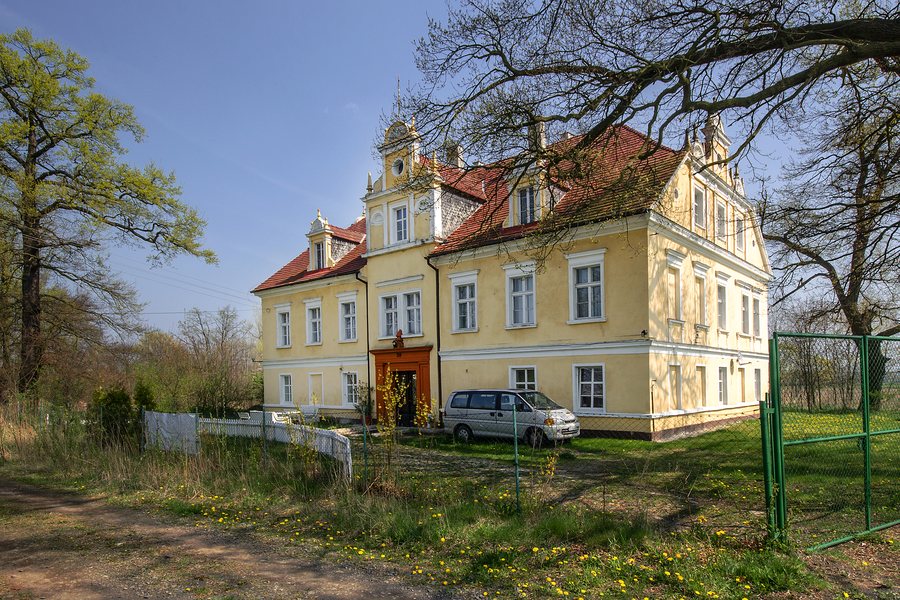 File:SM Pątnówek pałac (1) ID 593527.jpg
Photo: Sławomir Milejski via Wikimedia Commons, CC BY-SA 3.0 pl
Pątnówek at a glance
- The castle is at house number 38 and dates from the 1860s–1870s.
- The castle was entered in the register of monuments on 26 June 1986.
- The complex includes a park dating from the 19th to 20th century; a Baroque sculpture of Saint John of Nepomuk is also listed.
- Archaeological finds include settlements and burial grounds from different periods.
- A tradition described in 2014 mentions harvest festivals; an outdoor recreation area was built that same year.
What does the castle-park-manor complex tell us?
At house number 38 stands a castle within a castle-park-manor complex. It was built in the 1860s–1870s and remodelled around the turn of the 20th century. The castle is entered in the register of monuments under number A/3212/720/L; the entry was made on 26 June 1986. Its construction, later remodelling and listing mark different historical reference points.
In the eastern part of the complex is a park dating from the 19th to 20th century. Another aspect of the local cultural heritage is the listed Baroque sculpture of Saint John of Nepomuk on plot 254/3. Architecture, park and religious sculpture can thus be treated as distinct topics, without combining them into a single building.
Which periods are reflected in the archaeological sites?
The archaeological sites include different settlements and periods. One comprises a prehistoric settlement and another settlement whose period has not been specified. At another site, traces of settlement range from prehistory through the late La Tène period and the Early Middle Ages to the 13th and 14th centuries.
Other finds include a settlement dating from the 14th to 16th century. There is also a skeleton burial ground from the early Migration Period and a cremation burial ground dating from the Bronze Age to the Hallstatt period. Another site has traces of prehistoric settlement, as well as settlements from the Hallstatt period, the Roman Imperial period and the Early Middle Ages.
The periods therefore range from prehistory to the Late Middle Ages, and the types of finds also differ. Settlements and traces of settlement sit alongside two different types of burial ground. These represent several separate glimpses for understanding the cultural history, not one continuous history of settlement.
Which festival customs are part of the area’s history?
A tradition from Pątnówek described in 2014 mentions annual harvest festivals at which a harvest wreath was plaited. The local festival tradition described in 2014 also includes potato dishes and cakes sold at the parish fair or harvest festival.
A construction project is another part of the area’s more recent history: an outdoor recreation area was built in 2014 as part of a village development programme. The described festival customs and a dated village development project thus represent two different aspects of local life.
How can Pątnówek be placed in its regional context?
The Miłkowice municipality lies on the Legnica Plain between Legnica and Chojnów. This describes the broader municipal setting; the castle, park and archaeological sites relate specifically to Pątnówek.
Discover more destinations: Legnica, Strachowice, Rokitki, Chojnów, Jerzmanowice, Kawice, Legnickie Pole, Krotoszyce.
FAQ
When was the castle in Pątnówek built?
It dates from the 1860s–1870s and was remodelled around the turn of the 20th century.
Which archaeological periods are represented?
The finds range from prehistory through the Bronze and Hallstatt periods, the late La Tène period and the Roman Imperial period to the Early and Late Middle Ages.
What is known about the harvest festival tradition?
A description from 2014 mentions plaiting harvest wreaths at annual harvest festivals, as well as potato dishes and cakes sold at the parish fair or harvest festival.
For the broader travel overview: Legnicki.

