
Krotoszyce: Church, Palace and Park
Accommodation in Krotoszyce
In Krotoszyce, a parish church shaped over centuries meets the architectural history of Pałac Krotoszyce. The historic park adds walking paths and a remarkable plane tree to the area’s cultural heritage.
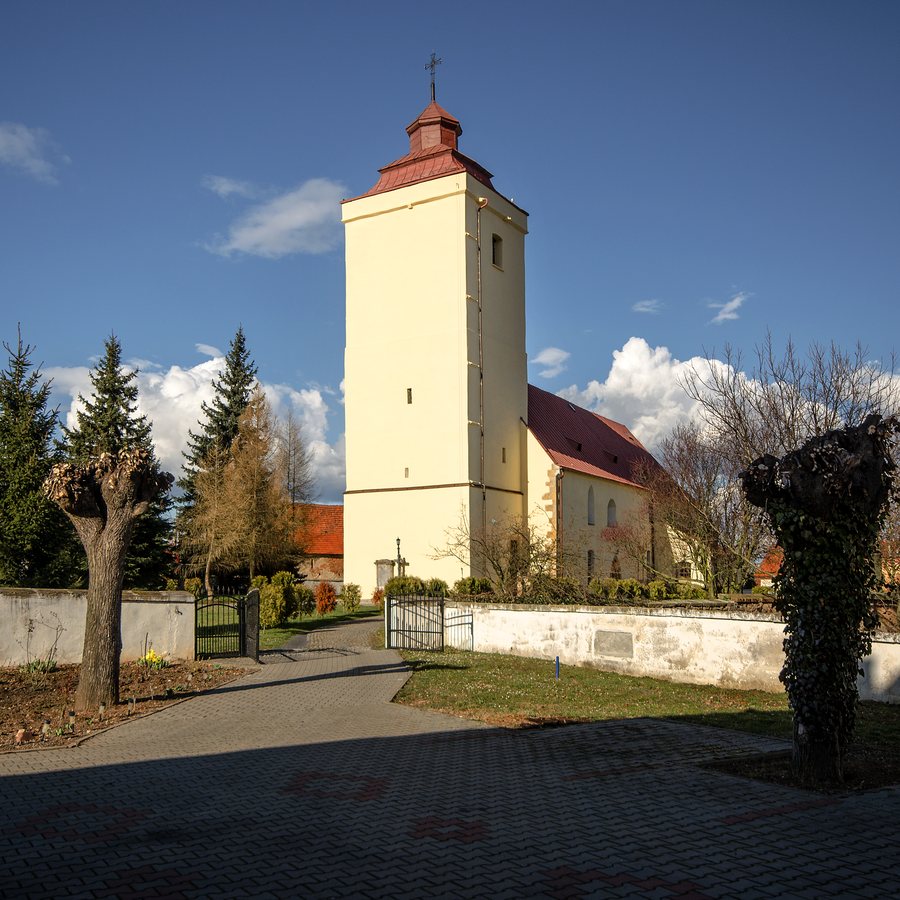 File:SM Krotoszyce - kościół Wniebowzięcia NMP (4) ID 593438.jpg
Photo: Sławomir Milejski via Source, CC BY-SA 3.0 PL
Key facts about Krotoszyce
- The Church of the Assumption of Mary was first mentioned in 1305; its original structure dates back to the Middle Ages.
- Its furnishings include a Gothic altar from 1519 and a wooden pulpit from the early 17th century.
- Pałac Krotoszyce is an estate dating from the 17th century, with former farm buildings and a six-hectare historic park.
- The park has designated walking paths, benches and a garden swing; it is also home to a plane tree listed as a natural monument.
What story does the parish church tell?
The Church of the Assumption of Mary was first mentioned in 1305. Its original structure was built in the Middle Ages; the church was remodeled around 1626 and again around the turn of the 20th century. These dates mark different stages in its architectural history, not a single date of construction.
An earlier history is attributed to the tower: it is said to have been built as a watchtower after the Battle of Legnica in 1241. The tower survived later military actions, while the rest of the church burned down. Thus, two distinct historical reference points coexist in the tradition: the history of the tower and the first mention of the church.
The church furnishings also come from different periods. The Gothic altar of the Four Virgins dates from 1519 and is surrounded by Baroque decoration. It underwent extensive restoration in 2015/2016 at the Veritas Arte restoration workshop in Kraków. The wooden pulpit, by contrast, belongs to the late Renaissance and was made in the early 17th century. Visitors interested in art history can therefore see works from different centuries in one place without confusing their dates of origin.
How did Pałac Krotoszyce develop?
Pałac Krotoszyce is an estate dating from the 17th century. Hans Sebaldus Heinrich probably had it built in 1600 as a small fortified residence with a moat. This attribution is explicitly tentative; the later remodeling, by contrast, is associated with a specific year: by 1686, Florian Gottlob von Thielau had the building transformed into a Baroque structure.
These construction phases give the palace a different historical perspective from the church: first there was a small fortified residence with a moat, followed later by the building’s Baroque form. The estate includes former farm buildings and a six-hectare historic park.
What does the historic park offer?
The park of Pałac Krotoszyce is described as a picturesque, Neo-Romantic park. It was laid out in 1894 during the modernization of the building. The connection between the palace and the park thus belongs to a later phase of the estate, not to its probable founding around 1600.
Designated walking paths, benches and a garden swing are available for exploring the park. Since visitor facilities like these can change, check whether they are currently available before planning a visit. The park is also home to a more than 350-year-old London plane tree. Its stated circumference is 700 cm; it is listed as a natural monument. The combination of specific paths, landscaped places to rest and a distinctive tree offers different reasons to explore the grounds.
For trip planning, Krotoszyce can therefore be understood through three clearly distinct highlights: the parish church’s long architectural and artistic history, the palace’s development from a probably fortified residence to a Baroque structure, and the historic park with its plane tree. Which of these themes shapes your stay most will depend on whether you are more interested in sacred art, architectural history or the park.
Discover more destinations: Kawice, Rokitki, Jerzmanowice, Pątnówek, Warmątowice Sienkiewiczowskie, Legnica, Chojnów, Legnickie Pole.
FAQ
When was the altar of the Four Virgins restored?
The 1519 Gothic altar underwent extensive restoration in 2015/2016 at the Veritas Arte restoration workshop in Kraków.
What is known about the origins of Pałac Krotoszyce?
The palace was probably built in 1600 by Hans Sebaldus Heinrich as a small fortified residence with a moat. By 1686, Florian Gottlob von Thielau had the building remodeled in the Baroque style.
How large is the plane tree in the park?
The more than 350-year-old London plane tree has a stated circumference of 700 cm and is listed as a natural monument.
To the main travel overview: Legnicki.

