
Kostomłoty
Accommodation in Kostomłoty
Kostomłoty combines a historically developed village center with notable landmarks around the Church of the Holy Cross.
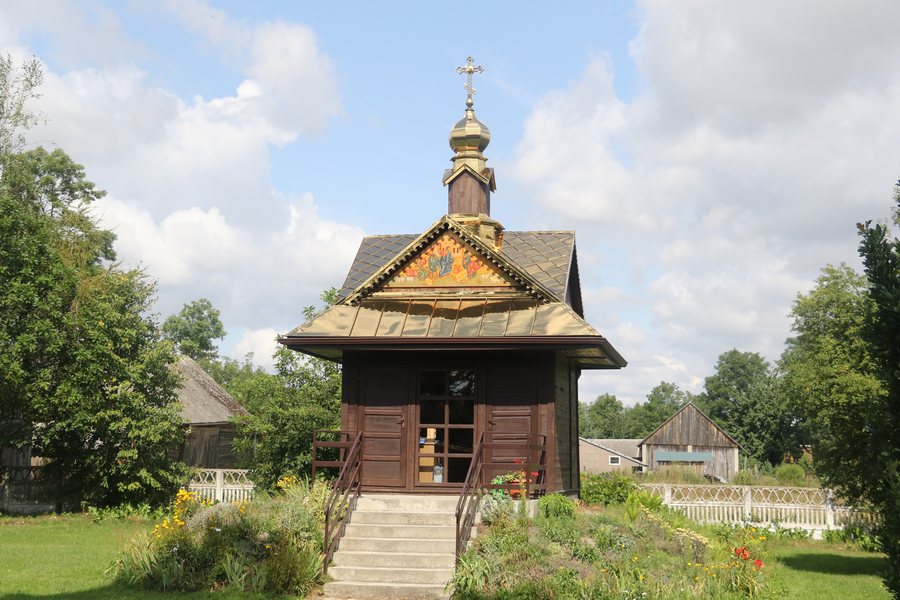
Kostomłoty at a glance
The Church of the Holy Cross was built in the mid-14th century. Its Gothic structure was extended in Renaissance and Neo-Gothic styles. The village’s pre-1945 farm buildings have been almost entirely preserved within its historic layout. There are also several monuments and crosses from different periods around the churchyard. A cycle path connects Kostomłoty with Zabłoto. The former Stary Ratusz inn is now a hotel with a restaurant.
What does the Church of the Holy Cross tell us about the village?
The church provides a point of reference for the history of Kostomłoty: it was built in the mid-14th century. It is also described as more than just a Gothic structure. Extensions in Renaissance and Neo-Gothic styles have also shaped the building. Anyone interested in architecture can distinguish between the different styles in a single building, without reducing the church to just one period.
There are also landmarks around the churchyard, each with its own historical context. On its eastern side is a 19th-century Neo-Gothic votive cross made of sandstone. In front of the western gate stands a Baroque monument to St. John of Nepomuk dating from around 1730. North of the eastern entrance, outside the enclosure, is a granite penitential cross dating from the 14th to the 16th century. Their different materials, forms, and dates offer several concrete points of reference when exploring local history.
What reveals the village’s historic character?
Kostomłoty’s appeal is not limited to individual monuments. The village’s pre-1945 farm buildings have been almost entirely preserved within its historically developed layout. The traditional village structure is therefore also a defining part of its character. For your trip planning, this offers a different perspective from looking at a single historic building: you can consider both the church’s architectural history and the farm buildings as themes for your stay.
Another landmark is the medieval pillory east of the church. It was formerly located at the northeastern corner of the market square. Its present location and former site should be distinguished: the pillory stands east of the church, while the market-square corner marks where it used to be. This historical change in location is part of the context, without confusing the former site with its present one.
Which accommodation in Kostomłoty is known by name?
The former inn in Kostomłoty is now the Stary Ratusz hotel and restaurant. This is a specific accommodation option in the village, and it also reflects the building’s former use as an inn. If you would like to take the character of the village into account when looking for a hotel, you can consider this name. The historic buildings and cycle path are other aspects of the village; they are separate considerations when planning your stay.
What role does the cycle path to Zabłoto play?
A cycle path connects Kostomłoty with Zabłoto. For cycle tourists, this provides a direct connection between the two places. You can therefore explore Kostomłoty not only through its church, monuments, and preserved farm buildings, but also take the route to Zabłoto into account. The other features described here form a distinct cultural focus; they do not need to be understood as part of a cycling route.
Those wishing to compare other village profiles can also find Mrozów, Wilkszyn, Środa Śląska, Piotrowice, Lenartowice, Krępice and Jarosław here.
FAQ
When was the Church of the Holy Cross built?
The surviving church in Kostomłoty was built in the mid-14th century. The Gothic structure was extended in Renaissance and Neo-Gothic styles.
What historic landmarks are located at the churchyard?
On the eastern side is a 19th-century Neo-Gothic votive cross made of sandstone. In front of the western gate is a Baroque monument to St. John of Nepomuk dating from around 1730. North of the eastern entrance, outside the enclosure, is a granite penitential cross dating from the 14th to the 16th century.
Where does the cycle path from Kostomłoty lead?
A cycle path connects Kostomłoty with Zabłoto.
For the overview of the wider area: Neumarkt in Schlesien.

