
Grabanów: Manor House History and Landscape Park
Accommodation in Grabanów
Grabanów combines a layered manor house history with a preserved landscape park. A river and a named route also provide points of reference for exploring the area’s heritage.
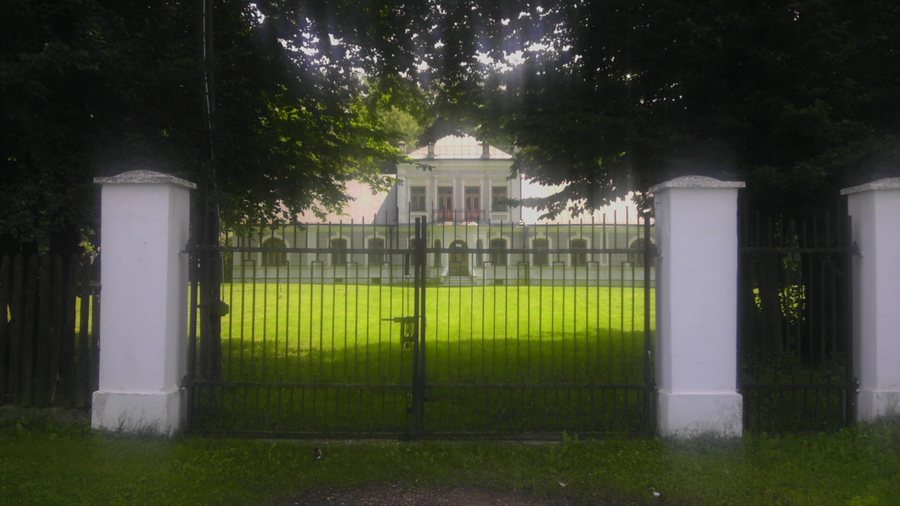
Grabanów at a glance
- In the 16th century, Grabanów, then called Grabianów, belonged to the Ilinicz and Kiszk families.
- In 1714, the manor house was expanded and a pheasantry established; both were given a unified Baroque composition.
- The landscape park probably dates from after 1860. Some of its paths are now only faintly discernible.
- The 32-kilometre-long Klukówka forms a natural boundary between Biała Podlaska and Grabanów.
- The Szlak dawnych cerkwi i dworów route passes through Grabanów.
What historical traces shape Grabanów?
The area’s history goes back to the early modern period: in the 16th century, Grabanów, also known at the time as Grabianów, was owned by the Ilinicz and Kiszk families. In 1522, the village was recorded as an endowment of St Anne’s Church in Biała. The church had been founded by Jerzy Iwanowicz Ilinicz. This record links Grabanów to a specific endowment and a named historical figure.
Another significant date is 1714. At that time, the manor house was expanded and a pheasantry established; both were given a unified Baroque composition. The documented history of the area therefore includes ownership and a church endowment, as well as a later change to the manor house. These dates help distinguish the different historical periods rather than treating them as a single building project.
The buildings near the manor house also point to different construction periods. Nearby stands a wooden Czworak building dating from the second half of the 19th century. West of the manor house are two brick outbuildings from the 1920s and 1930s: a stable and a coach house. Their materials, locations, and dates distinguish the buildings and give the manor complex several historical points of reference.
A monument in the park commemorates participants in the Bar Confederation, the Kościuszko, November, and January Uprisings, the Warsaw Uprising, and the Second World War. It adds a memorial site to the architectural history, commemorating several conflicts across different periods.
How is the landscape park laid out?
The preserved landscape park probably dates from after 1860. Its paths follow axial and radial layouts, although some are now only faintly discernible. Axial paths follow a line, while radial paths extend in different directions from a point of reference. These forms describe the grounds, even though their course is not clearly visible everywhere.
The former alignment of a long access avenue, which once ran along an embankment between ponds, is documented. Also preserved are an oval forecourt and a clearly discernible garden area southeast of the manor house, enclosed by a semicircular end. Rows of hornbeams and ash trees frame this garden area. The park therefore contains several distinct features: the former access route, the forecourt, and the more clearly visible garden layout. The dating remains tentative, while the paths are explicitly described as only partly discernible.
What points of reference do the river and route offer?
The Klukówka is 32 kilometres long and forms a natural boundary between Biała Podlaska and Grabanów. It provides a landscape feature that helps situate the area. The Szlak dawnych cerkwi i dworów is a separate point of reference; its stated route passes through Grabanów. Its name refers to old Orthodox churches and manor houses as the route’s theme, and Grabanów is one of the places along it. The river and route thus provide two different points of reference: one geographical and one thematic.
Discover more destinations: Slawatycze, Mokrany Nowe, Wisznice, Solinki, Bubel-Łukowiska, Woskrzenice Małe, Kodeń, Terespol.
FAQ
When was the manor house expanded?
The manor house expansion and the establishment of a pheasantry are dated to 1714. Both were given a unified Baroque composition.
Which features of the park are preserved?
Preserved are an oval forecourt and a garden area southeast of the manor house, enclosed by a semicircular end and framed by rows of hornbeams and ash trees.
Which route passes through Grabanów?
The stated route of the Szlak dawnych cerkwi i dworów passes through Grabanów.
What role does the Klukówka play?
The 32-kilometre-long river forms a natural boundary between Biała Podlaska and Grabanów.
Go to the main travel overview: Bialski.

