
Aleksandrów: History and Village Character
Accommodation in Aleksandrów
Aleksandrów brings together a founding history dating to 1791, the typical layout of a linear village, and cultural traces spanning several centuries.
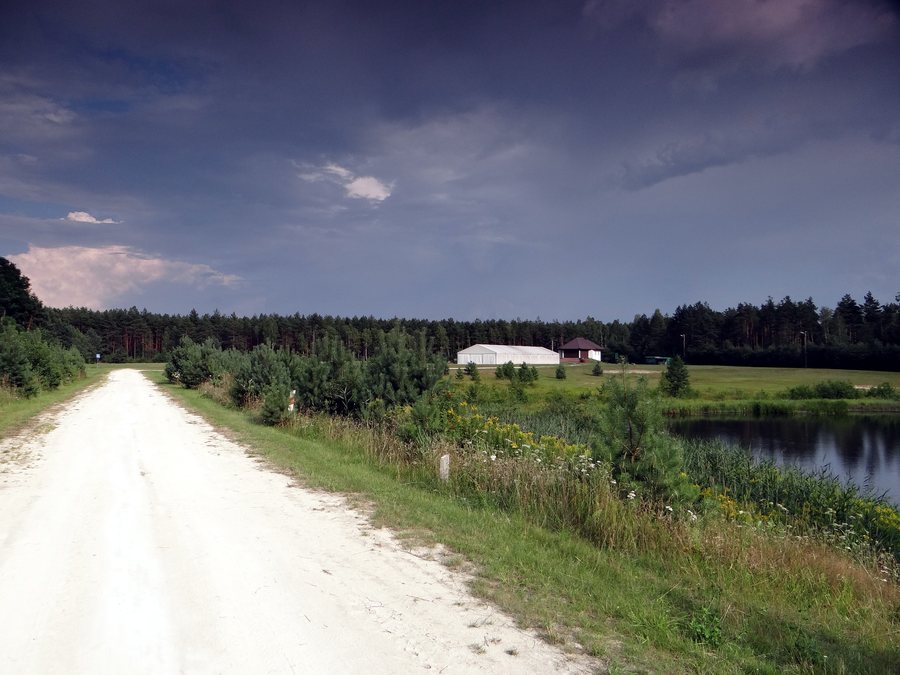
Quick Facts About Aleksandrów
- Aleksandrów was established in 1791 on the territory of the village of Łukowa, which was founded by Andrzej Zamoyski.
- A brick figure of Saint Stanislaus from the 18th century stands in the village.
- The Gminna Orkiestra Dęta was founded in 1934 at the parish church of Matki Bożej Nieustającej Pomocy.
- The settlement has the typical layout of a linear village.
- In the Sigła colony within the municipality, a retention reservoir for small-scale water retention lies on the Szum.
What Does the Village’s History Tell Us?
The year 1791 marks the beginning of Aleksandrów on the territory of the village of Łukowa. This village had been founded by Andrzej Zamoyski. The two place names therefore belong to different parts of the founding history: Aleksandrów was established on the territory of Łukowa. This connection gives more insight into the destination than an isolated date. It anchors Aleksandrów’s history in a specific place and offers a distinct point of entry alongside its cultural and architectural features.
Which Cultural Traces Shape Aleksandrów?
A single monument and an institutional history of music offer different points of interest. The brick figure of Saint Stanislaus from the 18th century is a distinctive religious feature in the village. The Gminna Orkiestra Dęta was also founded in 1934 at the parish church of Matki Bożej Nieustającej Pomocy in Aleksandrów. Together, these details link an older object with a later chapter in local music history, without conflating them into a single event.
A 2009 description of the county also mentioned folk and traditional customs groups in Aleksandrów. Alongside the church and brass band, this brings traditional customs into view as another cultural theme. Travelers who pay particular attention to local history and culture when choosing a destination will find several points of interest here: a named religious sculpture, the founding history of a music ensemble, and a reference to folk traditions and customs.
How Can the Village Character Be Understood?
Aleksandrów’s buildings are typical of a linear village. The term describes a settlement pattern in which buildings are arranged along a road. This means the focus is not only on a single monument, but also on the form of the village as a whole. This adds another layer to the founding history and individual cultural references: Aleksandrów can be understood both through individual historical landmarks and through its settlement character. This distinction is useful when comparing destinations by travel interests, because a village landscape tells a different story from a single sculpture or historical date.
What Belongs to the Municipality, and What to the Village?
One landscape feature lies within the municipality: a retention reservoir for small-scale water retention is located on the Szum in the Sigła colony. The location identifies Sigła as part of the municipality of Aleksandrów, distinguishing it from the details about the village itself. The term “small-scale water retention” refers to a different aspect than village history or buildings: it means retaining water on a small scale. This helps distinguish the cultural and architectural details of Aleksandrów from this landscape feature of the municipality.
Discover More Destinations: Biłgoraj, Borowina, Lipowiec, Tereszpol-Kukiełki, Podsośnina, Obsza and Tarnogród.
FAQ
When was Aleksandrów established?
The village was established in 1791 on the territory of the village of Łukowa, which was founded by Andrzej Zamoyski.
What cultural connections are associated with Aleksandrów?
A brick figure of Saint Stanislaus from the 18th century stands in the village. The Gminna Orkiestra Dęta was founded in 1934 at the parish church of Matki Bożej Nieustającej Pomocy.
Where is the retention reservoir on the Szum?
It is located in the Sigła colony within the municipality of Aleksandrów.
Back to the main travel overview: Biłgoraj.

