
Biłgoraj – Churches and the Sieve-Making Tradition
Accommodation in Biłgoraj
Biłgoraj brings together the history of sieve-making and sacred architecture. The Muzeum Ziemi Biłgorajskiej and Zagroda Sitarska showcase the town’s craft tradition. The wider Biłgoraj destination also offers hiking and cycling trails, as well as activities at Zalew Bojary. This lets you treat culture and outdoor activities as separate focuses for your trip.
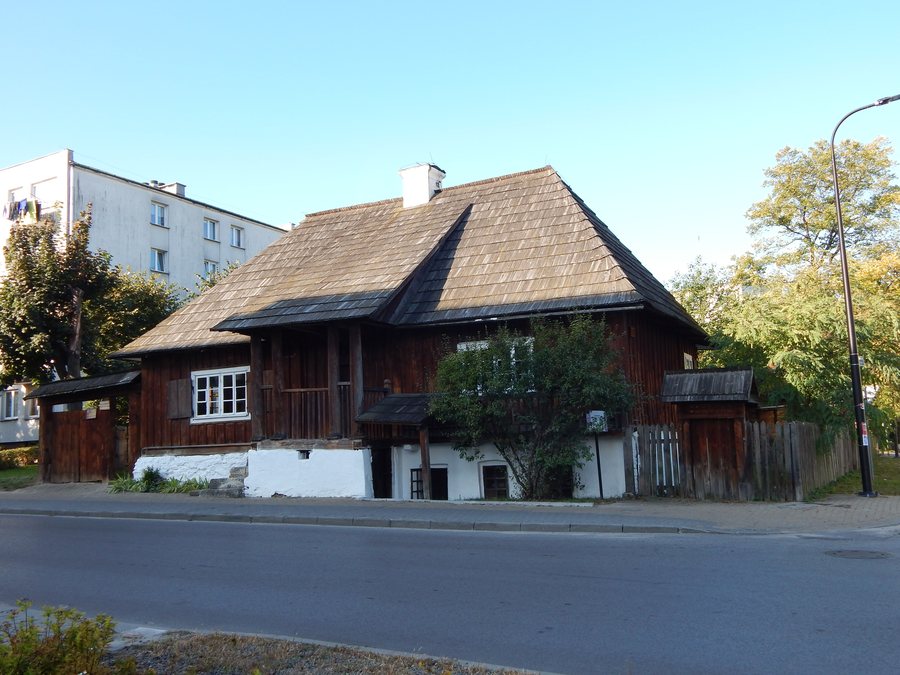 File:Biłgoraj, ul. Nadstawna 32 (zabytek A373 z 1969-04-14).jpg
Photo: Sashabrava via Wikimedia Commons, CC BY-SA 4.0
Biłgoraj at a glance
- The Muzeum Ziemi Biłgorajskiej includes the Zagroda Sitarska open-air museum, which showcases the sieve-making tradition.
- The Church of St. Mary Magdalene was elevated to the status of a diocesan shrine on 22 July 2016.
- In the wider Biłgoraj destination, hiking and cycling trails cross varied landscapes; the Biłgoraj–Osuchy cycling trail is 38 km long.
- Zalew Bojary has, among other things, a pier, fishing spots, volleyball courts and a children’s playground.
What does Biłgoraj tell us about craft and history?
The Muzeum Ziemi Biłgorajskiej is based in Biłgoraj. It includes Zagroda Sitarska, an open-air museum that showcases the town’s sieve-making tradition. Zagroda dates back to the 19th century. This connects the history of the craft with a specific historic site, without requiring a sequence of further stops.
In the wider Biłgoraj destination, the Muzeum Ziemi Biłgorajskiej preserves more than 10,000 objects relating to archaeology, ethnography, history, the military, numismatics and art. The collections are presented in permanent and temporary exhibitions. The permanent exhibition “Nad Tanwią i Ładą” explores the history of Biłgoraj and its surroundings. If you would like to see this particular exhibition, check in advance whether it is currently on display.
Which churches shape the area’s cultural history?
The Church of St. Mary Magdalene was elevated to the status of a diocesan shrine dedicated to St. Mary Magdalene in 2016. The brick shrine has three naves and was built in the eclectic style. A historic painting of the saint, probably dating from the 17th century, is located at the altar. This dating is therefore a well-founded possibility, not a certainty.
The Church of St. George and the Church of the Assumption of Mary also offer different historical and architectural points of reference: St. George dates from the late 17th century, while the Church of the Assumption of Mary is described as late Baroque. Together with the Shrine of St. Mary Magdalene, these details illustrate different periods of construction and stylistic features. If you are interested in churches, you can distinguish between these sites by their respective histories and architecture.
What trails are there in the wider Biłgoraj destination?
The Roztocze hiking trail runs from the Biłgoraj Plain through Western Roztocze to Zwierzyniec, passing through Biłgoraj along the way. The yellow Roztocze hiking trail also passes through the town of Biłgoraj and the municipalities of Biłgoraj, Tereszpol, Radecznica and Zwierzyniec. The blue trail through Puszcza Solska connects Biłgoraj with Górecko Kościelne. Beyond its initial stretch through the town, it runs through the forests of Puszcza Solska. These routes differ in their courses and named destinations; check current trail conditions before setting out on a hike.
For cycling, the blue Biłgoraj–Osuchy cycling trail is a specific option: it is 38 km long and passes through the town of Biłgoraj and the municipalities of Biłgoraj, Księżpol and Łukowa. A large part of it runs through the Tanew Valley. Its length and landscape offer an initial point of comparison if you are considering adding a cycling trip to your plans. However, they do not describe the current condition of the trail.
What does the wider Biłgoraj destination offer by the water?
Water equipment can be hired at Zalew Bojary, including kayaks and bicycles. The site has sunbathing areas, a pier and fishing spots; there are also volleyball courts and a children’s playground. These facilities cover various kinds of leisure activities: time by the water, fishing, exercise and play. You can choose among them according to your travel group’s interests, without this implying that any accommodation is particularly suitable or equipped for these activities.
Another cultural point of interest in the wider Biłgoraj destination is the Zespół Młyński on the Biała Łada, which dates to the mid-19th century. The present-day mill complex includes a listed 19th-century granary and a miller’s house that also dates from that century. The house was moved from Ogrodowa Street in Biłgoraj to the site of the complex. Details about the river, the period of origin and the relocated building offer a different historical perspective from the churches and the sieve-making heritage.
Discover more destinations: Borowina, Podsośnina, Obsza, Aleksandrów, Tereszpol-Kukiełki, Lipowiec, Tarnogród.
FAQ
Where can you encounter the sieve-making tradition?
It is showcased at the Zagroda Sitarska open-air museum, which is part of the Muzeum Ziemi Biłgorajskiej.
What makes the Shrine of St. Mary Magdalene distinctive?
It was elevated to the status of a diocesan shrine in 2016, is a three-nave brick building in the eclectic style, and houses a painting of the saint that probably dates from the 17th century.
Which cycling route has a stated length?
The blue Biłgoraj–Osuchy cycling trail is 38 km long. A large part of the route runs through the Tanew Valley.
What leisure activities are available at Zalew Bojary?
Among other things, there are sunbathing areas, a pier, fishing spots, volleyball courts and a children’s playground. Water equipment such as kayaks and bicycles can be hired.
Back to the wider travel overview: Biłgoraj.

