
Lubiatow: Baroque church and remains of a manor park
Accommodation in Lubiatow
The Baroque church in Lubiatow is built of brick and stone; its wooden tower is crowned with a spire and lantern. Remains of a manor park and its boundary enclosure have been preserved on the southeastern edge of the village. This lets you consider the church architecture and traces of a manor estate as distinct cultural themes.
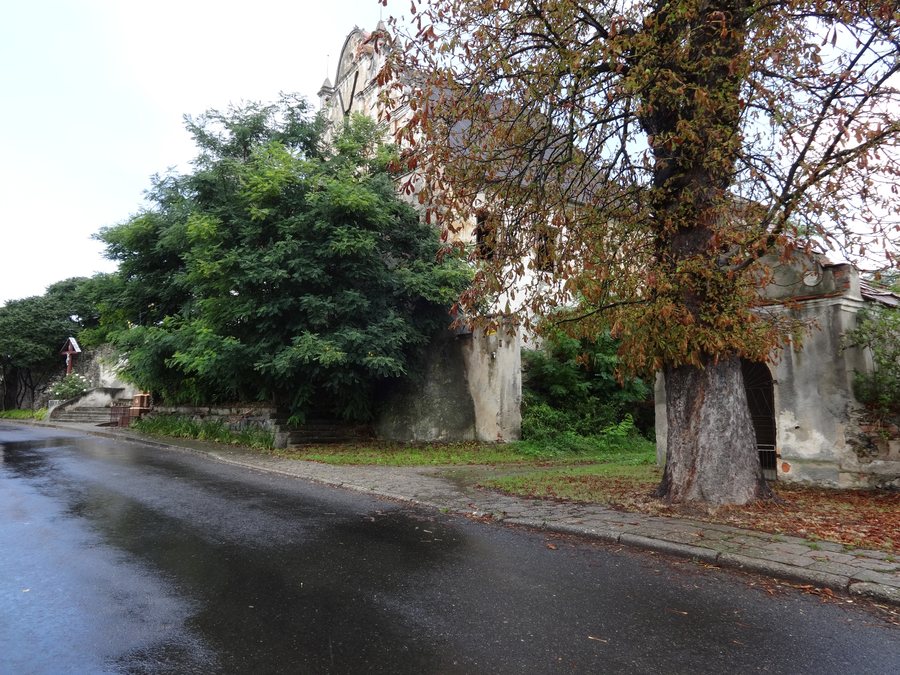 File:Lubiatów dwór, 1600, poł. XIX nr 627464 (1).JPG
Photo: Zanfra via Wikimedia Commons, CC BY-SA 3.0 pl
Key facts about Lubiatow
- The church is Baroque and built of brick and stone.
- The wooden church tower is crowned with a spire and a lantern.
- Lubiatow is on Route No. 288 between Nowogród Bobrzański and Dąbie.
- Remains of a manor park and its boundary enclosure have been preserved on the southeastern edge of the village.
What details define the church?
The church combines two building materials, brick and stone, while the tower stands apart because it is made of wood. This contrast in materials offers an accessible starting point if you are interested in historic architectural forms. The features can be considered through two questions: What materials is the church built from, and how is its tower designed? This brings the specific construction into focus, rather than just the Baroque designation.
The tower is crowned with a spire and a lantern. The spire is the tower’s upper roof structure; a lantern is an architectural element set on top. Together, they articulate the tower’s peak and add two specific design features to the wooden structure. So when comparing church architecture, materials and the tower’s crown can matter as well as style. These described details make it easier to form an initial impression without requiring specialist knowledge.
What traces of a manor estate remain?
Remains of a manor park and the estate’s boundary enclosure have been preserved on the southeastern edge of the village. The park is described as neglected; check its condition before visiting. The park and enclosure are different elements: one refers to the grounds themselves, the other to their boundary. This adds a manor-estate theme to the church’s religious architecture without suggesting that the two form a single building complex.
For travelers interested in historic features of the village, this offers two different points of interest. At the church, the focus is on style, materials, and the tower’s design. The remains on the southeastern edge relate to the park and enclosure. This distinction can help you weigh Lubiatow’s cultural aspects according to your own interests, rather than combining the different features into a single visit theme.
How can Lubiatow be located geographically?
Lubiatow is on Route No. 288 between Nowogród Bobrzański and Dąbie. The road and the two named places give you concrete reference points for finding your way on a map. If you include Lubiatow in your travel plans, you can use this location information as a starting point for researching your route. It describes where the village is and adds geographic context to its cultural features.
The village’s location on Route No. 288 is a separate geographic reference point. Which of these topics matters most to your plans depends on your travel intentions; the information offers an initial factual overview of Lubiatow.
Discover more destinations: Gryzyna, Marcinowice, Dychów, Gubin, Osiecznica, Bronkow, Łagów, Budachów.
FAQ
What materials is the church in Lubiatow built from?
The Baroque church is built of brick and stone. Its church tower is made of wood.
What crowns the wooden church tower?
The tower is crowned with a spire and a lantern.
Where is Lubiatow?
Lubiatow is on Route No. 288 between Nowogród Bobrzański and Dąbie.
What has been preserved on the southeastern edge of the village?
Remains of a manor park and the estate’s boundary enclosure have been preserved there.
Go to the main travel overview: Crossen An Der Oder.

