
Wschowa
Accommodation in Wschowa
Wschowa offers several ways to explore the city on a culture-focused trip: regional collections, historic fortifications and distinctive architecture. When choosing accommodation, you can plan around the subjects that interest you most and when you would like to visit the lapidarium.
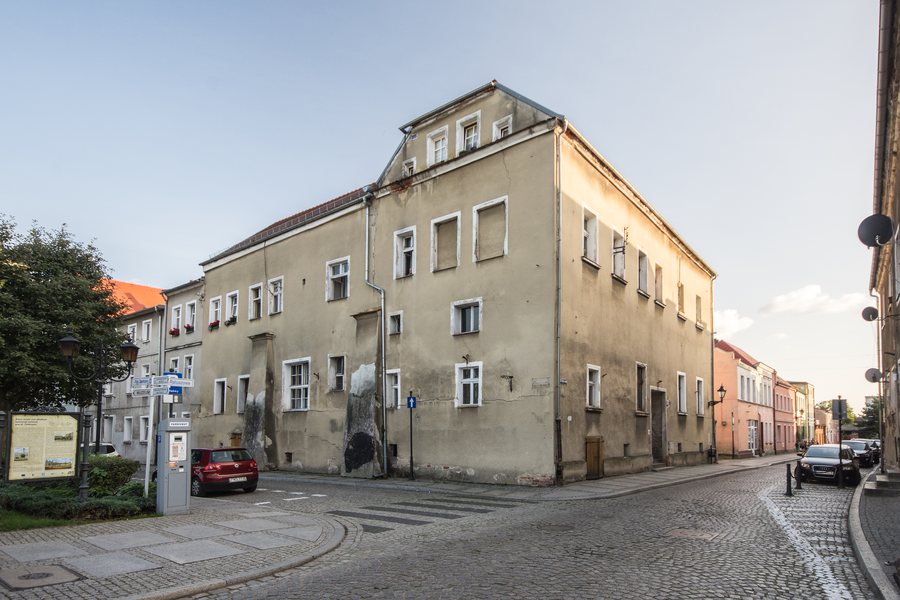 File:SM Wschowa Ratuszowa 2 2023 (0).jpg
Photo: Sławomir Milejski via Wikimedia Commons, CC BY-SA 4.0
File:SM Wschowa Ratuszowa 2 2023 (0).jpg
Photo: Sławomir Milejski via Wikimedia Commons, CC BY-SA 4.0
Wschowa at a glance
The Muzeum Ziemi Wschowskiej preserves regional collections covering archaeology, ethnography, history and art history, with a particular focus on the history of the royal city of Wschowa. Other sights described here include the Kripplein Christi evangelical church complex, the Biały Domek and the Lwi Mostek. The Lapidarium Rzeźby Nagrobnej is open to visitors from 1 April to 2 November and is closed on Sundays and Mondays during this period.
Which cultural sites can you discover in Wschowa?
The Muzeum Ziemi Wschowskiej brings together different approaches to regional history. Archaeology and ethnography sit alongside history and art history. Its particular focus on the history of the royal city of Wschowa gives the collections a clear local emphasis. The museum is therefore a good choice for visitors interested not only in individual buildings, but also in the city’s historical and cultural development.
To promote musical culture, the museum holds temporary exhibitions, lectures and talks, as well as concerts and meetings with renowned instrumentalists and soloists. This variety sets its programme apart from a collection-only display: alongside regional subjects, it also includes musical events. If you would like to plan your visit around a particular programme, it is a good idea to check the dates in advance.
The Biały Domek, also known as the Domek Mleczny (“Milk Pavilion”), appeals to visitors with an interest in a different kind of architecture. It is considered a notable example of modernist architecture in Wschowa. Domek Mleczny is another name for the same building, not an additional sight. Kripplein Christi, meanwhile, is an evangelical church complex dating from the early 17th century. Together, the two sites offer different architectural and historical perspectives on Wschowa’s building history.
What do the city walls and Lwi Mostek tell us?
The city walls are an example of medieval fortifications. Sections of the wall, a gate tower, a moat and an embankment have been preserved. In the 19th century, the fortifications were transformed into a promenade and gardens. Both the fortifications and their later redesign are therefore part of this site’s history. Visitors interested in the city’s past will find more than isolated remnants of walls here: several named parts of a former defensive system remain.
The Lwi Mostek also brings together features from different periods. The structure acquired its present appearance in the second half of the 19th century, in the eclectic style. The sandstone lion standing in the centre, by contrast, is in the Rococo style and was probably made towards the end of the 18th century. The qualification in this dating matters: it refers to the lion, not to the present appearance of the Lwi Mostek.
What should you know before visiting the lapidarium?
The Lapidarium Rzeźby Nagrobnej has specific opening dates: it is open to visitors from 1 April to 2 November and closed on Sundays and Mondays during this period. So do not plan your visit for either of those days. The seasonal dates and weekly closing days apply to the same visiting period.
A paid guided visit costs 50 złoty. Booking at least two days in advance is required. This requirement applies to the guided visit, so be sure to allow enough time to book and factor in the price. For travellers wishing to visit several cultural sites, Wschowa offers the museum and the historic buildings described here, as well as the lapidarium, each providing a different point of interest.
If you would like to compare other destinations, you can also find information about Slawa, Lubiatów, Radzyń and Tarnów Jezierny.
FAQ
When is the Lapidarium Rzeźby Nagrobnej open?
It is open to visitors from 1 April to 2 November. It is closed on Sundays and Mondays during this period.
How much does a guided visit to the lapidarium cost?
The paid guided visit costs 50 złoty. Booking at least two days in advance is required.
What subjects are covered by the Muzeum Ziemi Wschowskiej?
The museum preserves regional collections covering archaeology, ethnography, history and art history, with a particular focus on the history of the royal city of Wschowa.
For the broader travel overview: Wschowski.

.jpg)