
Wschowski: City History and Landscape
Accommodation in Wschowski
Wschowski combines historic buildings in Wschowa with a landscape that stretches from the Leszno Lakeland to the Głogów ice-marginal valley. When planning your trip, you can therefore consider the town’s history and nature as distinct focuses.
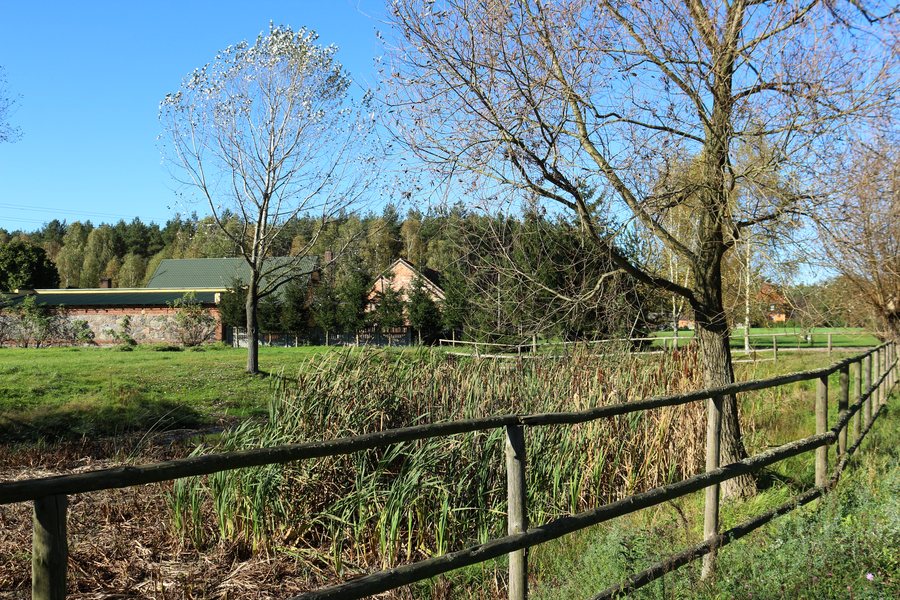
Wschowski at a glance
Wschowski County encompasses the Leszno Lakeland, the Leszno Upland and the Głogów ice-marginal valley. A 2,894-hectare section of Przemęcki Landscape Park lies within the municipality of Wschowa. Lake Lgińsko is located near Wschowa: at 68.6 hectares, it is the largest of the municipality’s three lakes and lies about 10 kilometres from Wschowa.
Which historic sites shape Wschowa?
In Wschowa, the town hall, the row of buildings around the market square and the fortifications tell different chapters of the town’s history. The town hall retains a Gothic hall with a net vault dating from the first half of the 16th century. Several Baroque townhouses from the 17th century stand along the western side of the market square. During the Saxon period, they were converted into a royal residence.
The town walls also offer a chance to consider their construction and origins: they were built of stone and brick. Work on the complete fortifications began under Casimir the Great; they were completed in the 15th century. Those interested in different periods will also find two churches with clearly dated construction phases: the Parish Church of St Stanislaus, Bishop and Martyr, and the Assumption of the Blessed Virgin Mary was rebuilt between 1720 and 1726 to a design by Pompeo Ferrari. The Church of the Holy Trinity was built between 1837 and 1839 to a design by Karl Friedrich Schinkel.
What does the museum tell visitors about the town?
The Muzeum Ziemi Wschowskiej holds archaeological, ethnographic, historical and art-historical collections. They focus in particular on the history of the royal town of Wschowa. The 18th-century town fountain features a copy of a sculpture of a woman in armour; the original is kept in the museum. This makes it possible to consider a work in the town’s public space and its museum-held original as two distinct aspects of the town’s history.
Another historical date concerns the Jesuit college: it opened in 1727 on the site of the former municipal mint. The Lapidarium Rzeźby Nagrobnej offers guided visits for organised groups by prior telephone or electronic reservation. If you plan to visit, note the group requirement and book in advance.
What nature and cycling experiences are available?
Lake Lgińsko offers a scenic contrast to Wschowa’s historic attractions. Its picturesque beach is widely used for recreation. Its distance of about 10 kilometres and area of 68.6 hectares help place the lake as a separate excursion destination near Wschowa; they do not, however, indicate a specific length of stay.
For a longer cycling route, the signposted Wschowa–Lgiń–Sława route starts at Park Wolsztyński in Wschowa. It is 39.3 kilometres long. Wschowa’s water tower, dating from the early 20th century, also stands at the edge of the park.
What guidance can help with planning?
The tourist information office recommends the 140-minute route “Królewskie Miasto Wschowa”. It is another way to explore Wschowa with a focus on its history. The 39.3-kilometre cycling route and the recommended 140-minute route are separate offerings, so be sure to consider each detail when planning the relevant route.
If you would like to include more local pages in your search, you can find Radzyń, Lubiatów, Wschowa, Slawa and Tarnów Jezierny here. For comparisons with other destinations, Zielonogórski, Sorau and Międzyrzecki are also available.
FAQ
How long is the Wschowa–Lgiń–Sława cycling route?
The signposted cycling route is 39.3 kilometres long and starts at Park Wolsztyński in Wschowa.
Which route does the tourist information office recommend?
The tourist information office recommends the 140-minute route “Królewskie Miasto Wschowa”.
How can organised groups visit the Lapidarium?
Guided visits are available to organised groups by prior telephone or electronic reservation.
For the broader travel overview: Lubusz.

