
Discover Żagań
Accommodation in Żagań
Żagań combines a significant monastic history with a museum dedicated to the history of prisoner-of-war camps and several themed routes. If you are planning a stay, these sites and trails offer practical guidance for choosing your itinerary.
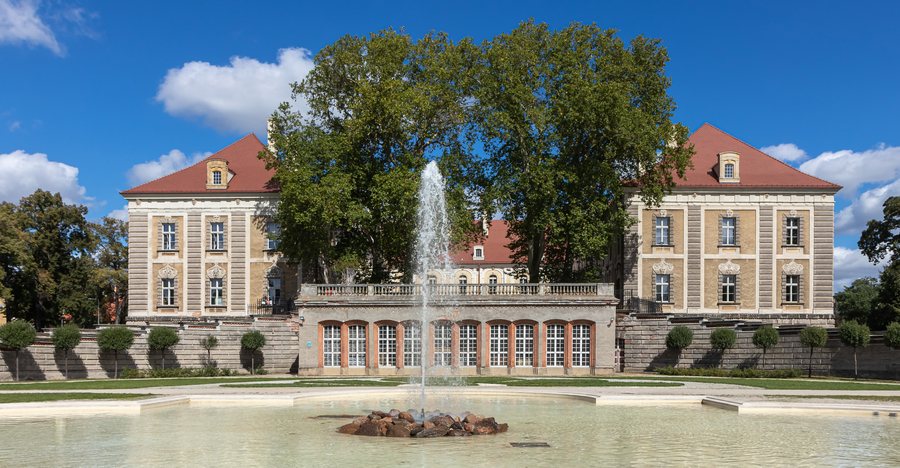
Żagań at a glance
- The post-Augustinian monastery complex was designated a Polish Historic Monument in 2011.
- The monastery library has been preserved almost intact and is known for the acoustics of its so-called Whispering Vault.
- The Muzeum Obozów Jenieckich displays documents, photographs, accounts and objects from the history of prisoner-of-war camps.
- The Great Escape Trail is a circular route that starts and ends at the museum.
- The “Kamienne Ślady Przeszłości” trail is 3 km long and leads to places connected with the history of the Ducal Park.
- The tower of the former Evangelical church was restored in 2004 and now serves as an observation tower.
What do the monastery and museum tell us about Żagań?
The post-Augustinian monastery complex is a prominent destination for anyone interested in the city’s history and cultural heritage. It has held the status of Pomnik Historii, a Polish Historic Monument, since 2011. Within the complex, the monastery library is well worth a look: since the 15th century, it has been one of the most famous libraries in Silesia and has been preserved almost intact. It is also known for the remarkable acoustics of its so-called Whispering Vault.
The Muzeum Obozów Jenieckich focuses on a different aspect of history. On display are salvaged documents about Stalag and the postwar trials of perpetrators, photographs, and accounts from prisoners of war. The collection also includes everyday objects and handicrafts made in the camp. Żagań thus brings together different forms of remembrance: the enduring monastic culture and the evidence of everyday life in the camp.
Which routes suit your interests?
The routes focus on different themes. The Szlak wielkiej ucieczki, or Great Escape Trail, is a circular route that starts and ends at the Muzeum Obozów Jenieckich. If you would like to combine the trail with a museum visit, they share the same start and end point.
The “Kamienne Ślady Przeszłości” tourist trail has a clearly stated length: it is 3 km long. It starts at the Domku Portiera, now the Centrum Informacji Turystycznej w Żaganiu, at the park entrance. From there, it passes the Domku Inspektora Parku, through Zacisze Doroty, Domek Wędkarski, Miejsce Marii and Wyspa Marii, and on to the former Oranżeria nad Bobrem, as well as other places connected with the history of the Ducal Park.
The Ścieżka “Park Słowiański” runs through a city park featuring a variety of woodland habitats, park ponds, the Bóbr River and the “Gród Chrobry” archaeological site. The park also has a clearing, a fire pit, benches and a toilet. Alongside the historic routes, the park landscape and named outdoor sites are another focus.
Another landmark is the tower of the former Evangelical church. Restored in 2004, it now serves as an observation tower offering panoramic views of the city. The monastery, museum, park trails and tower appeal to different interests; you can weigh up these options when planning your stay.
Discover more destinations: Gmina Szprotawa and Iłowa.
How can you tailor your hotel search to your stay?
The places mentioned offer a straightforward range of options: the monastery and library represent the city’s cultural heritage, the museum focuses on the history of prisoner-of-war camps, and the trails explore a variety of historical and landscape themes. You can also choose a route based on whether the stated length of 3 km is important to you or whether you are looking for a route described as circular.
FAQ
What makes the monastery library in Żagań special?
It has been preserved almost intact, has been one of the most famous libraries in Silesia since the 15th century, and is known for the remarkable acoustics of its so-called Whispering Vault.
What subjects does the Muzeum Obozów Jenieckich cover?
The exhibitions include salvaged Stalag documents, materials about the postwar trials of perpetrators, photographs, accounts from prisoners of war, everyday objects and handicrafts made in the camp.
Which of the routes described is 3 km long?
“Kamienne Ślady Przeszłości” is 3 km long. The route starts at the present-day Centrum Informacji Turystycznej w Żaganiu at the park entrance and leads to several places connected with the history of the Ducal Park.
For the broader travel overview: Sagan.

