
Sagan
Accommodation in Sagan
Sagan combines trails through river landscapes and parkland with a multifaceted urban history. For planning your trip, it is helpful to know that there are routes with different focuses, from the longer trail along the Bóbr to shorter themed trails in Żagań.
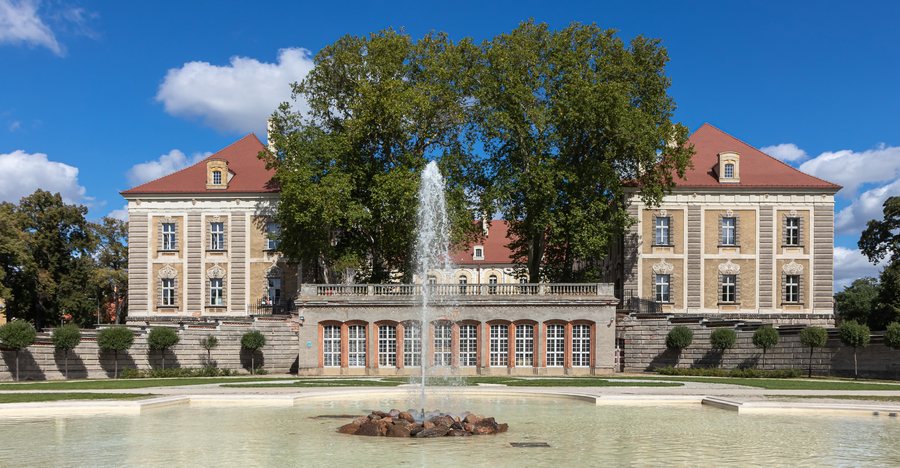
Sagan at a glance
The 9.5-kilometre Ścieżka Dzików trail runs along the Bóbr’s riverside meadows and oxbow lakes, as well as the pine forests of the extensive Niederschlesische Heide. The 3-kilometre “Kamienne Ślady Przeszłości” route begins at the gatehouse, which now serves as the Centrum Informacji Turystycznej in Żagań. For getting around the town: National Road 12 runs as a bypass along the eastern and northern sides of the town. The park and castle complex covers more than 100 hectares and is shaped by the Bóbr.
Which trails and activities suit your trip?
The trails mentioned differ in length and theme. The Ścieżka Dzików focuses on riverside meadows, oxbow lakes and pine forest. The shorter “Kamienne Ślady Przeszłości” route has a historical focus; its starting point is also now the tourist information centre. The distances help you distinguish between these two options when planning your day, without implying a walking time.
Cycling and kayaking routes are also part of the region’s offerings. The interregional Bałtyk–Karkonosze cycle route passes through Żagań on its way from Trzebież to Jelenia Góra. On the Bóbr, the kayak route covers a stretch from Szprotawa to Żagań. The Bóbr is also a landmark of Żagań, particularly its park, and carries participants on numerous kayak trips. When deciding how to spend your trip, you can choose between a cycling route, an experience on the water and walking trails.
What makes the park and castle complex distinctive?
The Ścieżka Wiewiórek leads through Żagań’s park and castle complex. Park Pałacowy lies around Pałac Książęcy and combines classical garden design with a natural, romantic landscape. Preserved vistas, mature trees and informal paths characterise the park; the paths are suitable for walking and relaxing. The landscape here is therefore different from the route through riverside meadows, oxbow lakes and pine forest.
The Wieża Widokowa combines recreational and historical functions with views of Żagań and the surrounding green spaces. Visitors to Pałac Książęcy can see its formal halls and arcaded courtyard. The themed trail devoted to the heritage of Duchess Dorothea begins in front of Pałac Książęcy. Those wishing to focus on the park, the architectural complex and its history will find several distinct points of interest here.
What cultural history can you discover?
For centuries, the former Augustinian Canons’ monastery in Żagań was a centre of religious, scientific and intellectual life. The surviving medieval town walls were built in the 14th century and formed part of the town’s defensive system. The former Jesuit college and the Church of Saints Peter and Paul make up a monumental religious and educational complex.
The Muzeum Obozów Jenieckich in Żagań is associated with the history of Allied prisoners of war. In the area near the destination, Stalag Luft III was established in spring 1942 south of the town and west of the already existing Stalag VIII C camp. Another cultural stop is the open-air installation Solar System, part of the tourist trail “Śladami Johannesa Keplera w Żaganiu”.
How should you plan for tours and local experiences?
The Centrum Informacji Turystycznej mainly offers guided walking tours of Żagań for organised groups. The date, duration and booking details are arranged individually with the centre. When planning, it is therefore important to note that these details are not fixed in general and must be agreed directly.
A guided experience at Winnica Saganum includes a tasting of wine and snacks among the vines. Wine and the regional landscape thus complement the options of parks, cultural history and outdoor activities. To compare other pages for nearby places, you can also view Iłowa, Gmina Szprotawa and Żagań. Further pages for regional comparison: Sulęciński, Świebodziński, Wschowski and Zielonogórski.
FAQ
Which trails have a specified length?
The Ścieżka Dzików is 9.5 kilometres long. “Kamienne Ślady Przeszłości” is 3 kilometres long and begins at the present-day Centrum Informacji Turystycznej.
What can you see at Pałac Książęcy?
Visitors can see the formal halls and the arcaded courtyard. The themed trail devoted to the heritage of Duchess Dorothea also begins in front of the palace.
How are guided walking tours organised?
They are offered mainly to organised groups. You arrange the date, duration and booking details individually with the Centrum Informacji Turystycznej.
What does the guided experience at Winnica Saganum include?
It includes a tasting of wine and snacks among the vines.
For the broader travel overview: Lubusz.
More about the destination
Useful information for planning your trip:

