
Zatonie – Palace Ruins, Landscape Park and Culture
Accommodation in Zatonie
Zatonie combines the ruins of a Neoclassical palace with an extensive landscape park and a distinctive organ history. If you are looking for accommodation for a culture- and park-focused stay, the town has a clear identity: architectural history, regional musical culture and guided walks are at the forefront.
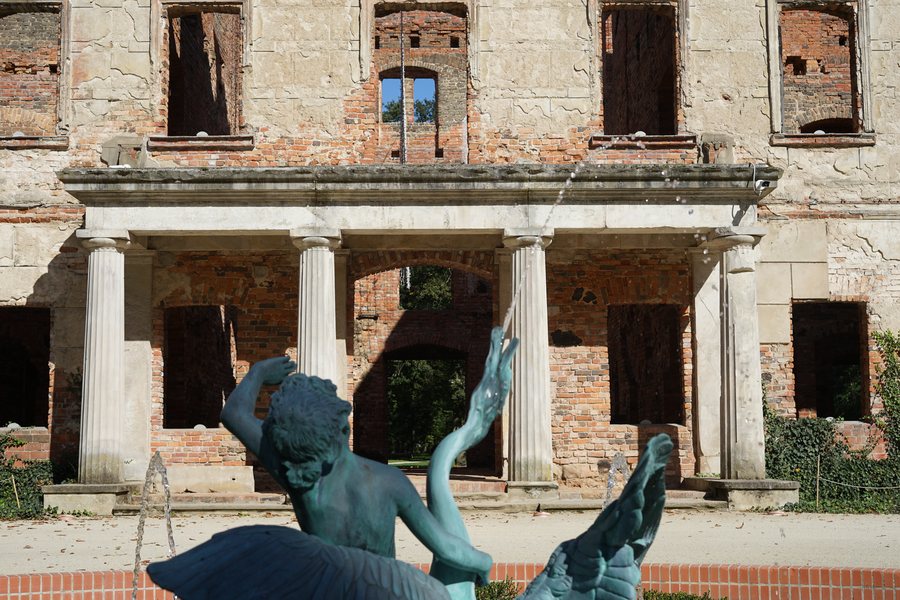 File:Zatonie ruina pałacu w świetle dziennym fontanna.jpg
Photo: Doris1926 via Wikimedia Commons, CC BY-SA 4.0
Zatonie at a glance
- The manor house was converted into a Neoclassical palace in 1842–1843.
- The palace ruins and landscape park are associated with the life and work of Duchess Dorota Talleyrand-Périgord.
- Książęcy Zatonie Park covers 52 hectares and has restored avenues; wild garlic has become its symbol.
- Free guided walks through the park take place annually from May to October.
- The historic organs are more than 225 years old.
What story do the palace ruins tell?
The manor house in Zatonie was converted into a Neoclassical palace in 1842–1843. The palace ruins and extensive landscape park are among the most important places associated with the life and work of Duchess Dorota Talleyrand-Périgord. The town’s character thus brings together architectural history and a connection to a historical figure. The date makes this conversion a distinct period in the palace’s history.
The development of public access can also be placed in a specific period: before 2020, debris was removed and the walls of the palace ruins were secured; afterwards, the site was opened to residents and visitors to Zatonie. The palace ruins and park are open to visitors. When planning your visit, you can distinguish the historic opening of the ruins from current visitor information.
What makes the landscape park special?
At 52 hectares, Książęcy Zatonie Park is an extensive landscape park. Its restored avenues are among the site’s notable features. Wild garlic also shapes the character of the park: the plant has become its symbol. Together, the park’s size, avenues and symbol give it a distinct character alongside its palace history.
The guided walks offer a specific activity in the park: they take place annually from May to October and are free of charge. This lets you distinguish between visiting the park and attending a guided walk when planning your trip. If you would like to join a particular walk, check the current schedule in advance. The stated season defines the time period but does not replace choosing a specific date.
What is noteworthy about the organs in Zatonie?
The historic organs in Zatonie are more than 225 years old. They are the oldest surviving two-manual instrument in the Lubusz region that has not undergone any significant later alterations. These features should be considered together: their age reflects their long history, the term “two-manual” describes their instrument type, and their state of preservation is another distinctive feature.
The organ history adds a distinct cultural dimension to the town’s connection with its palace and landscape park. If historic instruments interest you, this regional feature is a specific reason to consider Zatonie beyond its park and architectural history.
Discover more destinations: Krępa, Drzonków, Przylep, Marzęcin, Zielona Góra, Kargowa, Jeleniów, Racula.
FAQ
When do the guided walks in the park take place?
They take place annually from May to October and are free of charge. Check the schedule in advance if you would like to attend a particular walk.
What is the connection between Zatonie and Duchess Dorota Talleyrand-Périgord?
The palace ruins and extensive landscape park are among the most important places associated with the Duchess’s life and work.
What makes the historic organs noteworthy?
They are more than 225 years old and are considered the oldest surviving two-manual instrument in the Lubusz region without significant later alterations.
For the broader travel overview: Zielonogórski.

