
Discover Strzegowo
Accommodation in Strzegowo
Strzegowo brings together several distinct historical themes: a wooden church dating from 1756, everyday objects from past centuries, and Jewish history.
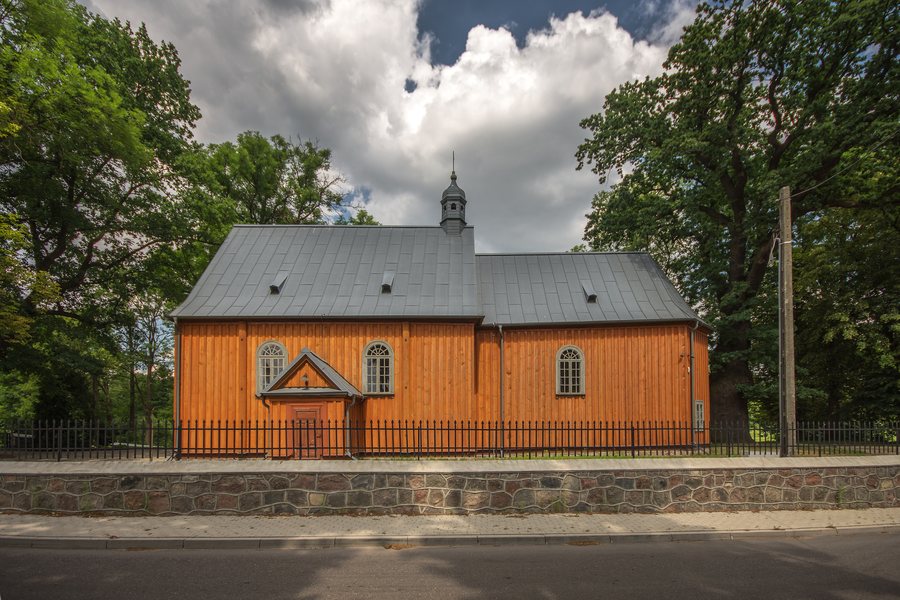 File:SM Strzegowo kościół św Anny 2018 (2).jpg
Photo: Sławomir Milejski via Wikimedia Commons, CC BY-SA 4.0
Strzegowo at a glance
St. Anne’s Church is built of wood using log construction; a bell tower dating from the 19th century stands beside it. The Jewish cemetery was established in the 19th century and lies southwest of the town on the road to Radzanów. The Strzegowskie Muzealia collection comprises exhibits from past centuries that were once used in everyday life. SUNSET by Anna Szulim is listed under agritourism at ul. Wyzwolenia 1A, 06-445 Strzegowo.
What historical traces can you find in Strzegowo?
The first Jewish residents settled in Strzegowo around 1775. The Jewish cemetery, established in the 19th century, adds a nearby site connected to this history. These two details refer to different points in time: the settlement dates to around 1775, while the cemetery was established in a later century.
The cemetery lies southwest of the town on the road to Radzanów. Its location can therefore be understood differently from that of the church in town. If you would like to visit the cemetery in person, check access in advance. This lets you take the town’s history into account without assuming a visit will necessarily be possible.
What makes St. Anne’s Church distinctive?
St. Anne’s Church was built in 1756. Two aspects of its construction are described specifically: the building is made of wood and uses log construction. In this type of construction, stacked logs form the walls. This makes the technical term easy to understand: wood refers to the material, while log construction refers to the building method.
A bell tower dating from the 19th century stands directly beside the church. The church and tower are therefore adjacent buildings from different periods. If you are interested in historic architecture, you can keep these differences in mind rather than assuming both buildings were constructed at the same time.
What can you learn about the Strzegowskie Muzealia collection?
The collection focuses on exhibits from past centuries that were once used in everyday life. This gives the objects a clear connection to daily life: they come from another era and once served practical purposes. In contrast to the church, whose construction draws attention to architecture, the collection focuses on objects and how they were used in the past.
If you are planning to visit the collection, check directly in advance whether it is currently open to visitors. The description of the exhibits can help you decide whether the subject interests you; it does not replace information for the day of your visit.
What accommodation information is available for Strzegowo?
SUNSET by Anna Szulim is listed under agritourism at ul. Wyzwolenia 1A, 06-445 Strzegowo. The specific address can serve as a starting point for a direct inquiry. Before booking, ask about current availability and check any conditions that matter for your trip.
You can first decide what type of accommodation you would like to compare, then search specifically for options that suit your trip.
Discover more destinations: Dalnia, Zabiele, Mlawa, Marianowo.
FAQ
How is St. Anne’s Church built?
The church, built in 1756, is made of wood and uses log construction. A bell tower dating from the 19th century stands beside it.
Where is the Jewish cemetery?
It lies southwest of Strzegowo on the road to Radzanów and was established in the 19th century.
Which accommodation is listed with an address?
SUNSET by Anna Szulim is listed as agritourism at ul. Wyzwolenia 1A, 06-445 Strzegowo. Check current availability directly before booking.
To the main travel overview: Mława.

