
Słupno: Historical Sites and Culture
Accommodation in Słupno
Those who want to get to know Słupno through its cultural sites will encounter traces of different periods: an 11th-century earthwork, historic wooden buildings and a monument commemorating an event from 1942. Together, they give the town’s cultural character a tangible shape.
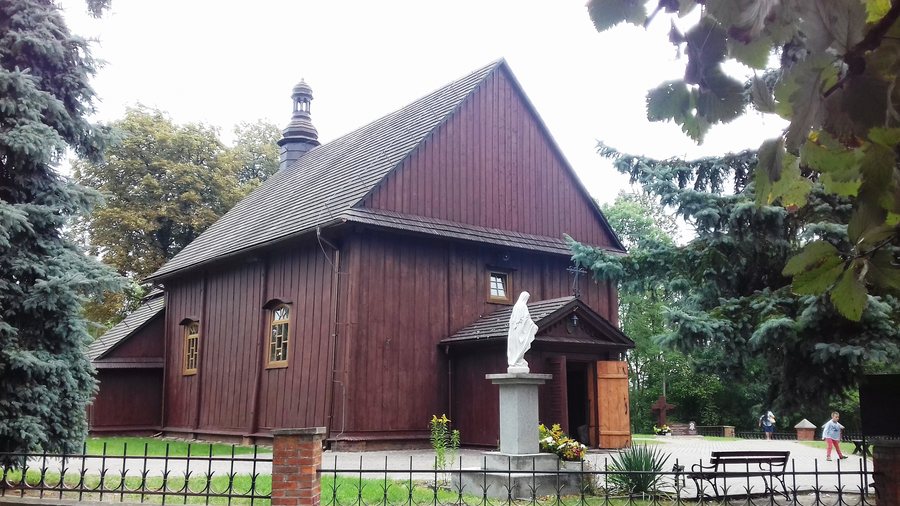
Słupno at a glance
- The wooden Church of the Holy Guardian Angels (pw. św. Aniołów Stróżów) dates from 1753.
- The medieval earthwork, dating from the 11th century, lies southwest of the church, on the bank of the Słupianka stream.
- The presbytery dates from the mid-19th century.
- The wooden house dates from the first half of the 19th century.
- A large, fenced monument in the woods on Kościelna Street commemorates twenty residents of Słupno who were hanged in August 1942.
Which periods are represented by the historic buildings?
The dates span from the 11th century to the 19th century. The wooden church dates to 1753; the wooden house is from the first half of the 19th century, and the presbytery from the middle of that century. This makes it possible to distinguish the buildings by when they were built, rather than lumping them together as simply “old.” Both the church and the wooden house are explicitly described as wooden. The presbytery adds a building associated with the church to the comparison.
The different names also help put them in context: a church, presbytery and wooden house represent different types of buildings. If you are interested in architectural history, you can therefore consider both the date and the type of each building. The dates, spread across several centuries, show that Słupno’s cultural sites do not belong to just one historical period.
Where is the earthwork?
The earthwork is southwest of the church, on the bank of the Słupianka stream. Its description gives two specific points of reference: its direction from the church and its location by the stream. It also differs considerably in age from the church, which dates from 1753. Its location and date help place this archaeological site among Słupno’s historical attractions.
What does the monument on Kościelna Street commemorate?
The large, fenced monument stands in the woods on Kościelna Street. It is at the site where, in August 1942, twenty residents of Słupno who had been bound with barbed wire were hanged. The memorial to a precisely dated event thus complements the older archaeological and architectural heritage. The monument has a different significance from the church, presbytery and wooden house: it is directly connected with commemorating these residents.
How can you organize Słupno’s cultural sites for your trip?
You can group the historical sites according to your interests: the earthwork represents archaeology, the church and houses represent historic buildings, and the monument represents memorial culture. This distinction makes Słupno’s cultural character tangible without treating its different sites as interchangeable. If you are looking for a hotel for a culture-focused trip, this thematic overview can help you decide in advance which of these historical perspectives interests you most.
Discover more destinations: Cierszewo, Rogozino, Rydzyna, Wola Łącka, Łąck, Płock, Kozłowo, Maszewo Duże.
FAQ
What year does the wooden church date from?
The wooden Church of the Holy Guardian Angels (pw. św. Aniołów Stróżów) dates from 1753.
Where is the earthwork in Słupno?
It lies southwest of the church, on the bank of the Słupianka stream, and dates from the 11th century.
What does the monument on Kościelna Street commemorate?
It commemorates twenty residents of Słupno who were hanged in August 1942.
For the broader travel overview: Płock.

