
Płock: The Vistula, Sobótka and Culture
Accommodation in Płock
If you are looking for a hotel in Płock, cultural sites, walking routes and the Sobótka waterfront offer practical starting points for planning your trip. Get to know the city through its steep escarpment, the broad Vistula and the history of its buildings.
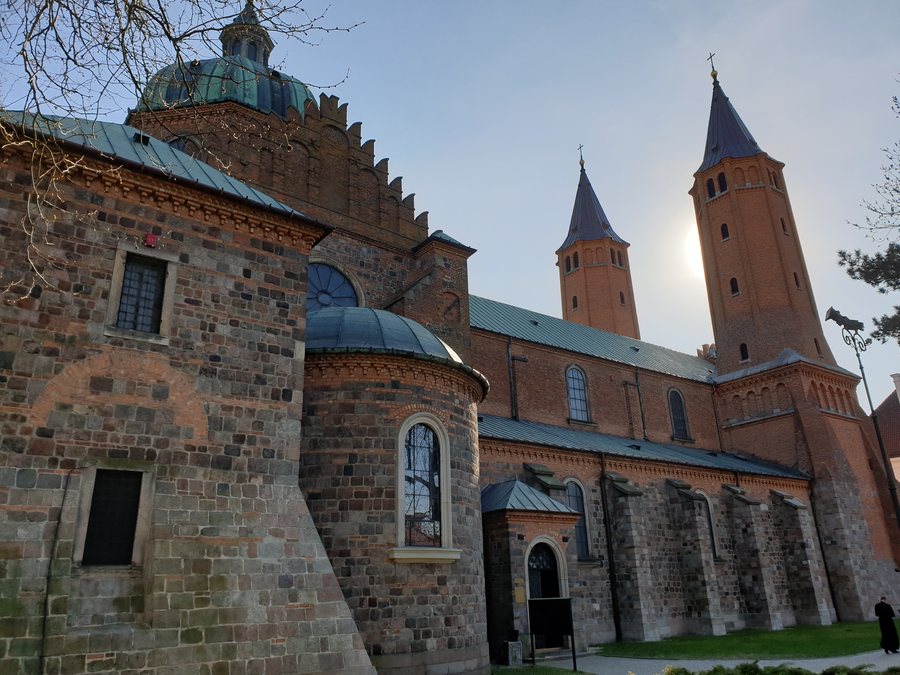 Exterior of the Płock Cathedral, Poland, April 2019
Photo: MichalPL via Wikimedia Commons, CC BY-SA 4.0
Quick facts about Płock
Płock lies on a steep, 52-metre-high escarpment called Wzgórze Tumskie. The Vistula is almost 1.5 kilometres wide at Płock. Zalew Sobótka is an oxbow lake of the Vistula, right on the riverbank. A walking route on Wzgórze Tumskie is about 5 kilometres long and runs from the zoo to the park behind Dom Technika.
How do the escarpment and the Vistula shape the landscape?
These details describe different landmarks: Wzgórze Tumskie is the steep escarpment on which Płock lies, while the almost 1.5-kilometre-wide Vistula forms a distinct feature of the landscape. Zalew Sobótka, by contrast, is an oxbow lake right on the riverbank. In Płock, a prominent rise, the broad river and an oxbow lake connected to it sit side by side.
The Sobótka area offers a specific focus for days by the water. The sandy beach has a beach volleyball court and a children’s slide; kayaks and pedal boats are also available for hire. Cycling and walking paths run around the lake, which is also a popular training spot for runners. The beach, paths and boat hire bring a range of activities together around a named body of water.
What experiences does the Sobótka area offer?
The events calendar also has a connection to the water: every September, the Polish Rowing Sprint Championships and the J. Kawiecki Memorial take place at Zalew Sobótka. If you are interested in rowing, this month offers a specific reference point for planning your trip; check the dates in advance of your visit.
For a walk on Wzgórze Tumskie, the approximately 5-kilometre route has defined start and end points: it runs from the zoo to the park behind Dom Technika. Another clearly measured riverside feature is the 358-metre-long promenade pier on the Vistula. It was built in 2010 and is the only structure of its kind in Poland. The two details indicate different scales for walks and waterfront areas, without implying that the routes are connected.
The tourist narrow-gauge railway starts at the zoo and travels to the waterfront, the boat landing, the pier, Sobótka beach and the Old Market Square. Check the timetable before your trip, as the service is seasonal.
Which cultural sites tell the story of Płock?
The Royal Chapel beneath the north tower of Płock Cathedral contains a sarcophagus with the mortal remains of the Polish rulers Władysław Herman and Bolesław Krzywousty. The Diocesan Museum offers a different historical connection: it was founded in 1903 at the initiative of the priest A. J. Nowowiejski and is one of Poland’s oldest ecclesiastical museums. Together, the chapel and museum offer two specific points of interest for visitors interested in cultural history.
Which destinations are nearby?
The Brudzeński Landscape Park lies west of Płock, within easy reach. The Skrwa runs through the area, where there are opportunities for canoe trips between picturesque gorges. The Płock stage of the Poland Bike Marathon also runs through the park. The river and gorges are the main features there, while the walking route on Wzgórze Tumskie and the pier are Płock’s own walking and waterfront features.
Wiączemin Polski is less than 30 kilometres from Płock. At the Open-Air Museum of Vistula Settlement History, visitors can also see the Powidlarnię. This adds a visit to an open-air museum nearby to the city’s cultural sites.
Discover more destinations: Płock, Dobrzyków, Rydzyna, Kozłowo, Grabina, Cekanowo, Łąck, Wola Łącka, Cierszewo, Maszewo Duże, Słupno, Rogozino, Wyszogród, Koszelówka.
FAQ
What facilities are available at Sobótka sandy beach?
There is a beach volleyball court and a children’s slide. Kayaks and pedal boats are also available for hire.
How long is the walking route on Wzgórze Tumskie?
It is about 5 kilometres long and runs from the zoo to the park behind Dom Technika.
When are the rowing sprint championships held at Zalew Sobótka?
They take place every September, together with the J. Kawiecki Memorial.
Which places does the tourist narrow-gauge railway visit?
It travels from the zoo to the waterfront, the boat landing, the pier, Sobótka beach and the Old Market Square. Check the seasonal timetable before your trip.
Go to the main travel overview: Masovia.

