
Przasnysz
Accommodation in Przasnysz
Przasnysz lies on the Węgierka River and combines a long urban history with distinctive religious buildings and a riverside city park. If you are looking for a destination with cultural attractions and green spaces, the town hall, churches, museum and park offer different options for your stay.
Przasnysz at a glance
- Przasnysz was granted town rights in 1427.
- The Neoclassical town hall was built in the centre of the market square at the end of the 18th century; its restoration was completed in 2012.
- The city park was established in the first half of the 19th century and includes an island in the Węgierka.
- The Historical Museum features the permanent multimedia exhibition “Złoty wiek Przasnysza”, aimed mainly at children.
What do the town hall and churches tell us about the city?
The town hall is a prominent landmark in the city’s history: the Neoclassical building was erected in the middle of the market square at the end of the 18th century. Its restoration was completed in 2012. Along with the town rights granted in 1427, it offers a glimpse into different periods of urban development, without suggesting that one building can represent the entire history.
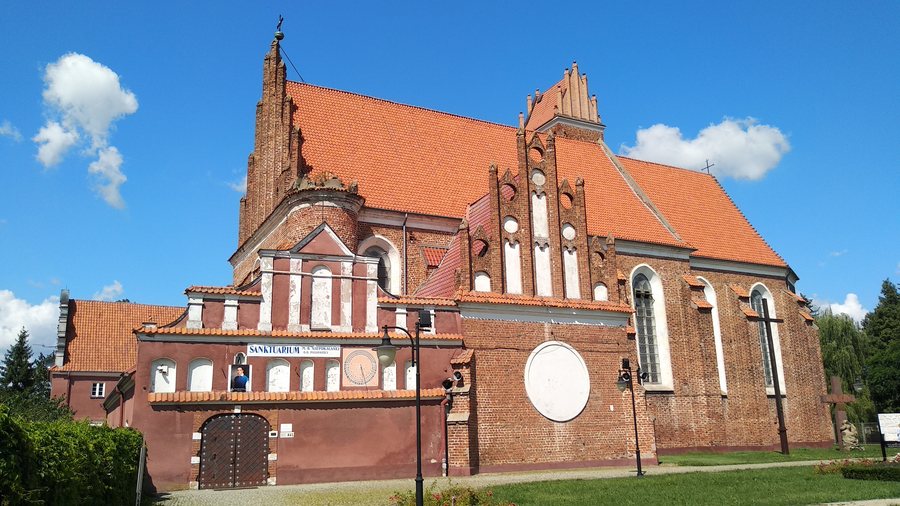
The Parish Church of the Assumption of Mary also offers a tangible link to the past. The late Gothic building dates from 1474 to 1485. Saint Stanislaus Kostka was baptised in 1550 in the so-called Kostka Chapel, where his parents and brothers are also buried. The church also has a fully detached Gothic masonry bell tower. It dates from the 15th century and was heightened around the turn of the 16th and 17th centuries.
Two more churches, each with its own building history, are also worth noting. The church of the Bernardine Sisters’ monastery complex was built between 1609 and 1616, and construction of the monastery was completed in 1615. The church of the Bernardine Friars’ monastery complex was built earlier, between 1585 and 1588, on the initiative of Paweł Kostka. The different names and dates help distinguish the buildings.
What does the city park offer as a counterpoint to the buildings?
Tadeusz Kościuszko City Park links the Węgierka with another side of Przasnysz. It was established in the first half of the 19th century and includes an island in the river. The park is home to five oak trees that are around 300 years old and protected as natural monuments. New walking paths surfaced with natural stone gravel complement the park. This gives you the option of alternating between historic buildings and time spent outdoors when choosing things to do, without conflating the two interests.
For a visit with children, the Historical Museum is another option: its permanent multimedia exhibition “Złoty wiek Przasnysza” is aimed mainly at children. The Sports and Recreation Centre offers a fitness room, aerobics rooms with exercise equipment and an infrared sauna. These activities appeal to different interests than the churches and historic buildings.
What railway heritage is part of the cityscape?
The Mławska Kolej Dojazdowa narrow-gauge railway was built during the First World War and initially connected Mława with Przasnysz. The railway heritage complex in Przasnysz includes a wooden station building dating from around 1925 and a steel bridge over the Węgierka. Both are listed in the register of historic monuments. For those interested in cultural history, these structures complement the religious and urban history with a story of transport.
Przasnysz as a regional centre
With its historic urban layout and religious buildings, Przasnysz serves as a service and tourism centre for the Przasnysz region.
Romany-Sebory, Rycice, Przasnysz and Krasne. Other destinations at the same navigation level include Sokołowski, Mława, Wołomin and Nowodworski.
FAQ
When was Przasnysz granted town rights?
Przasnysz was granted town rights in 1427.
What is included in the railway heritage complex?
It includes a wooden station building dating from around 1925 and a steel bridge over the Węgierka. Both are listed in the register of historic monuments.
Which exhibition is aimed mainly at children?
The permanent multimedia exhibition “Złoty wiek Przasnysza” is on display at the Historical Museum. It is aimed mainly at children.
For the broader travel overview: Masovia.

